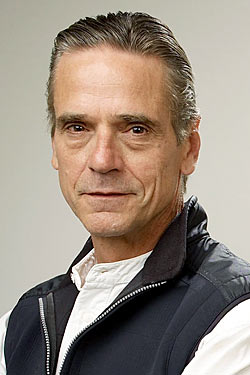
Jeremy Irons in ‘Cigar Aficionado’ Magazine

Jeremy Irons is featured in the March/April 2013 issue of Cigar Aficionado magazine.

This magazine is a must own for any Jeremy Irons fan. Be sure to buy a copy at your local news stand, book seller or cigar store.

Here are scans and photographs of the magazine. Click on the thumbnails to enlarge the images and read the text.

All images © Cigar Aficionado Magazine [Text by Marshall Fine – Portraits by Jim Wright] No copyright infringement intended.

This slideshow requires JavaScript.

Jeremy Irons – The A.V. Club Interview

Read the original interview HERE.

Follow @TheAVClub on Twitter

Follow Will Harris on Twitter @NonStopPop

Like The A.V. Club page on facebook.

Jeremy Irons on Shakespeare, The Simpsons, and enjoyable inconsistencies

by Will Harris January 31, 2013

Jeremy Irons’ filmography encompasses everything from Disney to David Cronenberg, plus a 1990 Best Actor Oscar win for Reversal Of Fortune, but his first efforts as an actor were on the stage, and one of his initial entryways into the dramatic arts came via Shakespeare’s work. Which explains why he was tapped to host an episode of PBS’ new documentary series Shakespeare Uncovered; Irons’ instalment, airing February 1, will cover Henry IV and Henry V. In conjunction with the show, Irons spoke to The A.V. Club during the Television Critics Association winter press tour about how he came to participate in the program, which of the villains he’s played is the most Shakespearean, and how his training prepared him to play a bar rag on The Simpsons.

The A.V. Club: What was the initial pitch when you were approached about Shakespeare Uncovered?

Jeremy Irons: Well, it was that we were going to make a documentary about the plays, about the locations, where they were written, the historical occurrences around the period, and where Shakespeare diverges and where he follows history, and why. They said to me, “We’ll do it all in four days for you. Do you want to do it?” And I had the time, and I thought it was a very interesting idea. Because anything that opens up Shakespeare to an audience is good. You know, he has a lot of disadvantages. But he’s often taught badly, and people haven’t seen great productions, so they sort of think, “Mmm, I don’t think so. I think that’s a bit heavy.” So anything that can make people realize that he’s a fantastic playwright, a fantastic story-writer, and open it up for them in their minds… well, it must be a good thing.

AVC: Did you have carte blanche to select which plays you wanted to tackle for your episode, or did they say, “Hamlet’s off the tableDavid Tennant gets first pick because he used to host Masterpiecebut anything else is up for grabs”?

JI: [Laughs.] No, I was doing Henry IV at the time [for BBC2’s The Hollow Crown], so they thought it would be interesting if I did the one that included the two plays that I was doing.

AVC: What was your first introduction to Shakespeare?

JI: I think it was The Winter’s Tale… Well, no, no, no, it wasn’t. I’ll tell you what it was: It was reading ’round the class in my English lessons at school. And I think perhaps once a week in English, we would choose a bit of a Shakespeare play, and we’ll all take characters, and we’d sit at our desks and read them. But it wasn’t until I began to see productions at Stratford and… I can’t actually remember the first Shakespeare I saw, though I think it might have been the Hollow Crown series, with Alan Howard. Peter Brook’s Midsummer Night’s Dream, I remember seeing. That was pretty early on. And suddenly I realized how theatrical Shakespeare is, how alive, how wonderful it is when it’s opened up by a great director and a great company.

AVC: Was it Shakespeare that made you want to become an actor?

JI: He was one of many. No, I wanted to become an actor because I wanted to become a gypsy. [Laughs.] I wanted to live the gypsy life!

AVC: You mentioned The Winter’s Tale a moment ago. That was the first Shakespeare play you actually performed, correct? At the Old Vic?

JI: The Bristol Old Vic, yeah.

AVC: The Winter’s Tale is one of the lesser-adapted Shakespeare plays when it comes to film and television. Do you have any theories as to why that is?

JI: Hmm. No, I don’t. But I’d actually love to film it. It’d be very interesting to film, because it’s all about two sorts of people. It’s about the really buttoned-up and the very loose people, the people who are always touching, which is like I am. The so-called Bohemian people. [Laughs.] Especially now, in this world where we’re so politically correct, and you’re not allowed to hold the hand of a little girl under the age of 14, and you’re not allowed to do this, you’re not allowed to do that, you’re not allowed to smack your children… You have to be so correct. And you compare that with the ’60s and ’70s and that time, with hippies and free love. And to have those two societies rubbing up against each other, which you have in The Winter’s Tale, it’s interesting.

AVC: Watching your episode of Shakespeare Uncovered offers a reminder of just how many of Shakespeare’s lines have filtered into pop culture, such as Christopher Plummer delivering the “dogs of war” speech in Star Trek VI

JI: [Laughs.] Yep, yep, yep.

AVC: Do you have a favorite example of Shakespeare being adapted for current tastes in popular culture?

JI: Well, I mean, I saw Ralph Fiennes’ Coriolanus, which was a very interesting way to show the play. Ian McKellen’s Richard III. Again, an interesting film. I suppose you could argue The Lion King, in a way. [Laughs.] We always say that he has entered our language with so many of these colorful phrases that we use in life. I suspect that they were phrases that were being used at that time, which he used in his plays. I’m not sure he necessarily invented them all.

AVC: You mentioned The Lion King, but looking beyond Scar, who would you say is the most Shakespearean villain in your back catalog?

JI: I think Simon in Die Hard With A Vengeance, a man who enjoys creating mayhem and living his own rules. Quite Shakespearean.

AVC: Earlier today, you suggested that you might have a performance of King Lear lurking within you somewhere. Is that something you anticipate letting out anytime soon?

JI: Oh, I don’t know. How soon is soon? [Laughs.] In the next 10 years, let’s say. I’d like to do Iago [in Othello], who is a wonderful character. A smiling villain. I’ve also never done a Don John, in Much Ado [About Nothing], who is a really unhappy man. I’ve always tended to play people who relish playing against the rules.

AVC: Rodrigo Borgia on The Borgias seems to qualify for that category. 

JI: Oh yes. He is wonderfully bad, isn’t he? [Laughs.] He’s a man who… well, one of the great things about Shakespeare is that his characters are inconsistent, and that’s something I think makes him a writer above most writers, because inconsistency is what we as people are full of. We maybe don’t see it in ourselves too often, but we are inconsistent. We think one thing one day and something else another day. We act a certain way one day and another way a second day. And Shakespeare knew that. Now, that’s very hard to play on film. It’s very hard to get a writer who will write characters who are inconsistent. They see it as somehow a failure. But when playing the Pontiff, the great thing is, I’ve had time to develop those inconsistencies. The fact that he was no doubt a man of God—maybe his faith wavered sometimes, but he was a man of God, as most people were then—and yet he is able to authorize assassinations and live in a way which we would think, “Well, that’s not very godly.” But then you look at George W. Bush, and you think, “Well, he was also calling himself a man of God,” but he also sanctioned actions around the world—basically in Iran—where thousands of innocent civilians were killed because of his decisions. So we all contain a bit of that.

AVC: Many actors admit to taking certain TV and film projects solely to subsidize their theater work. Has that ever been the case for you?

JI: It’s sort of incidental, really. I mean, you manage a career, you have to pay bills, and… sometimes I have done work to subsidize my life. [Laughs.] And to subsidize other works, yes. Less so now. Now I’m lucky enough to be comfortable enough that I can just choose what I want to do. It sort of doesn’t matter too much what I’m paid for it, and I do what I enjoy doing now. But when I was starting, yes, very much, television would subsidize my theater work.

AVC: In what way did your Shakespearean training prepare you to play a bar rag on The Simpsons?

JI: It taught me the importance of the smallest character, the most insignificant character, who not only has a great history, but who is as involved and as caring and as emotional as the largest character, the most active character. So it taught me not to take the bar rag for granted and to realize that he was, in his soul, Hamlet. How’s that? [Laughs.]

Jeremy Irons – Times Talks Madrid

Jeremy Irons was interviewed on Friday 21 September 2012, by New York Times London-based reporter Matt Wolf. The interview lasted one hour and covered Jeremy’s most recent films The Words and Trashed, as well as The Borgias. The final 15 minutes of the hour was devoted to audience questions.

The interview was live streamed on timestalksmadrid.com (though with several technical glitches that shut off the feed). The interview can be see On Demand on timestalksmadrid.com

Gallery of 50 photos at Media Punch

This slideshow requires JavaScript.

Jeremy Irons Interviewed by Scott Feinberg with Audio

From The Hollywood Reporter and Scott Feinberg’s Blog “The Race”

[Follow Scott Feinberg on Twitter @ScottFeinberg and @THR_TheRace]

  • jeremy_irons_interview_podcast.mp3
jeremy_irons_2011_H.jpg
 photo from Roadside Attractions

On Thursday morning, I had the privilege of speaking for about 30 minutes with the great London-based stage and screen actor Jeremy Irons, just minutes after his name was announced as a best actor (in a TV drama) Golden Globe nominee for his work on the critically-acclaimed Showtime series The Borgias.

Irons, 63, has already won just about every acting award that exists: an Oscar, a Golden Globe, a SAG Award, an Emmy, a Tony, an Annie, and prizes from all of the major critics groups, including the Los Angeles Film Critics Association, New York Film Critics Circle, and National Society of Film Critics. He mentions during our chat that he recently loaned his inimitable voice to a recorded reading of T.S. Eliot‘s The Waste Land, which could, hypothetically, earn him a Grammy, as well, which would make him just the 11th member of the elite EGOT club!

But, as Irons notes during our conversation, it is neither a desire for awards, nor a fondness for fame, nor even a particular passion for acting (he’s appeared in only 40 movies since his big screen debut 30 years ago) that keeps him in the game at this point in his life. Instead, it is a deep connection that he feels to certain characters that he reads, as well as a need for the creative companionship of other actors, that periodically draws him away from his various homes and hobbies and back into the fray.

The most memorable of his film roles include a lovestruck victorian in Karel Reisz‘s The French Lieutenant’s Woman (1981); a Jesuit missionary in Roland Joffe‘s The Mission (1986); a pair of twisted twins in David Cronenberg‘s Dead Ringers (1988); a murder suspect in Steven Soderbergh‘s Kafka (1991); a shady spouse in Barbet Schroeder‘s Reversal of Fortune (1991); a Machiavellian lion in Roger Allers and Rob Minkoff‘s The Lion King (1994); a child predator in Adrian Lyne‘s Lolita (1997); a cheating/cheated-upon husband in Istvan Szabo‘s Being Julia (2004); and a debtor in Michael Radford‘s The Merchant of Venice (2004).

And now comes another: the slithery corporate titan John Tuld — which sounds to me a lot like Dick Fuld, the disgraced former chair of Lehman Brothers — in first-time filmmaker J.C. Chandor‘s timely Wall Street drama Margin Call. The star-studded indie that debuted at Sundance in Jan. was released on Oct. 21 and has been very warmly received by critics and VOD consumers. Irons only enters the film in its third act, but he absolutely dominates it during every subsequent moment in which he appears onscreen. Consequently, he is receiving his loudest awards buzz in years and could — despite being passed over by the BFCA, SAG, and HFPA last week (probably because he’s part of such a large and impressive ensemble from which it is hard to single out only one or two individuals) — earn his first invitation to the Academy Awards since he won the best actor Oscar 21 years ago.

Irons and I discussed all of the above — and more — during our time together, and I hope that you’ll tune in to our conversation at the top of this post.

Just Like You Imagined – NY Magazine

Just Like You Imagined

Jeremy Irons plays himself very well.

Photo by Matt Carr/Getty Images

By Jada Yuan
Published Mar 27, 2011

Read the original article HERE

Jeremy Irons is laughing heartily outside Le Bilboquet on East 63rd Street, surrounded by attentive females. It’s a cold day, but he seems oblivious to the chill as he sips an afternoon Kir Royale and languidly smokes a hand-rolled cigarette. You approach and introduce yourself. He springs up, grabbing both your arms, and stands back to appraise you. At 62, he still possesses a liquid-eyed hotness. He cheek-kisses good-bye his coterie of women (publicists, managers, friends—it’s unclear), lays his hand on your shoulder, and gently guides you through the bistro door, all the while staring deeply into your eyes, so absorbed that he is halfway through the room before he realizes he forgot to put out his cigarette. With apologies, he takes his leave amid a chorus of dismay. “Are you kidding? He can smoke wherever he wants! He’s so cool!” says one entranced male diner, upon whom Irons bestows a two-palmed handshake before stepping outside to carefully deposit his cigarette butt in a trash bin.

Jeremy Irons is just so Jeremy Irons—that is to say, the man of flesh is very much the man of your fantasies. He doesn’t so much occupy space as consume it. Eyes follow him, then stare, rapt. And Irons, something of an attention hog, plays to his audience. He chooses the corner that allows him to face out and survey the room as it surveys him right back.

Irons calls out for a round of “Château Bloomberg” (a.k.a. tap water), “straight from the East River!” He has, he declares, “turned vigorously against the mayor because of the new law [banning] smoking in parks or on the beach, which I think is ludicrous and a terrible bullying of a minority that cannot speak back.” Irons, his teeth a testament to a life of indulgences, believes smokers ought to be protected like “handicapped people and children.” Though he clearly relishes declamation, he is getting notably heated over a law that is very briefly touching his life. The actor spends most of his time in an Oxfordshire village or at Kilcoe, an actual ­fifteenth-century castle (“You’d call it a keep,” he clarifies) on a bay in Ireland. Kilcoe’s ­hundred-foot, lovingly restored towers help to explain a spate of early-aughts parts in “sub–Lord of the Rings stuff” like Dungeons & Dragons. “It’s the shit you do,” he says, to “pay for another six months.”

Irons is in New York to reprise a guest role as a sex addict turned sex therapist on Law & Order: SVU (airing March 30) and to publicize his new Showtime show The Borgias (debuting April 3), a part he took at the behest of his friend Neil Jordan (The Crying Game), who wrote the series and directed the first two episodes. Irons plays Pope Alexander VI, despite having zero resemblance to the real man—an enormous, hook-nosed Spaniard with an insatiable appetite for corruption, food, women, and murdering his enemies. “I Googled Rodrigo Borgia, and he’s a voluptuary,” says the actor. “And I said, ‘I think I’m a bit of an ascetic, really, for that.’ And Neil said, ‘No, no, no. Because it’s all about power and what power does to you and how you deal with it. And you can play all that.’ ”

Yes, powerful and dark, Irons can do. He broke out as a heartthrob in the BBC series Brideshead Revisited, then romanced Meryl Streep in The French Lieutenant’s Woman. But by his forties, he was playing against his good looks, choosing dangerous, even creepy characters—like the twin gynecologists in David Cronenberg’s Dead Ringers and Claus von Bülow in Reversal of Fortune, for which he won his Oscar.

In his Borgias role, an outsider beset by a Roman aristocracy bent on destroying him, Irons sees parallels with Barack Obama. “Just look at the gossip about your current president being from Africa or being a Muslim,” he says. “Alexander was getting all of that.” On the other hand, Irons thinks Alexander had it easier than another of our presidents. “The medievalists would see the reaction to Clinton, for instance, and the cigars, as being deeply prohibitive. He’s a man! We ought to forgive and say, ‘Yeah, he’s got a lot of testosterone, and he’s great at what he does, and he loves a bit of lady, and there you go.’ We see all these marriages breaking because they’re under intolerable strains, because we expect to get all our happiness from our husband or our wife. Impossible! How can you get that from one other person? I don’t want a saint to be my leader. And maybe his wife after fifteen years won’t be able to provide everything he needs. That’s fine. That’s life.”

Irons’s wife of 33 years, the actress ­Sinéad Cusack, is apparently fine with this; no doubt she’s used to her husband’s decrees—including his disdain for organized religion (she is a practicing Catholic): “I don’t really approve of religion … I’m not quite sure the relevance Christianity has.” Their son Max, 25 (brother to Sam, 32), is currently starring in Red Riding Hood. Irons hasn’t seen the film, but he did catch the Jimmy Kimmel appearance in which Max talked about his eternal embarrassment over his dad’s driving around in a horse and buggy in the town where he grew up. Irons smiles indulgently. The father is resigned to letting the son find his own way. “I hope he never gets out of touch with theater, and I hope he doesn’t get too seduced by the money and all that,” says Irons. “I wish him well. But it’s always, for any parent, a slightly heart-in-the-mouth situation when you see your child climbing a rock face.”

Should The Borgias come back after the first season, the actor is committed to the series for five months out of the year, perhaps for three or four years. He is aware of and on guard against the lusty tendencies of cable TV’s costume dramas: “I know there are some series where there is a bit of history and a bit of fucking and a bit of history and a bit of fucking,” he says. “I think [Showtime] would have liked to have made it even more about that, but I wouldn’t want to be involved in something that’s just as obviously … You know, if you want fucking, there’s a lot of other channels.” (For the record, there is still quite a lot of fucking in The Borgias.)

As he’s telling me about his desire to play King Lear (“The next fifteen years, I’ll be right for it. And the next ten, I’ll be able to remember my lines”), a man approaches to ask if Irons would mind posing with his giggling female companion. The actor lets out an exasperated sigh. It is the first indication that being Jeremy Irons might be a bit of work. Then it’s gone, the Irons of your imagination returns, and it’s impossible to tell if his annoyance was real or feigned. He looks up at the woman, leaning awkwardly over him, and wraps his arm around her waist: “You’re falling over. Come and sit down. Just don’t show it to my wife. Ha. Ha. Pleasure. My ­pleasure.”

VIDEO – Jeremy Irons at the Hudson Union Society Luncheon

Vodpod videos no longer available.

more about "Jeremy Irons at the Hudson Union Soci…", posted with vodpod

M Butterfly on DVD May 26, 2009

mbutterflydvdcover

Features:
New interview with director David Cronenberg; Theatrical trailer

David Cronenberg’s cinematic intensity eviscerates this adaptation of David Henry Hwang’s passionate stage production. Based on a true incident involving a French diplomat who carried on an affair for 18 years with a man the diplomat thought was a woman, M. Butterfly begins in 1964 Beijing when French foreign service employee Rene Gallimard (Jeremy Irons) becomes smitten with Chinese opera performer Song Liling (John Lone). Before long, Gallimard is enamored with Song, and they begin an inflamed affair — bracketed by the stipulation that Gallimard will never be allowed to look upon her in a state of complete undress. Gallimard agrees to the rules, but, as he climbs up the diplomatic ladder, the communist government gets involved, corralling Song to become an informer for the government. When, at last, Gallimard’s passion demands nudity, Song flees the relationship. Gallimard, pining for his lost love, then becomes a physical and mental wreck. He leaves China and accepts a two-bit diplomatic position, but then Song appears once again to Gallimard. At that point, Gallimard is arrested and, during the subsequent sensational trial for treason, his affair is exposed for the sham that it is. Paul Brenner, All Movie Guide

Scene Index

Disc #1 — M. Butterfly
1. Credits [2:31]
2. Certainly Different [1:38]
3. Entrance of Butterfly [2:42]
4. Beautiful to a Westerner [2:55]
5. Piece of Beautiful Music [3:02]
6. At the Opera [5:35]
7. Wings Fluttering in the Dark [3:56]
8. Implications [4:56]
9. Unfriendly Party [2:43]
10. Letters to a White Devil [2:14]
11. Unexpected Good News [2:30]
12. Most Forbidden of Loves [5:30]
13. New Vice-Consul [1:38]
14. At the Great Wall [2:00]
15. Theories on Oriental Culture [2:17]
16. Practice of Deception [2:04]
17. Still Playing Missionary [2:33]
18. Slave’s Revelation [4:36]
19. Farwell to His Concubine [2:14]
20. What Only a Man Knows [2:00]
21. Flames of Revolution [4:23]
22. Bittersweet Reunion [2:36]
23. Demotion; Hard Labor [3:29]
24. Tear-Stained Memory [3:38]
25. Here in My Arms [2:22]
26. The Trial [5:41]
27. Loving the Lie [6:44]
28. His Biggest Performance [2:29]
29. Madama Butterfly [6:04]
30. End Credits [3:42]

Performance Credits
Jeremy Irons
(Films)(Biography)(Music) Rene Gallimard
John Lone
(Films)(Biography) Song Liling
Ian Richardson
(Films)(Biography)(Music) Ambassador Toulon
Annabel Leventon
(Films)(Music) Frau Baden
Shizuko Hoshi Comrade Chin
Richard McMillan Embassy Colleague
Vernon Dobtcheff Agent Etancelin
Damir Andrei 2nd Intelligence Officer
Deirdre Bowen Actor
Barbara Chilcott Critic at Garden Party
Viktor Fulop Marshal
David Hemblen 1st Intelligence Officer
Sean Hewitt Ambassador’s Aide
Tristram Jellinek Defense attorney
Philip McGough Prosecution attorney
Peter Messaline Diplomat at party
David Neal Judge
Antony Parr 3rd Intelligence Officer
Barbara Sukowa Jeanne Gallimard
Technical Credits
David Cronenberg Director
Suzanne Benoit Makeup
John Board Asst. Director
Deirdre Bowen Casting
Denise Cronenberg Costumes/Costume Designer
Bryan Day Sound/Sound Designer
Elinor Rose Galbraith Set Decoration/Design
David Henry Hwang Executive Producer, Screenwriter
Alicia Keywan Art Director
Gabriella Martinelli Producer
James McAteer Art Director
Ronald Sanders Editor
Howard Shore Score Composer
Carol Spier Production Designer
Marilyn Stonehouse Production Designer
Peter Suschitzky Cinematographer