Jeremy Irons – The A.V. Club Interview

Read the original interview HERE.

Follow @TheAVClub on Twitter

Follow Will Harris on Twitter @NonStopPop

Like The A.V. Club page on facebook.

Jeremy Irons on Shakespeare, The Simpsons, and enjoyable inconsistencies

by Will Harris January 31, 2013

Jeremy Irons’ filmography encompasses everything from Disney to David Cronenberg, plus a 1990 Best Actor Oscar win for Reversal Of Fortune, but his first efforts as an actor were on the stage, and one of his initial entryways into the dramatic arts came via Shakespeare’s work. Which explains why he was tapped to host an episode of PBS’ new documentary series Shakespeare Uncovered; Irons’ instalment, airing February 1, will cover Henry IV and Henry V. In conjunction with the show, Irons spoke to The A.V. Club during the Television Critics Association winter press tour about how he came to participate in the program, which of the villains he’s played is the most Shakespearean, and how his training prepared him to play a bar rag on The Simpsons.

The A.V. Club: What was the initial pitch when you were approached about Shakespeare Uncovered?

Jeremy Irons: Well, it was that we were going to make a documentary about the plays, about the locations, where they were written, the historical occurrences around the period, and where Shakespeare diverges and where he follows history, and why. They said to me, “We’ll do it all in four days for you. Do you want to do it?” And I had the time, and I thought it was a very interesting idea. Because anything that opens up Shakespeare to an audience is good. You know, he has a lot of disadvantages. But he’s often taught badly, and people haven’t seen great productions, so they sort of think, “Mmm, I don’t think so. I think that’s a bit heavy.” So anything that can make people realize that he’s a fantastic playwright, a fantastic story-writer, and open it up for them in their minds… well, it must be a good thing.

AVC: Did you have carte blanche to select which plays you wanted to tackle for your episode, or did they say, “Hamlet’s off the tableDavid Tennant gets first pick because he used to host Masterpiecebut anything else is up for grabs”?

JI: [Laughs.] No, I was doing Henry IV at the time [for BBC2’s The Hollow Crown], so they thought it would be interesting if I did the one that included the two plays that I was doing.

AVC: What was your first introduction to Shakespeare?

JI: I think it was The Winter’s Tale… Well, no, no, no, it wasn’t. I’ll tell you what it was: It was reading ’round the class in my English lessons at school. And I think perhaps once a week in English, we would choose a bit of a Shakespeare play, and we’ll all take characters, and we’d sit at our desks and read them. But it wasn’t until I began to see productions at Stratford and… I can’t actually remember the first Shakespeare I saw, though I think it might have been the Hollow Crown series, with Alan Howard. Peter Brook’s Midsummer Night’s Dream, I remember seeing. That was pretty early on. And suddenly I realized how theatrical Shakespeare is, how alive, how wonderful it is when it’s opened up by a great director and a great company.

AVC: Was it Shakespeare that made you want to become an actor?

JI: He was one of many. No, I wanted to become an actor because I wanted to become a gypsy. [Laughs.] I wanted to live the gypsy life!

AVC: You mentioned The Winter’s Tale a moment ago. That was the first Shakespeare play you actually performed, correct? At the Old Vic?

JI: The Bristol Old Vic, yeah.

AVC: The Winter’s Tale is one of the lesser-adapted Shakespeare plays when it comes to film and television. Do you have any theories as to why that is?

JI: Hmm. No, I don’t. But I’d actually love to film it. It’d be very interesting to film, because it’s all about two sorts of people. It’s about the really buttoned-up and the very loose people, the people who are always touching, which is like I am. The so-called Bohemian people. [Laughs.] Especially now, in this world where we’re so politically correct, and you’re not allowed to hold the hand of a little girl under the age of 14, and you’re not allowed to do this, you’re not allowed to do that, you’re not allowed to smack your children… You have to be so correct. And you compare that with the ’60s and ’70s and that time, with hippies and free love. And to have those two societies rubbing up against each other, which you have in The Winter’s Tale, it’s interesting.

AVC: Watching your episode of Shakespeare Uncovered offers a reminder of just how many of Shakespeare’s lines have filtered into pop culture, such as Christopher Plummer delivering the “dogs of war” speech in Star Trek VI

JI: [Laughs.] Yep, yep, yep.

AVC: Do you have a favorite example of Shakespeare being adapted for current tastes in popular culture?

JI: Well, I mean, I saw Ralph Fiennes’ Coriolanus, which was a very interesting way to show the play. Ian McKellen’s Richard III. Again, an interesting film. I suppose you could argue The Lion King, in a way. [Laughs.] We always say that he has entered our language with so many of these colorful phrases that we use in life. I suspect that they were phrases that were being used at that time, which he used in his plays. I’m not sure he necessarily invented them all.

AVC: You mentioned The Lion King, but looking beyond Scar, who would you say is the most Shakespearean villain in your back catalog?

JI: I think Simon in Die Hard With A Vengeance, a man who enjoys creating mayhem and living his own rules. Quite Shakespearean.

AVC: Earlier today, you suggested that you might have a performance of King Lear lurking within you somewhere. Is that something you anticipate letting out anytime soon?

JI: Oh, I don’t know. How soon is soon? [Laughs.] In the next 10 years, let’s say. I’d like to do Iago [in Othello], who is a wonderful character. A smiling villain. I’ve also never done a Don John, in Much Ado [About Nothing], who is a really unhappy man. I’ve always tended to play people who relish playing against the rules.

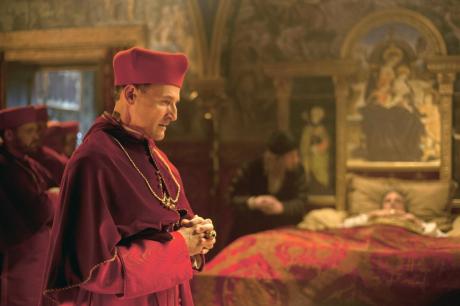
AVC: Rodrigo Borgia on The Borgias seems to qualify for that category. 

JI: Oh yes. He is wonderfully bad, isn’t he? [Laughs.] He’s a man who… well, one of the great things about Shakespeare is that his characters are inconsistent, and that’s something I think makes him a writer above most writers, because inconsistency is what we as people are full of. We maybe don’t see it in ourselves too often, but we are inconsistent. We think one thing one day and something else another day. We act a certain way one day and another way a second day. And Shakespeare knew that. Now, that’s very hard to play on film. It’s very hard to get a writer who will write characters who are inconsistent. They see it as somehow a failure. But when playing the Pontiff, the great thing is, I’ve had time to develop those inconsistencies. The fact that he was no doubt a man of God—maybe his faith wavered sometimes, but he was a man of God, as most people were then—and yet he is able to authorize assassinations and live in a way which we would think, “Well, that’s not very godly.” But then you look at George W. Bush, and you think, “Well, he was also calling himself a man of God,” but he also sanctioned actions around the world—basically in Iran—where thousands of innocent civilians were killed because of his decisions. So we all contain a bit of that.

AVC: Many actors admit to taking certain TV and film projects solely to subsidize their theater work. Has that ever been the case for you?

JI: It’s sort of incidental, really. I mean, you manage a career, you have to pay bills, and… sometimes I have done work to subsidize my life. [Laughs.] And to subsidize other works, yes. Less so now. Now I’m lucky enough to be comfortable enough that I can just choose what I want to do. It sort of doesn’t matter too much what I’m paid for it, and I do what I enjoy doing now. But when I was starting, yes, very much, television would subsidize my theater work.

AVC: In what way did your Shakespearean training prepare you to play a bar rag on The Simpsons?

JI: It taught me the importance of the smallest character, the most insignificant character, who not only has a great history, but who is as involved and as caring and as emotional as the largest character, the most active character. So it taught me not to take the bar rag for granted and to realize that he was, in his soul, Hamlet. How’s that? [Laughs.]

‘The Borgias’ Season 3 Promos

The Borgias, Season 3 Premiere – Full Episode


______________________________________________________________________________

The Borgias season 3 promo – “Father, Son, Unholy Spirit”


_______________________________________________________________________________

The Borgias season 3 short promo – “Give in to Sin”

________________________________________________________________________________

The Borgias season 3 promo – “Nothing is Sacred. Everything is a Game.”

________________________________________________________________________________


________________________________________________________________________________


_______________________________________________________________________________

________________________________________________________________________________


_______________________________________________________________________________

The Borgias : Season 3: Episode 1 Clip – We are at War


_______________________________________________________________________________

The Borgias : Season 3: Episode 1 Clip – There is a Plot


_______________________________________________________________________________
On the Season 3 Premiere of The Borgias:


________________________________________________________________________________

_______________________________________________________________________________

_____________________________________________________________________________

_______________________________________________________________________________

borgias season 3 promo pic

SHOW_BraceYourself_Btm_KO

borgias season 3 screencap 1

borgias season 3 still 1

borgias season 3 still 2

borgias season 3 still 3

borgias season 3 still 4

borgias season 3 still 5

borgias season 3 still 6

2013 Golden Globe Awards and After-parties

Jeremy Irons was a presenter at the 70th Golden Globe Awards, held on 13 January 2013. He introduced the film Salmon Fishing in the Yemen as a nominee for Best Picture – Musical or Comedy. Jeremy also attended the HBO and FOX after-parties.
——————————————————————————–
NO TIME TO SMOKE
Posted: Jan 13, 2013 10:22 PM EST
By The Associated Press

Jeremy Irons had stepped outside the Golden Globes show and was preparing himself a hand-rolled cigarette when he stopped in mid-roll and pocketed his tobacco.

“Wait, I want to see Jodie,” he said.

He rushed back inside the ballroom in time to see Jodie Foster accept the Cecil B. DeMille Award for lifetime achievement from Robert Downey, Jr.

– Sandy Cohen – http://www twitter.com/apsandy
——————————————————————————–

This slideshow requires JavaScript.

Jeremy Irons to Attend ‘Trashed’ Preview Screening at 92Y for thoughtgallery.org

Source

Jeremy Irons – Trashed Preview Screening

Jeremy Irons - Trashed Preview Screening

Date/Time
12/11/2012 – 7:15 PM
From $38

Location
92nd Street Y, 1395 Lexington Ave.
212-415-5500
Official site/reserve tickets

The Oscar-winning star of such films as Reversal of FortuneThe French Lieutenant’s WomanThe MissionLolitaDead Ringers and the TV series “The Borgias,” Jeremy Irons is also a producer, director, and activist. He will join Reel Pieces moderator Annette Insdorf for an onstage discussion after a selection of clips from his movies and a preview of Trashed, which premiered at the 2012 Cannes Film Festival and will be released Dec. 14 in New York.

Irons is the executive producer of this powerful documentary, a wake-up call about global waste. Irons investigates and reveals the extensive pollution of land, water and air around the globe-a threat to the food chain and to future generations. While Irons is outraged, the film also features images of paradoxical beauty as well as a score by the renowned composer Vangelis.

________________________________________________________________

Reel Pieces – Jeremy Irons, with a Preview of “Trashed” (Candida Brady, Director, 2012, 97 minutes)

The Oscar-winning star of such films as Reversal of Fortune, The French Lieutenant’s Woman, The Mission, Lolita, Dead Ringers and the TV series The Borgias,  Jeremy Irons is also a producer, director and activist.

Jeremy Irons Believes in Marriage – New interview from stop.hu

Source

Translated from Hungarian:

Jeremy Irons, there is no better system

Jeremy Irons has spent a long time shooting in Hungary. The Academy Award and Golden Globe winning British actor has been happily married for decades. His wife is actress Sinéad Cusack, they have two sons.

Marriage provides a framework to raise children. There are countries where it is useful to be married due to the tax system, in other cultures it signals that “off with your hands”! Personally, I believe it is still the best institution to raise a child. If I had fallen in love with someone, with whom we hadn’t wanted children, I would not have been interested in this bond, but if your intents are serious, then marriage is the only way. There are storms in all marriages, but the kids need two parents, even if you argue sometimes – says Jeremy Irons, who believes in marriage.

Not that marriage is a walk in the park, but it is important in raising children. My kids have already flew out, but every parent knows that kids do not ever really fly out. They need maternal-paternal care even when they are over thirty. And deep down it is important for them to know mum and dad are fine.

Source: STOP / Naturopathic News | STOP

Jeremy Irons in Madrid, Spain – September 2012

Original article and photos from the Mail Online

Jeremy Irons and Sinead Cusack were in Madrid, Spain the weekend after Jeremy’s birthday in 2012.  Jeremy was in town to participate in a TimesTalks Madrid interview on Friday 21 September. 

This slideshow requires JavaScript.

Jeremy Irons – Times Talks Madrid

Jeremy Irons was interviewed on Friday 21 September 2012, by New York Times London-based reporter Matt Wolf. The interview lasted one hour and covered Jeremy’s most recent films The Words and Trashed, as well as The Borgias. The final 15 minutes of the hour was devoted to audience questions.

The interview was live streamed on timestalksmadrid.com (though with several technical glitches that shut off the feed). The interview can be see On Demand on timestalksmadrid.com

Gallery of 50 photos at Media Punch

This slideshow requires JavaScript.

Jeremy Irons in Motorrevü Online – Interview and Photos

Interview – Motorrevü Hungary – Jeremy Irons

2012-09-20, Written by: Ivan Zomborácz, Catherine Burner , Pictures: Peter Kőhalmi
Source

Gallery at the bottom of this post. Click on the photos for full size.

This slideshow requires JavaScript.

Translated from Hungarian

Though being an Oscar-winning actor, he arrived without bodyguards, only his make-up artist was sitting behind him in the saddle. He wore simple canvas pants, leather boots and a shirt ripped at his elbow. For someone with such a strong presence, he doesn’t need a fuss around him – as he arrived, the air thickened around him, Mr. Irons has a presence of weight. Although it was the first time we’d first met, he greeted me as an old friend.

MR: You have not started riding too early. What made you start riding at 30?

Mr. Irons: I think I started to be interested in motorbikes because of my brother. He had a BSA He advised me not to sit on the motorbike until I had driven a car for at least 10 years. You need this amount of time to learn how other drivers behave, one of whom may be your murderer one day. You need to get used to how to get around in the safety of four wheels. I took my brother’s advice, so I committed my first mistakes driving a car. By the time I was 30, I knew that I was not invincible, that I could die. It is missing from young people.

MR: Almost at the same time that you started to ride, you settled your family life, and started up your acting career. What happened to you at age 30, that brought about so many changes in your life? Do you see a relationship between these?

I: I think it’s just a coincidence. If someone learns to be an actor, he spends his twenties with learning the profession and starts building his career. By the time he crosses 30, he’s picked up a lot of knowledge and begun to attract attention. So the really interesting things start happening for people in their 30s and 40s when they are still full of ambition and energy. At that time I lived in London, and was driving a little Honda 50. But it was enough for me. I remember once we went on a Christmas shopping trip, behind me my wife and our newborn baby, and our dog, and all the presents we bought. We looked like the Chinese. I was once in China, and I saw how they drive the motorbike there. Ladder, and anything that you can pack up on their bikes. So, there I was in London and I looked like them.

MR: When did you feel like leaving the Chinese feeling behind and move up a category?

I: When I passed 40, I stopped for a few years, until I moved to the countryside and reminded myself that I always ​​promised myself a bigger bike. So I bought my first BMW, second hand. It was a RT100’s, which I really loved. I remember when I bought it, I did not even know how to start it at first. In addition, I wanted to go to London that evening to pick up a friend for dinner and watch a movie. So I called her and told her to wear pants because I would be with a bike. But when I got there, she appeared in a long black skirt that was cut up high at one side and left her entire left leg free as she sat up on the motor. I thought immediately that it was worth it.

MR: Have you stuck to BMW?

I: I loved the RT100. When I heard that they would stop the complete production and adjust to a new model, a boxer engine, I bought one of the last RTs on the market. I use it to this day. Unfortunately, in the last 22 years I only put 87 thousand miles on it. I like it because it is so reliable, and because … it is not a computer. It’s so simple. If there is a problem, there’s a good chance it is the carburetor that I can adjust. Of course, it has no ABS, but I have never had a need of it. I evaluate the road on the basis of the abilities of the machine. Its wheels are a bit narrow, but still I love it.

MR: You have been in Hungary many times, you did hiking too. Do you have a favourite motorcycle route? And what would you recommend for the Hungarian bikers in Europe, that they shouldn’t miss?

I: Unfortunately, due to my work, I do not have much time to hike. But there is a section in the mountains, at the old capital city, Esztergom. I love that route. But I know there are a lot of good routes here. Once I headed east, but I found that area too flat. I could not yet get to the south. I know that there are a lot of good routes in Hungary, but you should not ask my advice. I love Slovenia. There are beautiful roads there, once I went down to the sea on little serpentine.

MR: Do you prefer travelling alone or with a passenger?

I: With a passenger, because I think the most interesting part of the ride, when you stop, talk, relax and explore. It is just the opposite of when you only drive and concentrate and go on. Of course, that also has its own beauty, but then you stop at one point. To smoke a cigarette, drink a cup of coffee while browsing around. And it’s very good to have someone there with you, with whom you can share the experience.

MR: What do you think of the Hungarian transport morals?

I: When driving in town, you musn’t forget that people can be tired, crapulent, or nervous because they are late, or they are simply old, and it can have thousands of other reasons why they may not notice the rider. Then the madness of young people on their scooters! However, I do not think that Hungary is more dangerous than any other country in the world. Every country has its own particularities. In Italy, for example, everyone is driving fast, but exactly for this reason, they concentrate more, even if they drive on the other side of the road sometimes. You can’t do anything about it, you need to get used to it. Budapest is not more dangerous than anywhere else, where you need to pay attention to a lot of people. For example, at each overtaking I try to see where comes an intersection, where one could suddenly turn on you without signalling.

MR: Is the Guggenheim motorcycle club still operating whom you are a founding member of?

I: It’s having a rest now, but we’d like to organize a trip in the memory of Dennis Hopper. Organizing is a problem though, since I have been very busy in the last 18 months. So, it’s on ice now. Where was the last tour? Spain, perhaps, 1.5 years ago, when the rest of them toured the Basque Country. Unfortunately, I could not be with them. So the heart of the club is still beating. Gently.

MR: When it comes to motorcycle clubs, what do you think of the classic motorcycle clubs? Do you attend some?

I: I do not like motor clubs. I mean, for me, riding is about to get a break from people. You may take your loved ones or a very small team with you, but big companies are not for me. There are enough people in my life, I do not like to ride with more than two or three, because with them you can still disappear. I do not like noisily letting the world know, I’m here.

MR: In 1995, your license was withdrawn for fast driving. Does speed still attract you?

I: I like to go fast, as fast as is safely possible. This is variable. I’m trying to remember also, where the cameras are and trying to drive safely. I believe that it is much safer to go a pace that is allowed by the motorcycle and the road, than to balance at the edge of the speed limit all the time. So much easier to concentrate and enjoy the journey, which is the point of the whole thing. You can’t feel this in a car. You have to concentrate on a motor, see where the rocks are, and the water flows, and what the road and other drivers let you do. Personally, I’m trying to slow down when I see a camera. And I do not compete. Some people go nuts, when they see that someone gain on them. There are many sides to this, but I think I am a careful and conscientious driver. But fast, too.

MR: One of your sons is following your path in acting, have you infected either of them with motorcycling?

I: No. I gave them the same advice that I got back then. Wait with the motor until you had driven a car for at least 10 years. My older son has been driving since he was 18, so he could even change now. It would make sense, too, since he lives in London. Interestingly, my younger son is not interested at all in riding. He drives, too, but only got the driver’s license at the age of 24 in America. He’s simply not attracted to the idea. Although when he was little, he drove a quad on our farm, he jumped with that everywhere. As I would not advise anyone to be an actor, I would not say to buy a motorcycle. Or buy, but be aware of the dangers. Because there are. Though nothing more than in the case of horse riding (which I also like very much). But the motor riding, just like horse riding and anything else that is exciting, carries potential risks. Therefore, be sure you are very good at them. So, you have to be careful with such an advice. One day the sign will come anyway that you are ready and you can go and buy your bike and start up on the thing.

MR: You live in a medieval castle that you restored. Do old engines attract you in the same way as old buildings?

I: I like looking at them. I really liked the exhibition that was organized by the Guggenheim Museum, but I’m not obsessed with technology. I think I like motorbikes, because they give me freedom. I am interested how reliable they are, how well they work, how nice they look, but I am not crazy obsessed with them. What I enjoy in bikes is what they do to my life.

Jeremy Irons on CBS This Morning

Jeremy Irons was a guest on CBS This Morning on Friday 7 September 2012 to talk about The Words, Trashed and The Borgias.

Watch the entire interview HERE

This slideshow requires JavaScript.

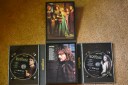
‘The Borgias’ Season 2 – DVD Box Set Photos and Blooper Reel

This slideshow requires JavaScript.