The three Shakespeare kings hit TV: The Times Interview

From the London Times, Saturday 23 June 2012.
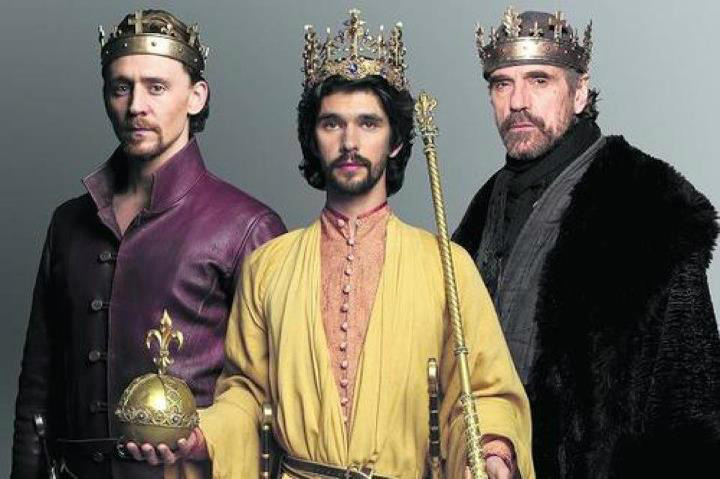
Ben Whishaw, Jeremy Irons and Tom Hiddleston are bringing the history plays to the BBC. Andrew Billen talks to them.

Uneasy lies the head that wears the crown — uneasy even, one imagines, if it is worn merely for Harry, England and the BBC. Any actor playing the king in Shakespeare’s second tetralogy of English history, the Henriad, composed of Richard II, the two parts of Henry IV, and Henry V, must feel the crown’s weight. It has rounded the mortal temples of Alec Guinness, Paul Scofield, Derek Jacobi and Mark Rylance (among the Richards), of John Gielgud, Jon Finch and Tom Fleming (the last of whose Henry IVs became the voice of royal ceremonial for the BBC), and, most burdensomely, of an army of hyper-distinguished Hals led by Ralph Richardson, Laurence Olivier, Richard Burton and the just-knighted Kenneth Branagh.

But for Ben Whishaw, Jeremy Irons and Tom Hiddleston, who sequentially play the kings in the BBC’s new cycle, The Hollow Crown, there is another responsibility. Shakespeare on TV has fallen out of fashion. The once familiar BBC Shakespeare production — there were more than 60 between 1945 and 2000 — has disappeared to be replaced by the occasional BBC film of a hit stage version. Even with Ian Holm as Lear, David Tennant as Hamlet, and, tomorrow on BBC Four, Jeffrey Kissoon as the RSC’s current Julius Caesar, this is not quite the same. The BBC’s last Richard IIs, for instance, were Fiona Shaw (from the gender-swapping 1995 National Theatre production) and Mark Rylance, filmed at the Globe in 2003. Incredibly, there has not been a BBC Henry V for 32 St Crispin Days. That play begins by apologising for cramming “so great an object” within the “wooden O” of the stage. Today, the question is whether Shakespeare, with his worrisome language, lengthy scenes and habit of arriving DOA in classrooms, is interesting enough to fill our great plasmatic rectangles.

Well. I have seen all four films in the BBC’s The Hollow Crown series, and my living room echoes resoundingly “yes”. When the BBC announced the project in September 2010, the histories seemed an odd place to begin a Bard revival. Now, in the summer of the Jubilee, as the kingdom again ponders a succession, they seem oddly relevant, if not as controversial as when Richard II’s abdication scene was removed from print editions so as not to offend the first Elizabeth. Politicians now, as Shakespeare’s monarchs then, strain for legitimacy amid shifting alliances. Nor is there anything remote about sending young men abroad to die for opaque causes: as the grunt Williams tells Henry V just before Agincourt, when he dares to speak of the justice of his cause: “That’s more than we know.”

Taking advantage of the nation’s widescreens, the executive producers Sam Mendes and Pippa Harris have opened the dramas out, cinematically, into Britain’s countryside, castles and cathedrals. The plays’ respective directors, Rupert Goold, Richard Eyre and Thea Sharrock, have encouraged their casts to deliver often heavily-cut speeches conversationally. Soliloquies, following the convention of Olivier’s 1948 Hamlet, are delivered as voiceovers. But what casts! Not even counting those kings, to whose number one must admit the dourly brilliant Rory Kinnear as Richard’s successful challenger Bolingbroke, there is the fat-suited Simon Russell Beale as a delicate, scheming Falstaff, Joe Armstrong as Hotspur, and, down in Falstaff’s unruly alternative court in Eastcheap, Julie Walters as Mistress Quickly. Again and again, actors we have taken for granted prove true Shakespeareans.

But it is when the kings wrangle over the crown that the films electrify. Ben Whishaw as Richard, reluctantly persuaded to abdicate in Bolingbroke’s favour (“Here cousin!”), bursts into tears, almost hands over the crown, takes it back and finally rolls it truculently towards Kinnear, who is wearing an expression that might be texted as “WTF?”.

“When someone is that deluded about themselves, it is always slightly comic,” says Whishaw, last seen in The Hour on BBC Two, and, at 31, two years younger than Richard at his deposition and death. “I felt his story was the story of someone who was forced to confront their vulnerability, who has constructed an identity of power and invulnerability and godlike authority, and whose illusions about himself are shattered.”

Whishaw dresses for his sacking in a priestly white gown trimmed in orange. In an earlier beach scene, in which he makes a stage of a rock, he wears his crown over a scarf worn a la Lawrence of Arabia. Mixed in with his divinity is a dessert helping of camp. “What Rupert [Goold] and I talked about was a Michael Jackson parallel. That was our reference in terms of his theatricality, the sense that everything is a performance and everything is about maximising the mystery around him. And like Jackson he is surrounded by people who just say yes to him.”

But there are more mundane parallels for an age of economic uncertainty. Whishaw sees Richard both as a megastar and a bloke who loses the job that defined him. Yet, once reduced to nothing, in his cell, his imagination spring opens and he identifies with others, even his old horse. “When I had finished working on this play — and maybe all Shakespeare is like this — I had the sensation that the play seemed to be about everything in life,” Whishaw says. “It is at once very specific and completely universal.”

For Jeremy Irons, who takes over from Kinnear as Henry IV in the two plays that follow Richard II, the story burrows towards the particular and the personal. Henry, so assured when he was Henry Bolingbroke, a duke unjustly exiled by the whimsically despotic Richard, is now plagued by ill health brought on by guilt at having usurped a divinely anointed king. The barons, not liking their new monarch much more than the last, again divide the kingdom. Any actor playing this Henry finds the plays’ form following their content. He is the star in title only. In performance he vies for attention with his tearaway son-and-heir Hal, his rebellious rival Hotspur, and, above all, Falstaff, who not only represents that hedonistic boozer faction in the English character but is a dissolute second father to his son. For many theatre-goers over the centuries, and for Orson Welles in his movie Chimes at Midnight, the star ofHenry IV is Sir John Falstaff.

Irons’ solution to the plays’ divided attentions is to make Henry’s throne its own centre of gravity, turning it into a virtual sick bed. Irons, 63, six years older than Henry at his death, wears the hollow crown over a hollow face, in a performance informed by his research into the real Henry, a “dazzling youth”, champion jouster, unjustly exiled and rightly outraged when Richard takes the estate of his dead father (Patrick Stewart’s John of Gaunt). “You would think he would be perfect, but in fact illness got him,” Irons says. “He used to have these fits. He would lie there apparently dead for ten, 20 minutes and then he would revive. No one quite knows what it was.” But it adds to the scene when Hal believes his father dead.

In a 1979 Henry IV, the BBC gave Jon Finch’s king leprosy, allowing for some Pilate-style hand-washing undermined by an off day in the continuity department that resulted in the king both wearing and not wearing gloves at the time. This time Richard Eyre determined leprosy would only mean Irons getting up even earlier into make-up. Instead Irons complicates his malaise with a father’s despair.

“For me it is a domestic play and a play about a father and a son — quite common themes: I am missing a boy who is not there and is up to I-know-not-what. I think quite a lot of fathers go through that time with their sons when they are demanding their independence. I certainly had it with my first boy. He pulled away and some years later he came back and realised how similar he was to me.”

Sam Irons is a photographer, but Max Irons is already, at 26, a Hollywood leading man (Red Riding Hood). He has talked openly of being expelled from Bryanston when a master caught him having sex. “Now Max is trying to steal my crown,” his father jokes. “But you also think of our current Prince of Wales. He is not up to making a fool of himself, but he has no function and he is trying to find his place. Of course, like Hal, as soon as he gets the job, I am sure he will be magnificent.”

Richard Eyre rang Tom Hiddleston to say he had won the part of Hal/Henry V on the wedding day of Prince Charles’s elder son two Aprils ago. Tom said yes. Now 31, barely two years older than Henry at Agincourt, he had been alerted to the “muscular, visceral” Shakespeare as a schoolboy when he saw Branagh’s 1989 film ofHenry V. Over a term at Rada, he paperbacked his way through Shakespeare at a Café Nero near Archway, London. “I distinctly remember the weekends I read the histories. When I got to Henry IV and Henry V, I thought to myself, very privately: ‘What a prospect that character is! What a journey he goes on!’ ”

No prep, however, could forearm him for his first day of filming, which, owing to the professional commitment of Beale, was onHenry V (15 weeks later Hiddleston’s reverse journey would end in the studio that mocked up Eastcheap in Henry IV). “It was an extraordinary thing. Day one, take one, slate one was riding along the moat of Arundel Castle and then delivering, ‘Once more unto the breach.’ ”

Branagh renders the Harfleur battle speech from a white horse, crisply and at speed, revving up the “r” in “tiger”. Olivier before him, riding an equally pristine steed, waits for perfect quiet and speaks unlisping Churchill. But Hiddleston dismounts and kneels amid a group of soldiers, fixing them in turn. Breathlessly, almost desperately, he gives his pep talk as if the English are one-nil at half time and he is going on himself. The playing owes much to the realism of HBO’s Band of Brothers (which, of course, owes much to Shakespeare).

“The play is an examination of war through the eyes of this one man,” Hiddleston says. “There are brutal speeches in there that are not pretty. I must be careful. Thea Sharrock has not made an anti-war film but it is certainly a pro-peace film. When Henry tells Williams ‘every subject’s duty is the king’s, but every subject’s soul is his own’ it is an exhortation to accountability. Take responsibility for who you are and what you stand for.”

Hiddleston, who has played in several father-son struggles (Randolph Churchill to Albert Finney’s Winston in The Gathering Storm, Loki to Anthony Hopkins’s Odin in Thor last year) clashed lightly with his scientist father about whether to go into acting. One of the funniest moments of his Henry is when he delivers a perfect Irons impression down at the Boar’s Head. But the Henriad has got to him deeper than that, either that or 4am starts, pre-dawn runs and filming till dusk did.

“I don’t want to sound too pompous or pretentious but people I have spoken to who have played Hamlet and other huge, totemic parts say they change you permanently. And having played Henry V, I tend to agree. Part, I think, of the appeal and strength of Henry V as a character is his astonishing ability to back up words with action. I truly think I understand the nature of responsibility a little more.”

The responsibility of returning Shakespeare to television was not the three kings’ alone, but Whishaw, Irons and Hiddleston have more than delivered. As Whishaw says, we are told, and sometimes think, that Shakespeare doesn’t work on television: “His poetry needs a space to live in. It is metaphorical. Blah, blah, blah.” The Hollow Crown refutes such pessimism. Shakespeare is as intimate as television and as outsized as its widest screen. Our wooden O is the box in the corner of our little rooms, confining mighty men, and liberating them too.

The Hollow Crown begins with Richard II on BBC Two, June 30 at 9pm

Jeremy Irons Photographed for BMW Magazine

Fantastic new photos of Jeremy for BMW Magazine, photography by Istvan Labady and styling by Ali Toth and Aniko Virag.

Beautiful Creatures – Behind the Scenes Photos

Thanks to @emmyrossum, @Thomas_Mann, @difflexx, @zoeydeutch, @kamigarcia, @mstohl, MTV, The English Tea Room in Covington, LA, thebeautifulcreaturesmovies.com, Lion Roar News, Hammond Daily Star, spavalice on flickr and more…- Photos collected from the Internet taken by the cast and crew of Beautiful Creatures:
Check out this same album on our Facebook page for captions and descriptions

This slideshow requires JavaScript.

Jeremy Irons speaks about ‘TRASHED’ (2012) – Filmfestivals.com

Jeremy Irons speaks about 'TRASHED' (2012) at 65th Cannes! | Filmfestivals.com.

Jeremy Irons speaks about ‘TRASHED’ (2012) at 65th Cannes!

Interview and all photos by Vanessa McMahon

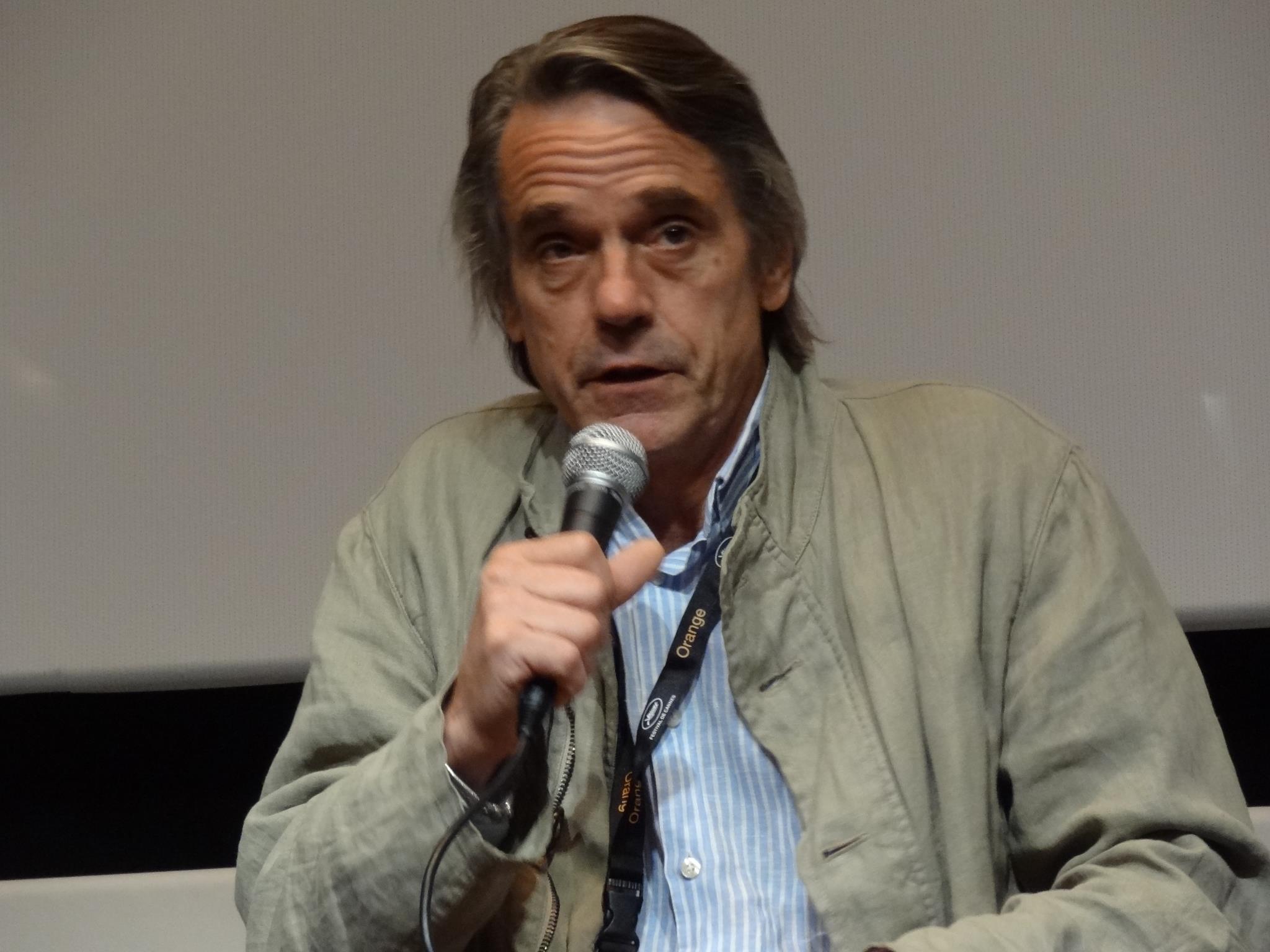
On May 21st, 2012 at the 65th Cannes Film Festival, docu-director Candida Brady and Academy Award-winning actor Jeremy Irons presented their film ‘TRASHED’ (2012) in the Salle Bunuel theater to press. The film is about the horrific state of plastic and garbage, the ever looming and impossible to ignore eco-crises of our planet, which is being consumed by its own waste.

Q and A with Jeremy Irons.

Q: Where does your desire to make this environmental documentary come from?

IRONS: It comes from a desire to do something more useful than just making endless entertainment films. I have the opportunity, as we all do, in some small way raise people’s consciousness about a particular problem. The particular problem we chose was trash. All Im really doing is what I can do to hopefully encourage a different way of living. I think we can all do it in our different spheres, and if everybody did whatever they could do to improve whatever, then I think things might begin to change. But we all know that’s a responsibility and I was delighted when Candida suggested we make a film about trash and the problems of trash, to learn myself and to do whatever I could to push that film forward.

Q: You think that Cannes Film Festival is the best place to talk about waste and garbage?

IRONS: I think beggars cant be choosers. I think there are a lot of journalists here in Cannes and there are a lot of people watching films. I think wherever you can put a message across that you believe is an important message and can communicate with other communicators, in other words yourselves, its got to be a good thing to do. I think it also gives a little bit more relevance to Cannes also. You know, we watch Sacha Baron Cohen and we have a laugh. But actually, why don’t we spend a few moments of our dinner parties or at our drinks parties discussing them as well as whether Brad Pitt needs a haircut or not?

IRONS CONT’D: I do think there’s such a huge lobby for making plastics. I mean we have this enormous petro-chemical industry and bi-products of plastic makers, a lot of people, a lot of money, and it seems to me outrageous that governments everywhere don’t take care of us. It’s what they should be doing. It’s why we elect them, that’s why we pay them taxes. Why are they not monitoring what is going on, what is going into the oceans, what is going into our stomach, what is going into the air. I think it’s outrageous and we know that it’s us that makes government do what they have to do, which is another reason I wanted to make this film and why I’m terribly glad you’ve come, because it makes me really angry. You know, they worry about things which don’t matter a damn, and then things which really affect our lives and our children’s lives, they appear to be blind to and I hope this film will in some small way, make them realize there our future decisions that have to be made, that have to be taken seriously and that the easy option about allowing incinerators to be built because it gets rid of the problem must be looked at seriously. They must take responsibility for our votes.

Q: I was wondering if you could say about an experience that turned you onto this subject?

IRONS: It was really Candy who had done a lot of research and is a documentary filmmaker and when we were discussing what we would make a film about. But I am very aware of my country, because we have to start at home, but as I travel about there are different methods of where you put your rubbish and what is disposable and what is recyclable and what is not and it’s totally confusing: ‘You know, this bit of plastic, is it recyclable? What if it turns out that the bottle is but the cap isn’t? So what do I do then, do I put this here or there? And what about this glass?’ We just need very simple instructions which should be uniform across the globe, so whether or not we do it is one thing, but at least we should know what we should be doing and I found in England that each council was different, each town was different and the same in the US and the same wherever I traveled. I don’t think that’s necessary and that was one reason I thought we should make this film. Also, I think there’s a lot of money, also in trash, which I know is why it’s very difficult to encourage these recycling systems into production. There’s a lot of people making a huge amount of money out of trash, burning it and burying it. So, there’s a lot of people a fight and we have to make people care and make the subject known and public in order to fight this trash lobby.

Q: I wanted to know how much were you committed in the prep for the documentary? How involved were you in the script and research?

IRONS: Not at all in the script. A little bit of feed in when I was talking to people, a little with financing and a little to get Vangelis to do the music and to be there on the screen. But that was all. The research and the construction of it was all Candida Brady.

Q: How is the nonsmoking going? And when you were in London, you were smoking something but it didn’t look like a cigarette so I didn’t know what that was?

IRONS: The nonsmoking is a disaster, but I’m now conscious of every filter, which is a nightmare so some of the pleasure has been destroyed. You’re very perceptive because there was a part in the film, which was supposed to have been cut but obviously one scene remains, so but you know, we’re all sinners. But that doesn’t mean we can’t do anything about it. Just because I produce these horrible filters which kill water flees, I can still do something about it.

IRONS CONT’D: But what we’re trying to do is spearhead the information to the right people. I hope that government members will see it, and local government members when they are giving their consents they will have some information in their heads. I think it’s very important that schools see it, because it’s the new generation who are going to be developing their habits of living while we are all set in our ways. But you know if we can encourage them to realize the idiocy of creating a huge amount of garbage, then things will change. I mean, change happens really slowly. You just have to keep at it, and the worst thing is to accept how things are in whatever state, politically, ecologically, whatever. You’ve got to say: ‘This is wrong. Lets try and change it.’ And how you educate people it’s difficult. Maybe we could have told this story in an animated way so kids rapt to it. I sometimes think we have too much information, too many talking heads, and yet one wants to get so much information in there. You know, we’re playing to an educated audience and it’s the educated audience who will lead the others to change their ways so we have to go towards good solid factual factoid. It’s tricky. I don’t know how one does it. I just think you have to keep trying. I myself recycle. I do have bonfires. I still burn my garden waste, which I think is alright because we’ve been doing that for hundreds of years.

Transcribed by: Vanessa McMahon

Emmys 2012: Jeremy Irons is the Original Mob Boss (Q&A)

From The Hollywood Reporter

The actor channels his innate “touch of melancholia” to create an addictive crime-family patriarch in Showtime’s epic drama “The Borgias.”

11:44 AM PDT 6/6/2012

by Marisa Guthrie

This story first appeared in the June 2012 Special Emmy Issue of The Hollywood Reporter.

A rainy April afternoon in New York finds Jeremy Irons, 63, chain-smoking hand-rolled cigarettes (he buys the tobacco at airport duty free shops) in his suite at the Upper East Side boutique Lowell Hotel. He is enjoying a moment away from his peripatetic work schedule: In addition to playing the lead on Showtime’s The Borgias, which shoots in Budapest, the British Oscar winner (Reversal of Fortune) also has completed work on Bille August’s Night Train to Lisbon, shot on location in Portugal, and is shooting Richard LaGravenese’s Beautiful Creatures in New Orleans. With his signature candor, Irons shares his take on the “bullshit” of fame, how a revealing dinner at the Vatican prepped him for his role as Renaissance Pope Rodrigo Borgia and the two American actors who have intimidated him.

The Hollywood Reporter: What drives you to keep working?

Jeremy Irons: It’s a bit of a drug. But it’s important that you have a very strong life with other passions that counter balances the work so that you know why you’re working. Fame and success are valueless. We have a culture where everybody wants to be famous. And you think, why? Because we’re being told that will bring happiness. And it’s all bullshit. Admittedly, it’s very nice wandering down the street and people saying, “Hi, love your work”; and going into a restaurant and people saying, “Oh, we’ll find you a table.” The whole world’s your village. But you have to put up with everybody wanting to know your business.

THR: How long do you see yourself playing Rodrigo Borgia?

Irons: I ask myself that every day. And I ask [creator and executive producer] Neil Jordan that every day. When they originally asked me to do it, they said, “Listen, it might run for four years.” And I gasped! But Neil is a filmmaker. So in a way, he’s educating himself to write for television. This makes the series a little slower than Showtime would like. But we’ve picked it up a bit, shorter scenes and more [snaps fingers] in season two.

THR: Do you like Borgia as a character?

Irons: You can’t play someone and not like him. You are inside him, and they are you. I like Borgia’s appetite; I like that he eats life, won’t take shit and that he has flaws. He’s not a good guy, he’s not a bad guy, he’s a guy. He’s power hungry; he doesn’t want to waste his time in this life. I share that with him. I’m not power hungry, just easily bored and want to make the most of the four score years and 10, if I’m lucky, while I’m on the planet.

THR: I read somewhere that when Borgias started shooting, you had dinner with an archbishop. What was that experience like?

Irons: Yes, it was at the Vatican. When he asked me in the door, he said, “You are now safe; no one can get you here; you are diplomatically immune.” I thought, “Well, that’s nice to know; I’ll put that address in my book.” We shared a bottle of wine in his kitchen, which was pretty spartan. And around 11 o’clock, we went to the roof to have a cigarette, and he pointed over the rooftops to a cell of lighted windows and said, “There’s Rodrigo Borgias’ modern counterpart; he’s still awake, doesn’t sleep much, sits and plays his piano.” Then we went downstairs, by which time [the archbishop’s] mistress had arrived.

THR: You’re allowed to have a mistress in the Vatican?

Irons: It would seem so.

THR: Who was this person?

Irons: It would be wrong to mention names. But all I can say is that nothing really has changed. We now think that the pope is next to God. Well, in those days the pope was head of the Church but behaved as any man would behave — or most men would behave.

THR: Are you Catholic?

Irons: Not really. I was baptized Church of England. My children are Catholic; my wife is Catholic. But I’m not really a club member, never have been. I go to Mass because I enjoy times of reflection. But I’m not a regular at all.

THR: How pigeonholed have you felt as an actor?

Irons: You’re always pigeonholed a bit. I do play the occasional American character, but I’m thought of as an “English actor.” I’m tall, slim and do bring a certain thing. You can’t get away from that. I’m never going to be cast as a sort of Danny DeVito character.

THR: Well, you have done a few projects with comedic elements.

Irons: Glad you’ve noticed! I seem to be known as enigmatic: Is he good, is he bad? Can we trust him, or is he just evil?

THR: But certainly no one has accused you of being Mr. Sunshine.

Irons: No, but I can show you a few films where I was Mr. Sunshine — although there’s always a touch of melancholia. I try not to put my feet in the footsteps that I’ve been in before. All actors have a certain smell. You can say that’s a Jeremy Irons role, that’s an Al Pacino role, or that’s a De Niro role. My biggest competition for roles is maybe Alan Rickman, in a way, or Bill Hurt. It’s all about the work you’ve done that adds up to your aroma.

THR: You’ve worked opposite fellow Oscar winners Meryl Streep, Kevin Spacey and Helen Mirren. Do better actors make you better?

Irons: Yes. It’s like tennis; it ups your game if you have someone playing good tennis against you.

THR: Have you ever been intimidated by one of your co-stars?

Irons: De Niro used to intimidate me. He doesn’t give any quarter, but he’s mellowed now. And Al Pacino is quite intimidating.

THR: Any leading ladies?

Irons: Intimidated me? No.

Email: Marisa.Guthrie@thr.com; Twitter: @MarisaGuthrie

Oscar Winning ‘Die Hard’ Actor – ‘Trashed’ in Bishop’s Cleeve

From This Is Gloucestershire

Oscar winning Die Hard actor – Trashed in Bishop’s Cleeve

Saturday, May 26, 2012

Gloucestershire Echo

OSCAR winning actor Jeremy Irons left a Bishop’s Cleeve resident stunned when he pulled up on his motorbike outside her house.

The Die Hard film star is a keen environmentalist and visited the village to find out about its nearby toxic waste dump, Wingmoor Farm.

He was filmed speaking to Safety in Waste and Rubbish Disposal (SWARD ) campaigner, Barbara Farmer.

The documentary, Trashed, which features footage of the village and Cleeve Hill, has now been selected for a special screening at Cannes international film festival.

Barbara said: “It was quite surreal to have Jeremy Irons motorcycle up to my house and knock on my door. He spent a lot of time talking with me as the cameras rolled, finding out all about the blight of having thousands of tonnes of toxic incinerator chimney ash dumped on the edge of our villages in open conditions.

“He was astounded by the scale of the hazardous landfill so close to a residential area and in such a beauty spot.”

Blenheim Films came to visit Bishop’s Cleeve as part of a tour of worldwide locations that have been blighted by waste disposal.

The crew spent a day filming the area then came back to film the protest in September 2011 when SWARD held a protest to coincide with the Gloucestershire County Council Planning Committee’s site visit.

“I was astonished to get a text from the director telling me that she was sitting with Vangelis, who has written the music for the film, watching my clip,” Barbara said.

“So far we’ve only seen the trailer, which included a brief glimpse of Jeremy Irons with Cleeve Hill behind him. We can’t wait to see the finished film.”

SWARD is delighted that Trashed has been selected for Cannes.

Barbara said: “”It is very apt timing. Gloucestershire faces the awful prospect of a massive incinerator at Javelin Park. If this application is granted we will have to feed the burner 24 hours a day seven days a week with precious resources that can’t be replaced and at a terrible cost to our environment.

“Anyone who thinks burning rubbish is a safe and clean option should come to see the vast quantities of toxic ash that are dumped at Wingmoor.

“Trashed” shows why we have to simply stop producing waste and start realising that on a finite planet what we throw away comes back to haunt us.”

The trailer can be viewed at Trashedfilm.com

Max Irons: On the Set of ‘The Host’

See video of Max on the set of The HostHERE

Text from Dread Central:

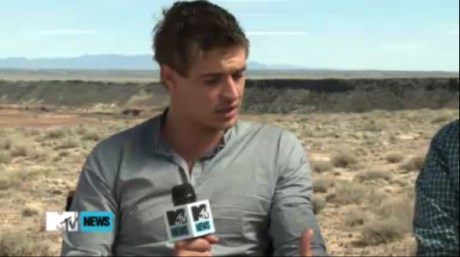
MTV News visited the set of Andrew Niccol’s big-screen adaptation of Stephenie Meyer’s first adult novel, The Host, last month and brought back a behind-the-scenes peek at the film along with a few more details about what we can expect when it hits theatres on March 29, 2013.

The Host is the story of Melanie Stryder (Saoirse Ronan), one of the last humans to have avoided capture by an alien race called Souls. The Souls operate more like parasites in that they invade human bodies and erase their personalities. The film follows the unlikely partnership of Melanie and her parasite as they seek out the last of Melanie’s human relatives and her love, Jared (Max Irons). It also stars Jake Abel, William Hurt, and Diane Kruger.

For Ronan, whose character runs down corridors and jumps off tall precipices, her dual roles are a lot more physical than she expected, but she has relished the opportunity to flex those new action-type muscles. For his part, Irons is enjoying the struggle Jared has in wanting to be close to Melanie but knowing in the back of his mind that he can’t. Irons explained. “He wants to hold her, but the rational part of his mind is saying she needs to be killed.”

Author Meyer is involved in the production, and being on the cave sets was particularly magical for her. “It was so awesome. The cave set was enormous, it was vast, they’re just so cool, so much fun to walk on,” Meyer enthused. “It was kind of like someone built something out of your imagination just for you.”

Synopsis:
The Host is a riveting story about the survival of love and the human spirit in a time of war. Our world has been invaded by an unseen enemy. Humans become hosts for these invaders, their minds taken over while their bodies remain intact. Most of humanity has succumbed. When Melanie, one of the few remaining “wild” humans, is captured, she is certain it is her end. Wanderer, the invading “soul” who has been given Melanie’s body, was warned about the challenges of living inside a human: the overwhelming emotions, the glut of senses, the too-vivid memories. But there was one difficulty Wanderer didn’t expect: the former tenant of her body refusing to relinquish possession of her mind. When outside forces make Wanderer and Melanie unwilling allies, they set off on a dangerous and uncertain search for the man they both love.

This slideshow requires JavaScript.

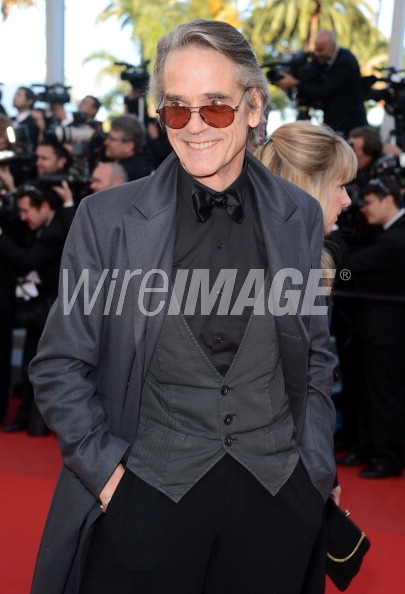
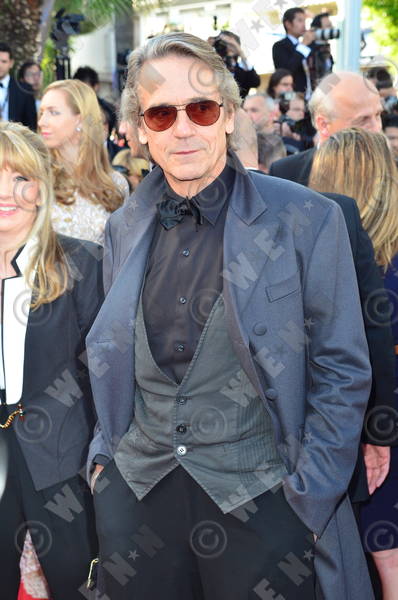
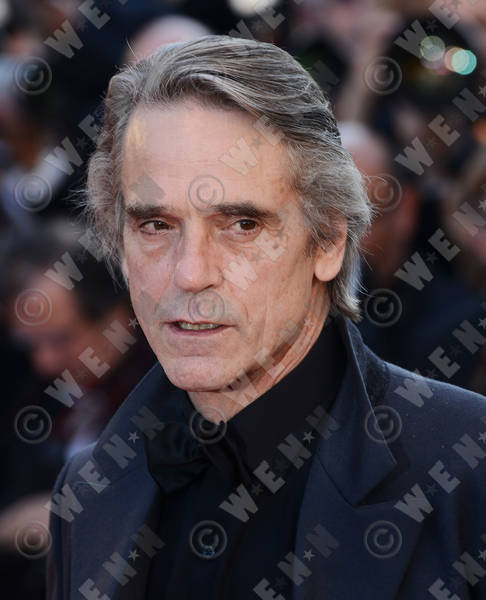
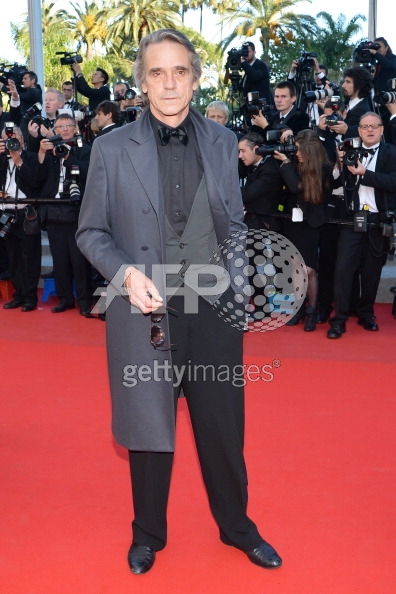
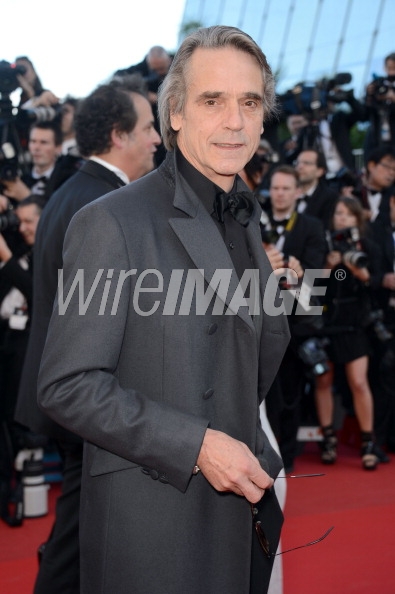
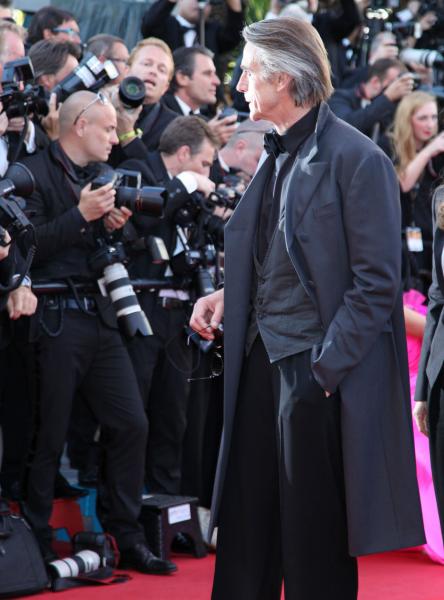
Jeremy Irons at the 2012 Cannes Film Festival

Jeremy was in Cannes to support Trashed.

Reviews of Trashed from Variety, The Hollywood Reporter and The Telegraph.

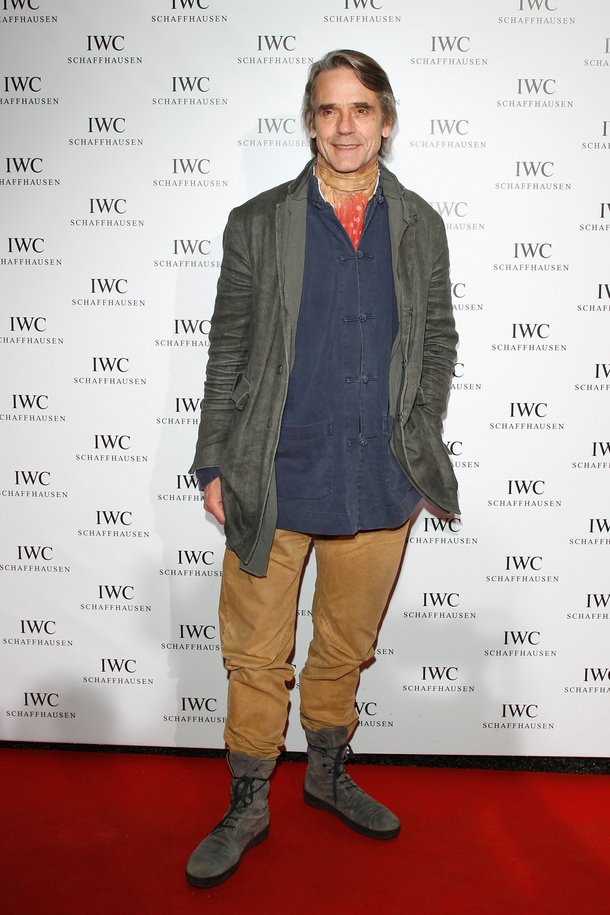
On 21 May, he attended the IWC and Finch’s Quarterly Review Annual Filmmakers Dinner.

On 22 May, he attended the premiere of Trashed with the film’s director, Candida Brady.

Jeremy was also reportedly spotted at Paul Allen’s Cannes party.

Jeremy Irons, Quelle Classe! – from Get the Look

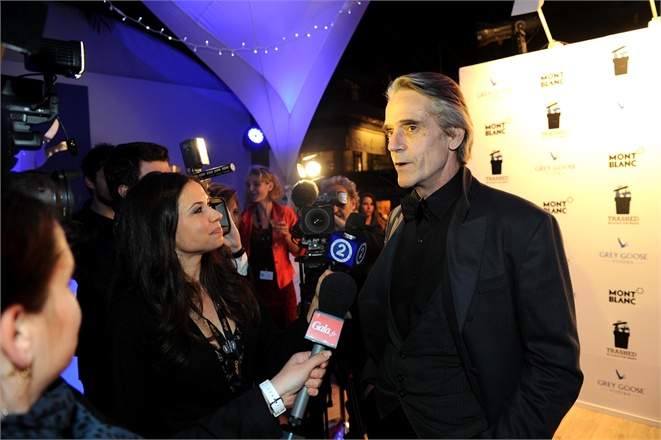
Jeremy Irons at the Grey Goose Carré party in Cannes in honor of the documentary Trashed – from Vogue Italia

Photos by Michael Buckner, Gareth Cattermole, George Pimentel, Venturelli, Alberto Pizzoli.

This slideshow requires JavaScript.

IWC And Finch’s Quarterly Review Annual Filmmakers Dinner – Cocktail Reception

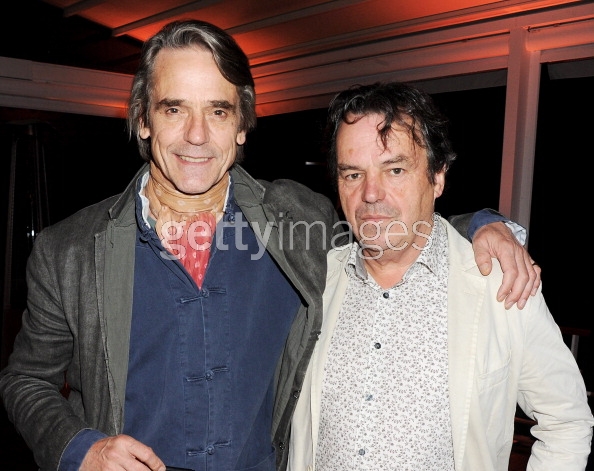
ANTIBES, FRANCE – MAY 21: Actor Jeremy Irons (L) and director Neil Jordan attend the IWC and Finch’s Quarterly Review Annual Filmmakers Dinner at Hotel Du Cap-Eden Roc on May 21, 2012 in Antibes, France. (Photos by Dave M. Benett/Getty Images)

‘The Words’ Official Trailer

CBS Films has revealed the trailer for The Words, the September 21 release starring Bradley Cooper, Jeremy Irons, Zoe Saldana, Dennis Quaid, Olivia Wilde, Ben Barnes, John Hannah, Nora Arnezeder and J.K. Simmons.

The Brian Klugman and Lee Sternthal film follows a writer (Cooper) who, at the peak of his literary success, discovers the price he must pay for stealing another man’s work.