Jeremy Irons – The Sunday Conversation – LA Times

Source

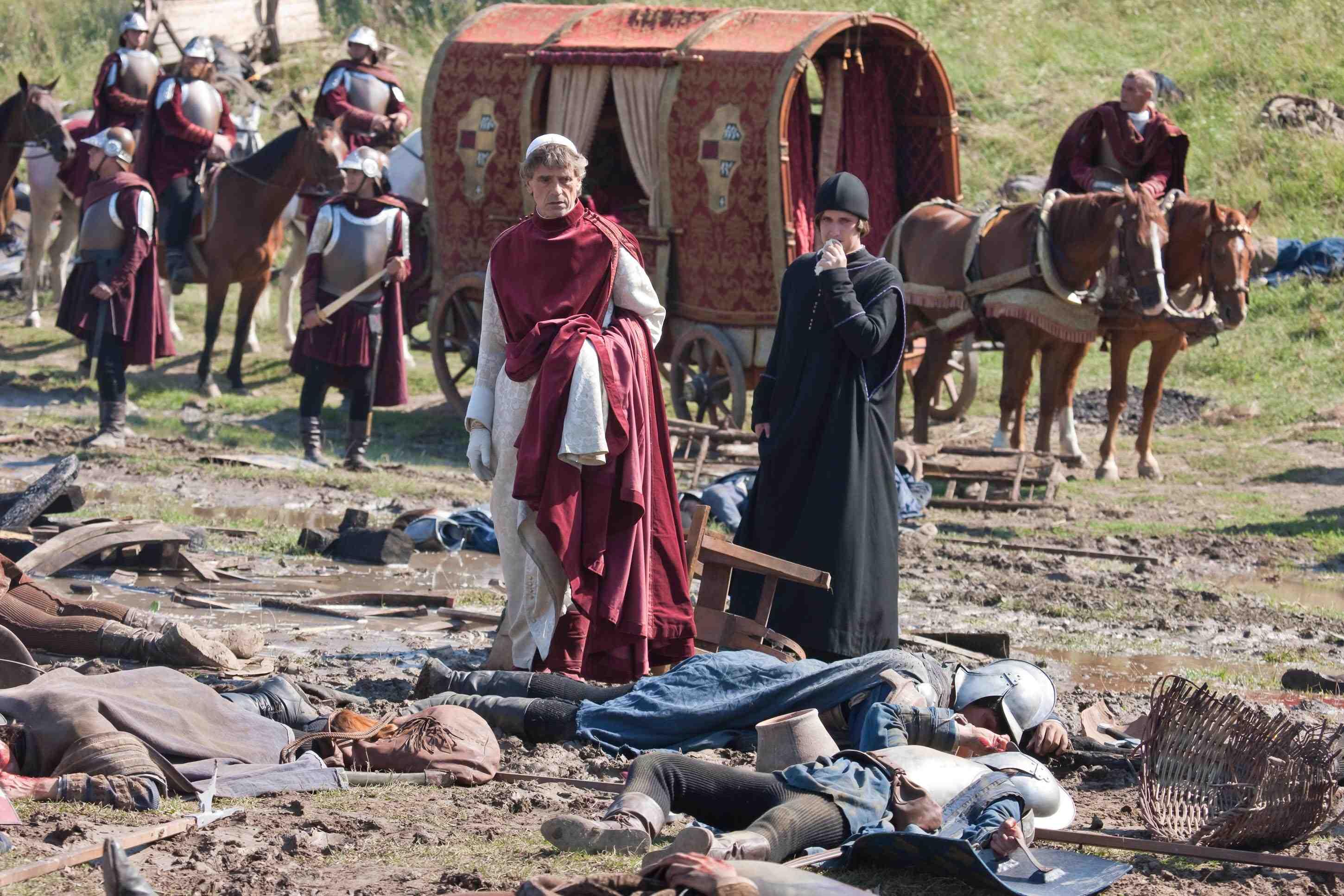
The Sunday Conversation: Jeremy Irons digs in to ‘Borgias’ darkness

As the brutal pope in the Showtime drama, the actor enjoys the play of contradictions that he says mirrors the real world.

Jeremy IronsActor Jeremy Irons (Carolyn Cole / Los Angeles Times / May 17, 2012)
By Irene Lacher, Special to the Los Angeles TimesMay 20, 2012

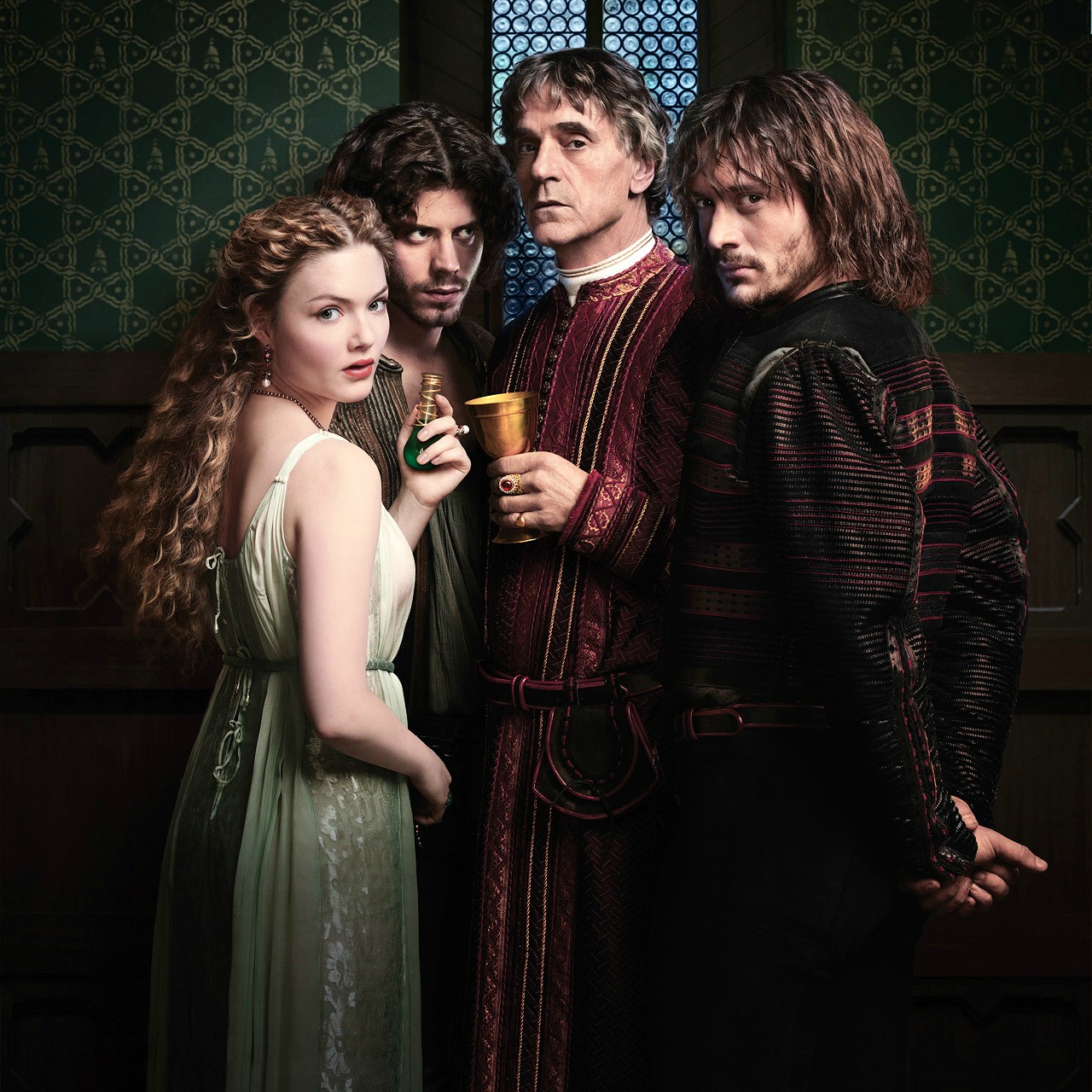
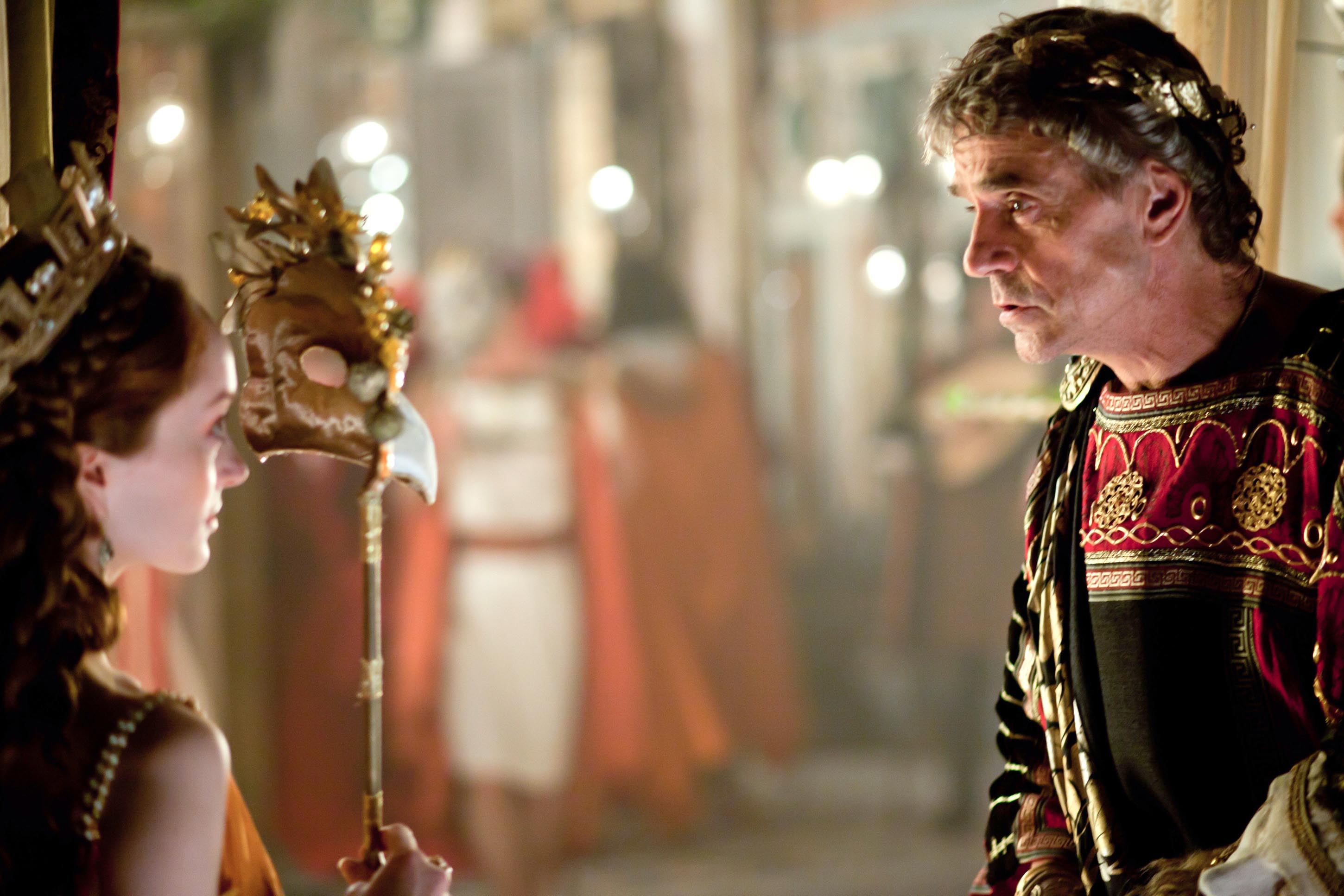
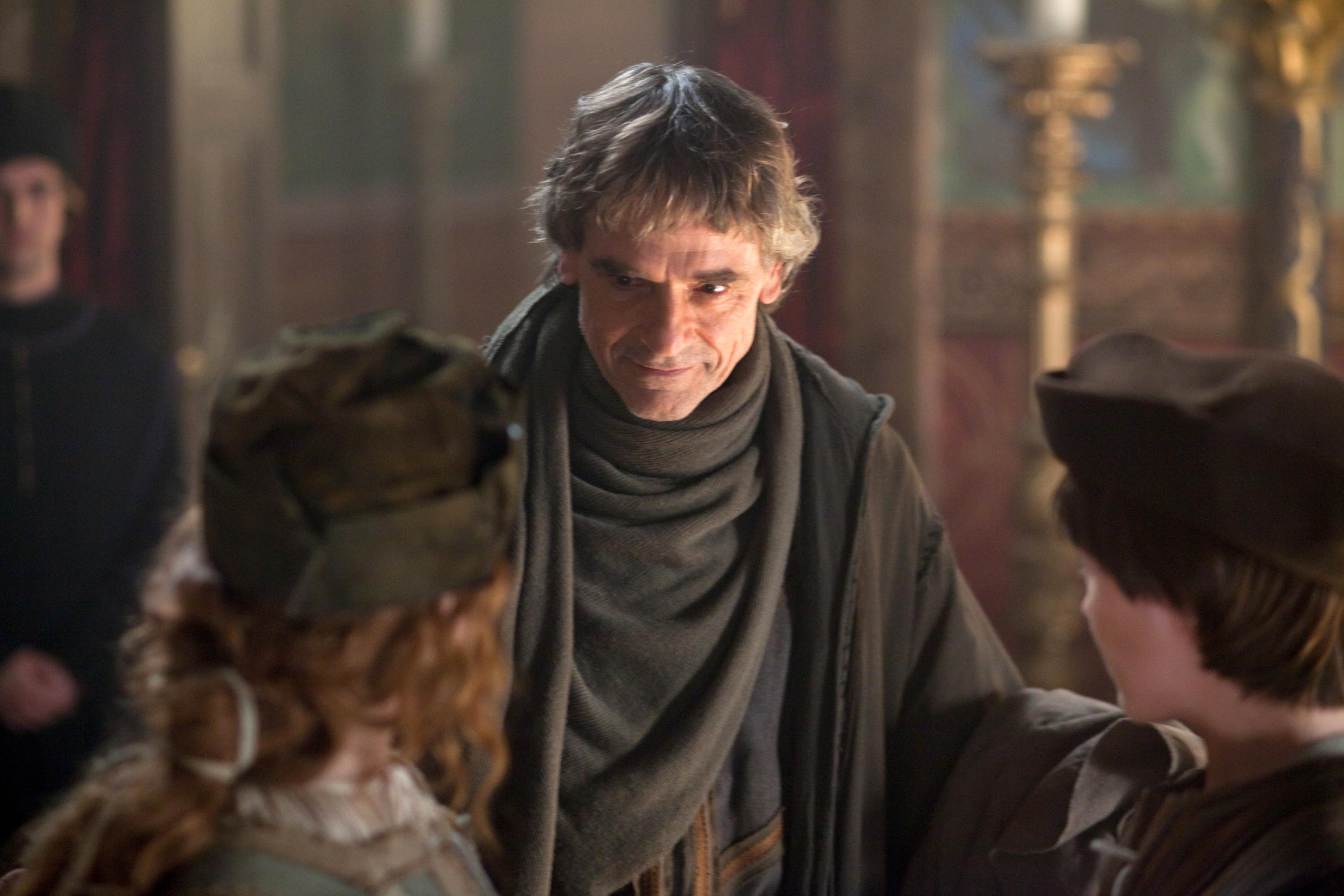
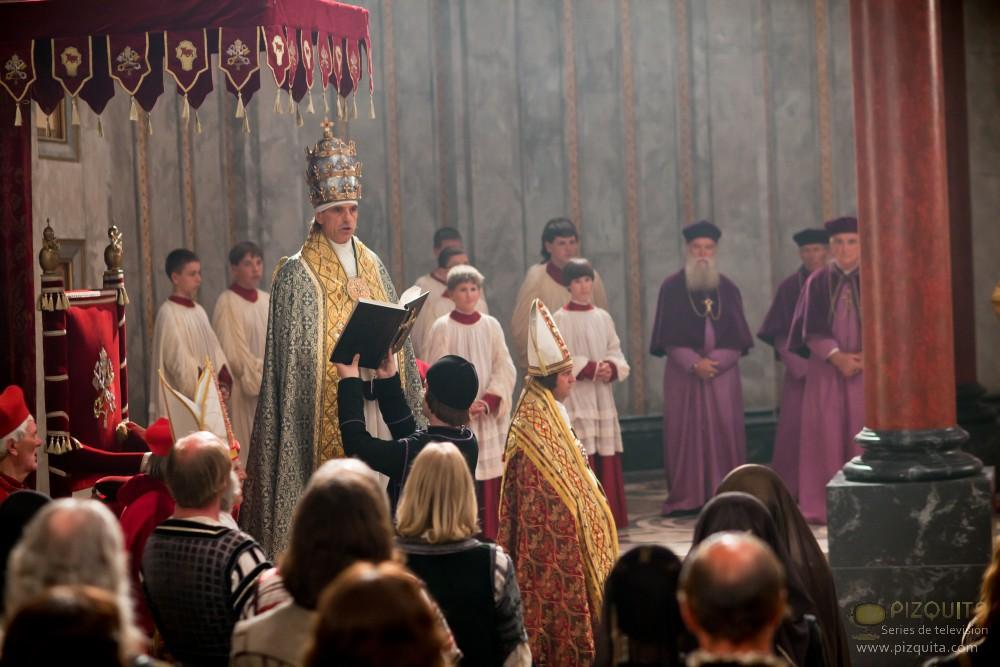
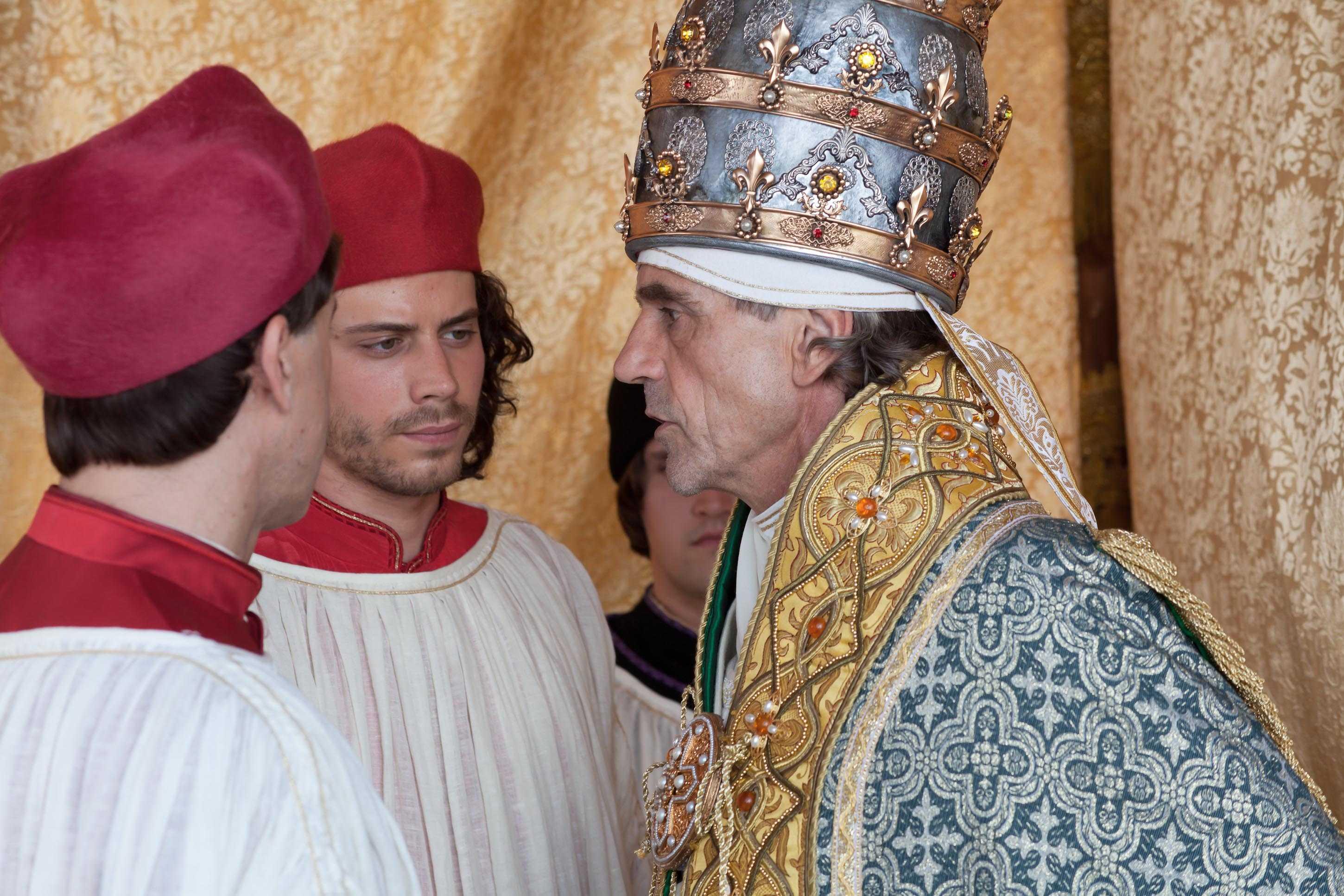
Jeremy Irons stars as the ruthless Rodrigo Borgia, who became Pope Alexander VI, in Showtime‘s period drama“The Borgias,” now in its second season.

You really seem like you’re having fun with this role.

I’m glad about that. I’ve always believed that in the theater or movies, whatever, the audience’s enjoyment is increased if the actors seem to be enjoying what they’re doing.

What’s fun about the Borgia pope?

The great thing about doing series television is you have time. I’ve had now 19 or 20 hours to explore this character, and that means that Neil Jordan, the writer, can write a character that has inconsistencies, that has enigmatic qualities that you wouldn’t be able to explore in the shortened period of a film. So it’s great fun to play all the contradictions, which most real-life people have and certainly Pope Alexander had.

Do you prefer television?

No, I don’t prefer television, but it does allow you to work in a certain way that film sometimes doesn’t because film only has 11/2 to 2 hours to tell a story. And quite honestly, we could be making film with “The Borgias.” The process is exactly the same, the standards are exactly the same, if not higher in some cases.

What I prefer is to work on a character who interests me and a story that is a good story with good backup, and that could be in theater, it could be film, it could be television. The medium in a way doesn’t matter.

How does your character compare to our understanding of the Borgia pope?

I think he’s pretty accurate. Facts are very difficult to get. And we’re talking about 600 years ago when there was no reportage. What comes down to us is, most of it is the propaganda of the succeeding pope. He tried to completely ruin his reputation, so a lot that comes down to us is spin on that. [Pope Alexander] was, however, a man very different from how we would imagine a modern-day pope, but then life was different and politics were different and the whole power structure within Europe was different, the position of the Catholic Church was different. But that aside, there are huge parallels with today; sometimes I think the Vatican then was not that different from Washington now. The Vatican then was a political and military power with the monarch being the pope, and he was much more of a monarch and a pope than the present pope, who isn’t a monarch at all.

He does seem to be pious. How did he reconcile that with murder?

You could ask the same question of George [W.] Bush really, who would say he’s a Christian man and yet who killed many civilians in Iraq for pragmatic reasons.

Can’t you make the distinction between war and murder?

I don’t believe you can. When you are protecting interests outside your country, then I’m not sure there’s a great difference actually. I think it’s dressed up in different words. You are subjecting people, killing them if you like, for your own reasons pragmatically, whether it be to create influence or to protect power lines or oil lines or whatever.

And this season is even darker?

I don’t know if it’s darker. The first season we laid out the world and the second season it begins to move. The pope I think you see him moving but also trying to mold his children into what he wants them to be, what will be useful. There’s no doubt that Pope Alexander dreamt of the papacy becoming hereditary and of uniting as much of Italy as he could, Northern Italy, anyway. Which is not so odd. Most kings are succeeded by their children, and that’s what he was trying to do

Were you pleased when your sons decided to become actors?

They didn’t both. My elder son [Samuel] is a photographer. He acted when he was very young. He acted in a movie with me when he was 10 and did a stage play with me when he was 6, which was perhaps a misguided decision on my part in that he was aware of what I call the bull surrounding my profession and I wanted him to be aware of the real nature of it, and I thought that if he was able to experience that, he would understand the importance or not of what surrounded me, the fame, etc., etc., celebrity-ness. By his admission, that probably put him off being an actor.

But Max has hung in there.

I think he was 15 or 16 before he did his first film, and it was a tiny part and nobody knew who he was. But his passion was always to do it, so you can only wish your children joy when they have a passion to do something.

You have voiced concern over the way the industry uses up pretty young people and spits them out.

Yes, I think it’s a problem. I was lucky enough to have my first 10 years as an actor working in theater, where I could learn and grow and practice and fail and it did not matter too much. I think when you’re starting out and it’s very public — he’s now on his third film — in order to grow as an actor, you need to allow yourself the permission to fail. And you can do that in theater and you can risk in a certain way which will make you grow, if you allow yourself that permission. When you’re working in a movie that has a big budget, an awful lot of people are very keen you shouldn’t fail, so it’s a much harder route.

I’ve read that you have seven homes in England and Ireland. Is that right?

I have seven buildings that I have something to do with, yes. Other people live in them, other family members and things.

I was going to ask how it worked. You don’t rotate among seven homes?

No, I rotate among three homes.

You must be much better organized than I am.

It’s tough, isn’t it? The thing you want is always in the other one. It is tough, and I have a bit of help, but if you’re a person who likes to live a private life, who has certain needs — in other words, I have to be in London sometimes; I have to be in England sometimes — but when I have time off I go to Ireland where my horses are and I can really chill and relax.
calendar@latimes.com

Copyright © 2012, Los Angeles Times

‘Trashed’ to be screened at Cannes Film Festival 2012

Jeremy Irons will be at the 2012 Cannes Film Festival to promote Trashed.

The 2012 Cannes Film Festival runs between 16-27 May.  Trashed will likely be screened on 22 May.

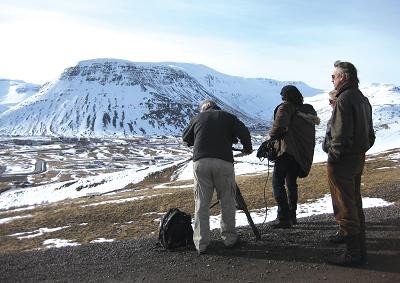
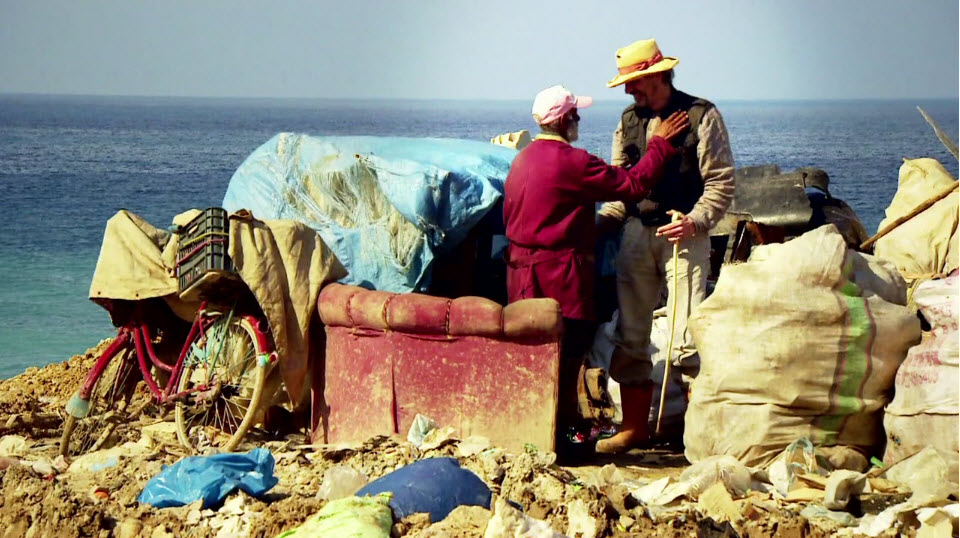
UK filmmaker Candida Brady’s documentary Trashed is about the environment and the world’s garbage, featuring actor Jeremy Irons as he travels the globe – stopping off in Iceland, Vietnam and Brazil – looking at the problem. The film will receive a special screening.

View in HD on Vimeo

The Next “Inconvenient Truth”? Jeremy Irons Talks New Cannes Doc “Trashed”

This slideshow requires JavaScript.

Jeremy Irons on CBS This Morning – 23 April 2012

Video of Jeremy on the CBS This Morning show – 23 April 2012

This slideshow requires JavaScript.

Jeremy Irons on ‘The View’ 23 April 2012

This slideshow requires JavaScript.

Jeremy Irons in People Magazine April 16, 2012

Jeremy Irons is in the April 16, 2012 issue of People Magazine:

Video of Jeremy on location for the People Magazine shoot.

On location for the People Magazine shoot at Griffith Park

Jeremy Irons and Sinead Cusack at BAM

From BAM Scene

In March 2012, Friends of BAM were invited to join Friends of BAM Chairs Sinead Cusack and Jeremy Irons for a special screening of their 1988 film Stealing Beauty. This coming of age story explores the relationships of Lucy, an American teenager visiting Tuscany, and the eccentric residents she encounters, including Irons as a dying playwright and Cusack as one of her hosts. The couple recounted their experience of making the film in an exclusive introduction to the audience.

This slideshow requires JavaScript.

Jeremy Irons Reads TS Eliot’s ‘The Waste Land’ BBC Radio 4

Complete audio of The Waste Land, read by Jeremy Irons and Eileen Atkins…

Click on the audio player below:

Source

Friday 30 March 2012

2:15 – 3:00 p.m. (GMT) on BBC Radio 4

Radio Times review by: Laurence Joyce

Thank heavens for Ezra Pound! Without his artistic intervention TS Eliot’s modernist poetic masterpiece would have been called He Do the Police in Different Voices instead of The Waste Land. This we learn in the introductory contributions from the Archbishop of Canterbury Rowan Williams, Jackie Kay, Matthew Hollis and Sean O’Brien that set Eliot’s complex and multi-layered work in its literary and historical context.

But it is the reading of the text itself by Jeremy Irons and Eileen Atkins that is most enlightening for anyone who has ever struggled to catch Eliot’s drift. Their measured delivery, never overdone, captures the poem’s bleak emotional landscape, breathing life into its panoramic sweep and mundane detail, with Atkins chillingly perfect in Death by Water.


About this programme

Eileen Atkins and Jeremy Irons read the poem by TS Eliot, featuring an introduction by the Archbishop of Canterbury Rowan Williams, Jackie Kay, Matthew Hollis and Sean O’Brien. The author’s seminal work is arguably one of the most influential of the 20th century, and is split into five parts – The Burial of the Dead, A Game of Chess, The Fire Sermon, Death by Water and What the Thunder Said.

Cast and crew

Cast

Reader
Eileen Atkins
Reader
Jeremy Irons
Contributor
Rowan Williams
Contributor
Jackie Kay
Contributor
Matthew Hollis
Contributor
Sean O’Brien

Crew

Producer
Susan Roberts
Writer
TS Eliot


Watch ‘The Borgias’ Season 2 Premiere Full Episode

Watch on YouTube

Also watch on Xfinity TV

This slideshow requires JavaScript.

‘The Borgias’ – Season 2 Promo Pics and Stills

Scroll down for the gallery. Click on the thumbnails and permalink for full sized images.

The Borgias returns to Showtime on Sunday 8 April 2012 for Season 2 with its first episode entitled “The Borgia Bull”.

This slideshow requires JavaScript.

Jeremy Irons is back as bad guy on ‘The Borgias’
BY LUAINE LEE
McClatchy Newspapers

British performer Jeremy Irons didn’t enter acting to become an actor. He joined to become a gypsy, he says.

“I had this sort of romantic vision of the life I wanted. I always say to kids now, ‘Find out what makes you happy and try to make a life that gives that to you, whatever that may be doing.’ I wanted a job which allowed me to move from society to society, not to be stuck in a conventional rat race,” he says in the courtyard of a hotel here on a chilly winter’s day.

He considered three options: life in the circus, the carnival or the theater. “I went and looked at circuses and carnivals, and I looked the accommodations they gave to the staff, and I thought, ‘I think I’m too middle-class for that. I don’t think I could live in something that small. I think maybe I’ll look at the theater.’ So I went and joined a theater in Canterbury when I was 18.”

The actor, who has illuminated the screen in films like “Reversal of Fortune,” “The Iron Mask” and “Die Hard: with a Vengeance,” returns Sunday as the evil Rodrigo in Showtime’s “The Borgias.”

It doesn’t matter whether Irons is playing the consummate hero in “The Man in the Iron Mask” or the Machiavellian pope in “The Borgias.”

“I’ve always been interested in gray,” says Irons, who is dressed in ochre pants, a khaki jacket trimmed in leather, and a black scarf circling his neck.

“I think we all have shades of gray in us. Nothing is really black and white. Yes, I play some people who carry their ‘bad sides’ to extremes, but I think that’s what the storyteller should do. What happens if you hit the edge of acceptable behavior or go over it? Why is that edge there? ‘Lolita’ is a perfect example — a man who broke social mores and acted in a way that was unacceptable. But why is it unacceptable? You see what happens to both him and the girl by the end of the picture, and you realize that that is why we say the behavior is wrong, because it destroys people.”

When he first started out he was hammering flats and holding candelabra on stage as part of the “scenery.” For a time he was even a busker. “That means I would sit on the street corners and play music for money,” he says.

“Performing was something I felt comfortable with, and I loved the communication, between an audience and the storytellers, in the same way I loved the communication when I was singing a song well … and I enjoyed the process.”

He enjoyed the process so much that he became an arch perfectionist — a curse to those around him, he says, as he rolls a brown cigarette in a machine he takes from his pocket.

“I realized that I was caring so much about my work and trying to make it absolutely perfect that — you will have to forgive my language here — there is a very thin line between a perfectionist and a complete (expletive). And I think I was falling over that line,” he says.

“Perfection, you can’t seek it because it doesn’t exist. I was worrying about it so much and making it fairly difficult for people who were working with me to work with me. And I sort of realized that the most important thing is to have fun with what you are doing. … Learn your lines, learn your character and then have fun with it. So I sort of pulled back and thought there is no way that an actor can make something perfect, you have no control over the finished project. Try and make it fun for everyone.”

Dissatisfied with his achievements, he actually quit for a while. “I turned 50. I found I was doing film work which I was bored by, and I wanted something that would absorb me completely. And I think it had something to do with the fact that in my 30s and 40s I was playing leading roles and then in my late 40s and 50s I was playing guest characters, and smaller roles. You don’t feel the same when you show up for a month instead of being there the whole time,” he says, rescuing a tea bag from his cup.

“I found a ruin (castle) in Ireland, and I spent two years just working on that. I had a large crew, but I was running it. And then I began to run out of money because I was paying 40 wages a week, and so I started acting again here and there over the next three years so six years over all. It was the greatest project I have done. I came back a slightly different person and started off again.”

He still owns the 15th century Kilcoe Castle and he and his wife of 34 years, actress Sinead Cusack, stay there when work permits. They have two grown sons. Sam is a photographer and Max, alas, is an actor. “My boys are 33 and 25, and you still ache for them if things go wrong,” he sighs.

© 2011 Belleville News-Democrat and news service sources. All Rights Reserved. http://www.bnd.com

Max Irons in ‘The Host’ – First Images and More

People magazine has released some great images of Soairse Ronan and Max Irons from The Host!

Open Road Films has set a March 29, 2013 release date (Easter weekend) for The Host.

Vodpod videos no longer available.

Plot synopsis from IMDB.com

Earth has been inhabited by an intellegent alien species known as “Souls.” Although an incredibly peaceful race, Souls can only survive by being inserted into a host body, taking control of their minds. In an effort to discover the secret whereabouts of some of the last remaining human resistances, the Soul Wanderer has been inserted into the human being Melanie Stryder (Saoirse Ronan) , who was captured while attempting to locate her family. After insertion, Wanderer comes to realize an unsettling fact- Melanie has not faded away in consciousness, and in fact is putting up walls in her mind to prevent her family from being found. As time passes and Wanderer tries to break Melanie’s walls, she begins to feel sympathetic toward the humans Melanie loves so dearly- her brother Jamie and her partner, Jared Howe (Max Irons). Wanderer becomes torn between loyalty to her own race, trying to give information to the argumentative Seeker assigned to her, and her blossoming love for the humans in her memories. As Wanderer’s and Melanies trust builds, they embark on a journey through the desert to find the resistance, nearly dying in the process. Wanderer awakens to find herself captive in the den of the enemy, and realizes her problems have just begun: the humans want her dead, the doctor wants to experiment on her, she may have accidentally lead the Seekers here, and she has become hopelessly in love with Jared, the man who belongs to the human she occupies. What follows is an inspiring story of friendship, love, and loyalty in which the bonds of human brotherhood are tested, and an alien discovers that in all the planets in the universe she has experienced, humans are the only race she would give her life to save. .