Jeremy Irons in Limerick for Kilcoe Castle Presentation

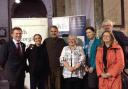
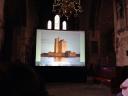
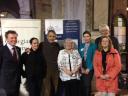
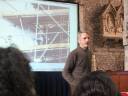
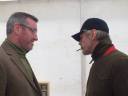
Jeremy Irons was at St. Mary’s Cathedral in Limerick, Ireland on Saturday 10 May 2014, to give a presentation on his restoration of Kilcoe Castle.  The event was part of the Irish Georgian Society and Limerick City and County Council’s traditional building skills exhibition at The Hunt Museum. Jeremy’s talk was originally scheduled to take place at The Hunt Museum but, due to the large number wanting to attend, the talk was moved to St. Mary’s Cathedral.

Scroll down to read two first-hand accounts of Jeremy’s presentation.

The best of Jeremy Irons in Limerick – from Limerick Today

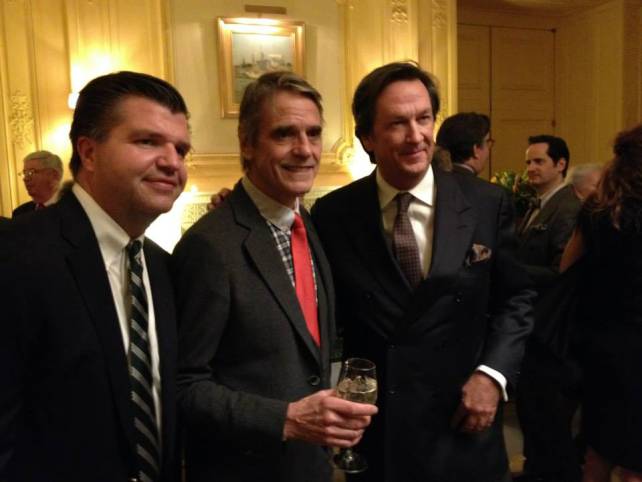
Thank you very much to Garry Irwin, David Morrissey, Kate O’Shea, Kate McLoughney, the Irish Georgian Society, The Hunt Museum, RumpusX, Emma Gilleece, Dr. Ursula Callaghan, David Sheehan, Deirdre Power, Tom Cassidy and all those who took the photos you see here. Scroll to the bottom for the gallery of individual photos and click on the thumbnails for enlargements.

This slideshow requires JavaScript.


———————————————————————————————————————-

The following account is by Garry Irwin

Jeremy Irons Talk – 10/05/2014 – St. Mary’s Cathedral, Limerick

Despite the terrible weather in Limerick that day, a good crowd was gathering around the cathedral in the lead up to the Jeremy Irons talk at noon.

The talk was due to be given in the Hunt Museum, but seeing as its biggest room holds about fifty people at a push, it was moved across the bridge to the 12th Century church, which accommodated the, I’m guessing, near two hundred people who braved the elements that day. Jeremy did say that if you thought the weather was bad here, you should have been in West Cork that morning! While some people did mention that they had come from even further afield to catch his talk that afternoon.

The presentation was to be a series of photographs detailing the restoration of the 15th Century Kilcoe Castle, but some technical gremlins saw to it that things did not go smoothly. So before it began proper, Jeremy said he would talk about how he came into possession of the castle. But before he even did that, he beckoned everybody at the back to fill seats at the front. He was miked up but still didn’t want it to feel like he was giving a formal lecture. So what did he do? He shot off to the side aisles of the church and started carrying chairs to the front of the nave, nearer where the screen was positioned. After doing this a number of times, people eventually helped him until all the chairs were in the middle aisle of the church. This may have annoyed those who had gone to the trouble of reserving their seats at the front! Then just as all the chairs were repositioned, Jeremy stood up and said, ‘seeing as we are in such a setting, I think it right that the last shall be first and the first shall be last’, before gesturing for those at the back to come fill the remaining seats. During the talk, Jeremy constantly moved up and down the centre aisle, so no-one was left out and everyone could hear him.

Jeremy gave a brief history of the castle, before telling the story of how it came into his possession. He got someone else to buy it for him, for fear the price would be jacked up if his name was attached to the purchase. Eventually the screen was working and the talk could begin, but unfortunately the pictures were not in order and Jeremy would have to prompt an unseen figure from behind the screen in order to move from one slide to the next, but this didn’t hamper the talk in any way.

He admitted that at the outset of the restoration he didn’t have a clue as to what would be required, how long it would take, or what the cost would be, but he did say that it ended up not unlike what would be needed on a film set, where lots of different moving parts come together for a single end goal.

Jeremy breezed through photograph after photograph, delighting in elucidating on each aspect of the restoration. Every time someone appeared in a picture Jeremy would go into who they were, where they came from, and what they did on site. It was very rare that someone popped up in a picture and he did not seem to know everything about them.

It seemed that during the restoration a wide range of people came onto the island where Kilcoe Castle is situated. Wandering German artists, French masonry students, local farmers driving ancient tractors, cranes brought in from Paris, wooden beams from English forests, woodworkers, metalworkers, electricians, sailors, and even musicians. All became part of the workforce, which itself became one big family during the six years of the restoration. At the beginning he said he was handing out brown envelopes for work done at the end of the week, but by the end he was one of the biggest employers in the local area and was giving out redundancies to people when the work was eventually finished.

While the large crowd was always attentive during the two hours of the talk, a number of tales went down well with those in the cathedral. Jeremy needed to get a number of large furniture items into the castle, and the only way to do this was through a gap in the roof at the very top. So they all had to be hoisted up and then carefully lowered into the building. The usual array of furniture was shown being brought up, and then they were shown inside where they were to be used. Sofas, a piano, and a life-size horse?

Someone in the audience had to ask, what was the story with the horse? So Jeremy went on to explain how he passed an antique shop and just knew he had to take the horse away. So after furiously rapping on the front of the shop until the owner appeared, the shop was closed, he asked how much it would be to take the horse of the owner’s hands? He was slightly taken aback by the figure that was he was given. So Jeremy and his friend (whose name I unfortunately can’t remember) went for a bit of a liquid lunch to mull it over. They eventually reasoned that they could use the horse as a mould, and after they had sold copies of this horse mould to people to put in their gardens or wherever, they would then surely make the money back with interest. So the horse was bought, but as of yet, hasn’t made them any money.

Another time Jeremy had been continuing his research, so as to aide the restoration in being as accurate as possible. One day as he looked up at his castle, he realised that the castellation was wrong. The castellation is the defensive parapets ringing the roof of the castle. He knew it would be something he could not unsee every time he looked upon it, so it would have to be changed. Jeremy’s wife said that was fine, but he would have to be the one to break it to the workers. So up he went to the finished roof were the workers were and told them that it would have to be redone. One of the workers commented, ‘the thing I hate about you actors, is your need for —– rehearsals.’ Jeremy never revealed the swearword that was used.

Lots of other little stories and asides were given. How Jeremy’s dog would often somehow climb up thirteen flights of scaffolding to join him at the top of the building. Or the time a worker (name escapes me again) decided to tell him that he was quitting after working there for years. Jeremy was surprised, and they organised to have a big session to give him a good send off. Come Monday morning though, he was back on site working. Jeremy went up to him and asked, ‘I thought you left?’, ‘I was only trying to see if I could get a pay rise out of you’, was the reply.

Jeremy also talked of how he was not a fan of some of the reporting that was done during the time of the restoration. How he had refused to talk to reporters about it while it was ongoing, yet they still found something to write about. He was not impressed when the castle was coined as his ‘pink erection.’ Two reasons; his is not nearly as impressive! Nor is the castle painted pink. He prefers to see it as a shade of ochre, and he ended the talk on a picture of the impressive fully restored castle and a lengthy round of applause from the appreciative audience.

After the talk, Jeremy took a number of questions from the crowd; he was asked about how the castle held up during the recent stormy weather; what help, if any, did he receive from the Irish government during the restoration. Here he went into his feelings about the bungling red tape and laws which do not engender a sense of historical understanding. How Ireland has so many worthy sites, but they are left in their state of ruin. As the clock ticked past two, Jeremy ducked outside for a quick cigarette as people lined up to give him a short word of thanks or to get a photograph with the star.

Jeremy Irons was giving a talk for the Irish Georgian Society, who were hosting a weekend of conservation and education awareness to do with Ireland’s architectural heritage. This was in association with the Hunt Museum, and the talk was held in Limerick’s St. Mary’s Cathedral.

Garry Irwin
————————————————————————————————————————

The following account is by David Morrissey:

Refurbishment of Kilcoe Castle
When: Saturday May 10th 2014 12pm-2pm
Where: St. Mary’s Cathedral, Limerick city.
Organiser: Irish Georgian Society I.G.S.
Admission: Free
Speaker: Jeremy Irons

A crowd of around a hundred people attended the amazing St. Mary’s cathedral in Limerick City for this exciting and in-depth account of Jeremy Irons’ complete refurbishment of his West Cork home, Kilcoe Castle. This presentation began in bizarre circumstances with a plethora of technical and seating issues to be ironed out before Jeremy could begin his detailed slide-show. With the waiting crowd assembled within the church, Jeremy entered the cathedral with great enthusiasm and vigour. Immediately he began to re-arrange the seating, constantly wanting to make the entire presentation less formal and more personal for everybody involved. He went to great lengths bringing anybody at the back of the congregation up to the front and filled up any available space so nobody would miss out. He also wanted to disband his microphone which he felt was hindering his communication but we convinced him otherwise so he continued with a less bulky headset microphone. After tweaking some technical issues with the laptop and projector finally the photographic extravaganza got underway.

Jeremy proceeded to tell us the history of the castle from its construction in 1450 through to the unsuccessful British attack on Kilcoe in the 1600’s and the transfer of ownership from local farmer James Caverly to Edward Samuel who eventually sold it to Mr. Irons. The presentation entailed a slide show of roughly 75-100 photos taken by Jeremy and with each slide he gave us a detailed narrative of the refurbishment process. The Oscar winning actor spoke with such energy and vitality about this project that he would stop on occasion reminiscing about certain people or characters who toiled on the castle. He rented a nearby field from a local farmer to create a storage yard for the scaffolding he bought, the crane he bought, and all the other necessary machinery he bought. Which the farmer only asked for ‘peanuts’ as payment as he said himself. He continued with many stories that only he would know.

For instance he told us that one day he gathered every worker on site and brought them to the top of the castle where he got the local Catholic priest to bless the project because he said if anybody got hurt during its refurbishment that it would tarnish his future home and diminish his love for the archaic building.

His passion for this project was amazing as he put astonishing detail into each phase of the construction process. Jeremy bought old steel cart wheels to straighten and make door hinges, he bought Irish oak timber which had been culled in the nearby Fota island forest to hand cut into load bearing joists and beams for the roof. He had every stone of the old castle power washed and re-pointed with mortar to a hands’ depth, he employed two beret-wearing French stone masons to cut arched windows from solid pieces of limestone. He explained his problems with eradicating dampness and his fixation with letting a building ‘breathe’.

A German man and woman wandered into Kilcoe Castle looking for some work, the woman a stone carver and her partner a carpenter who were part of a craftsman guild society looking to earn their way around Europe. Jeremy obliged and gave them board and accommodation along with a weekly wage, the woman carved a detailed head of the virgin Mary which Jeremy mounted on the east side of the castle. He explained that Catholic churches place the altar always situated at the east end of a church so it was only right that he mounted the bust of the virgin Mary on east facing side of Kilcoe.

To complete the refurbishment he bought items from an array of local and international sellers, bedroom pillows and lamps from India, quality floor rugs from Morocco some quarried stone and timber from England, the list is endless but Jeremy can recall each item and where it was bought.

This presentation was extraordinary in its opportunity to see Jeremy in full flow of passion for something he holds so dearly. His booming English voice and charismatic descriptive words along with his animated hand gestures gave us all wanting more after the minuscule two hours.

Question time afterwards gave some surprising results with the Oscar winner telling us that he received no grant from the Irish government and his disappointment with the poor system in Ireland for protection and restoration of ancient ruins.

Jeremy was very nice to pose for photographs after the presentation having a quiet word with each person.

A great event from the Irish Georgian society.

David Morrissey
————————————————————————————————————————-

Jeremy Irons on ‘Sunday with Miriam’

Miriam O’Callaghan interviewed Jeremy Irons and Lord David Puttnam on Friday 17 January 2014, at the Cork Airport, ahead of the ceremony at which Jeremy Irons was made an Honorary Corkman. The interview aired on Sunday 19 January on RTE Radio 1 on Sunday with Miriam.

Click on the audio player above to listen to the complete interview.

miriam rte jeremy and david puttnam

sunday with miriam photo

sunday with miriam

Sunday with Miriam is also available on iTunes as a free podcast.

itunes logo 2

Jeremy Irons Made Honorary Corkman

Jeremy Irons was made an Honorary Corkman, at a luncheon ceremony at the Rochestown Park Hotel. Jeremy received the award from last year’s recipient producer Lord David Puttnam.

Video and an article from Independent.ie – ‘Now I’m an honorary Corkman I am not quite such a blow in’

Video from Independent.ie

RTE Video – Jeremy Irons Made an Honorary Corkman at Cork People of the Year Awards

[Audio] Jeremy Irons Is Honorary Corkman – from thecork.ie

Audio of Jeremy’s reaction to the Honorary Corkman Award from redfm.ie

This slideshow requires JavaScript.

——————————————————————–

Irish Independent – by Ralph Riegel – 17 January 2014
CONSUMMATE English actor, Jeremy Irons (65), admitted he was “absolutely thrilled’ to be made an honorary Irishman.

The Academy Award winning star, who lives in Kilcoe Castle in west Cork with his Dublin-born wife, Sinead Cusack, was made an honorary Corkman as he received the award from fellow west Cork resident, ‘Chariots of Fire’ producer, Lord David Puttnam.

“It is a huge honour and a great pleasure. I am a blow in and I have been a blow in for 35 years. I suppose I will always be a blow in.”

“But at least now that I am an honorary Corkman I am not quite such a blow in. I am hoping that when I am stopped for going slightly over the speed limit the fact that I am an honorary Corkman may help tilt the balance. I am chuffed.”

He said he loves life in Ireland because people treat him as an ordinary person and not as a Hollywood celebrity.

“West Cork is a place where I ground myself. It is a place where I am surrounded by people who accept me for who I am and not for the fame that surrounds me.”

“That is very grounding for a person who works in a profession where you are constantly over-hyped. You know your true value is not the value that some people seem to attach to you.”

The actor has starred in some of the most critically acclaimed films of the past 30 years including ‘Reversal of Fortune’, ‘The Mission’ and ‘Lolita’ as well as blockbusters including ‘Die Hard With A Vengeance’ and ‘Kingdom of Heaven’.

“West Cork (offers) a very honest evaluation. People who live there work when they have to so as to live as they wish. People are much happier to be sitting talking, eating great food of which there is wonderful produce in west Cork and enjoying the wonderful countryside. It is a very special place on God’s earth.”

The star splits his time between west Cork, London and Oxfordshire but he said he hopes to spend even more time in Ireland.

“One of the advantages of being a blow in is that you can blow out every now and then. But I was swimming off (Kilcoe) Castle on Christmas Day and I nearly died with the cold but it was a glorious day. Last summer I thought I had died and gone to heaven in west Cork.”

Mr Irons also vowed to make his first film in Ireland – and said he would love to work on a suitable script for a film dealing with the Great Famine.

“A good script is all it takes. That’s all it ever takes. Movies come from good scripts and not locations. If we find a story which can be told here I will be so happy. But I would like to do a story about the famine. The famine is something that lurks…particularly down in west Cork. It is very much in the (Irish) psyche but has never really been faced because the horrors were too great. I would love to do a story that addresses that and, so to speak, helps lance the boil.”

However, he refused to be drawn on Kerry-born star, Michael Fassbender, and his chances of Academy Award glory next month for his role in ‘Twelve Years as a Slave’.

“I am not allowed to say because I vote (in the Academy). But there are some extraordinary performances this year. It is a very strong year. Michael is a fantastic actor…as another actor looking at him I think he is far too good.”

Corkman of the Year nominee, World Champion athlete Ron Heffernan (35), admitted he had other reasons to be nervous than sharing a stage with Jeremy Irons and Lord Puttnam as his wife, Marian, is expecting a baby within 24 hours.

“I have the overnight bag packed and we’re ready to go at a minute’s notice. But I’ll be driving her to the hospital and not walking because I’ve put on a few kilos over Christmas,” he laughed.

“It has been an incredible few months. There was the gold medal in Russia, then there was the Corkman of the Year nomination and now Marian is due any day now. I just can’t believe all that has happened.”

Irish Independent

Jeremy Irons at Irish Georgian Society New York

Jeremy Irons addressed the Irish Georgian Society at The University Club in New York City, on Tuesday 5 November, to discuss his restoration of Kilcoe Castle.

irish georgian society 5
irish georgian society 3

irish georgian society 4

irish georgian society 2

irish georgian society 6

irish georgian society 7 irish georgian society 8 irish georgian society 9 irish georgian society 10

Jeremy Irons in ‘Cigar Aficionado’ Magazine

Jeremy Irons is featured in the March/April 2013 issue of Cigar Aficionado magazine.

This magazine is a must own for any Jeremy Irons fan. Be sure to buy a copy at your local news stand, book seller or cigar store.

Here are scans and photographs of the magazine. Click on the thumbnails to enlarge the images and read the text.

All images © Cigar Aficionado Magazine [Text by Marshall Fine – Portraits by Jim Wright] No copyright infringement intended.

This slideshow requires JavaScript.

Jeremy Irons on ‘Dame Edna Live at the Palace’ from 2003

Jeremy Irons’s “Willing Lass”

Jeremy Irons owns a sailboat named Willing Lass.

From the blog Another Day in Triage by Jayne Johnson:

“Our next stop on the journey was Hegarty Boatyard where Cerri’s partner, John, works. The yard is world famous for the restoration work they do on large wooden ships. People come from around the world to attend workshops at the boatyard. Currently they are working on the Ilen (eye-len). They also work on boats for fisherman and the like.

Jayne Johnson and Jeremy's boat Willing Lass

John personally built a sail boat for Jeremy Irons which is called “Willing Lass.” Yes, THE Jeremy Irons. If you are interested in learning more about the Ilen restoration/Hegarty Boatyard, here’s a link: Ilen Restoration at Hegarty Boatyard in Baltimore, Co. Cork, Ireland

Photo by The Selvedge Yard

Jeremy Irons, was among the group who turned up at Hegarty’s Boatyard to see work commence on the re-fitting of the Ilen ketch:

Jeremy Irons in Parade Magazine

Read the full, original article at Parade.com, complete with a link back to the Kilcoe Castle page at jeremyirons.net!

Here’s how the article appears in Parade Magazine in newspapers: (Click for a much larger high-res image…)

If there’s a cad or a creep to be played, Jeremy Irons’s antennae shoot up. “Characters who live on the outer edge of acceptable behavior have always been to my taste,” says the Oscar winner, now starring as the power-mad patriarch of Showtime’s series The Borgias (Sundays, 10 p.m. ET/PT). Irons, 62, chats with Steve Daly about his affinity for sinners.

Why are scandalous families like the Borgias so fascinating?
Whether it be in The Borgias or Shakespeare or The Godfather, we love watching people doing what we don’t dare do. Murder and mayhem, from the safe position of our armchairs, can be delightful.

What will audiences make of Rodrigo Borgia, who became Pope Alexander VI in 1492 but kept multiple mistresses?
He wouldn’t see that as hypocritical. He wasn’t a god—he was a man, and man was born a sinner. He’s rather endearing, in a strange way. He’s as pathetic as all men are. They want everything, don’t they?

Will people be surprised at the brutal Vatican politics?
The Vatican at that time was nothing like it is now. In a way, it was a medieval West Wing—the center of power in the known world.

Sundays have changed since Borgia days. What do they mean for you?

I’m a bit sorry we have all the shops open. But we all have to be encouraged to buy, buy, buy, to keep society going, so I suppose one has to accept that. For me, it’s a day I can have a lie-in and a relaxed brunch. I think we need a down day. Otherwise we’d just go bananas.

Your 25-year-old son, Max, is co-starring in Red Riding Hood. What’s it been like watching him deal with the publicity?
Well, it fills me with concern. I’m very happy he’s doing what he loves. But my nightmare as a young actor was to be taken up too quickly. A plant needs to get its roots into the soil before it can withstand the wind and the ice and the cold. Nowadays, the business has a huge appetite for youth and tends, when it’s tired of it, to spit it out. But I think he’s got his head screwed on quite straight.

You’ve played some very dark roles. Which gave you the most pause before saying yes?
I think Reversal of Fortune, because the protagonists [Claus and Sunny von Bülow] were still alive—or partly alive, anyway. But Glenn Close persuaded me that if I didn’t do it, someone else would. And I knew Lolita would cause fireworks. I said to my agent, “You’d better get me a wage that will keep me the next three years, because I don’t think I’ll work much after this.” That was indeed what happened.

You’re skilled at sailing the ocean and riding horses and motorcycles fast—not the safest activities. Are you a daredevil?

Living on the edge, for me, has always been one of life’s great pleasures. It’s not really the speed; it’s the fact that you have to do it well in order to survive.

Ever pushed it too far?
Oh, I have. At any time, you can tumble, but that adds to the frisson. It reminds you there is an edge. And I think we need constant reminders: The edge is there. Don’t fall over it.

Acclaimed actor Jeremy Irons talks about the Irish castle he’s renovated. Plus, Irons gets passionate about the controversial ban on smoking in New York City.

On the 15th century castle in Ireland he owns and has renovated.
“Renovating scared the wits off me. I didn’t know what it was going to cost or how long it would take, or that I’d manage to do it. People were sort of surprised, ‘cause they think I’m an extremely wealthy actor. They thought, ‘You’ll get architects in, you’ll get builders, and they’ll do it.’ But I didn’t want to do it that way. I wanted to be as hands-on as I could.

“It was open to the sky, but structurally sound. The walls had stood for 500 years, despite people’s attempts to pull them down for the stone they contained. They’re 100 feet tall, 9 feet thick at the bottom and 4 feet thick at the top. All the fine carving around the windows had either been eroded or stolen. No heating, no plumbing, no electricity.

“When we were going flat-out on it, I had 40 guys working there every day. I was the main contractor, so my job was to make sure that those guys, who were getting paid by the hour, were fully occupied, that they had all the equipment and materials they needed.

“I didn’t put a lift [elevator] in. The purist inside me said, ‘You’ve got to earn that height. If you want to get up there, you’ve got to walk.’ I’m sort of glad about that, even though when I’m 80 I may be cursing that decision.”

On the unusual color the castle is painted.
“It’s a sort of orange terra cotta—the color of newly-born seaweed. It’s a color that’s found a lot around the castle, and also in strands of the [local] rock that has copper in it. I think it fits [the setting] quite well, but it did surprise everybody when we first took the scaffolding down. There was a sort of sharp intake of breath from those in the neighborhood. I once asked my direct neighbor, who’s a farmer, ‘What color would you have done it?’ He said, ‘I suppose grey.’ Because of course it had been grey for the last 400 years. However, he said, ‘It’s yours! You can paint it whatever color you like.’ And now they rather like it. The fishermen and the ferrymen use it as a landmark. And I have to say it looks stunning, especially in low morning or evening light.

See photos of Jeremy’s stunning castle in Ireland

On the public-area no-smoking regulations he hates.
“I think they’re appalling. It’s what I call bullying a minority. Because if you say, ‘I really think I should have the right to smoke in the street or in the park or at the beach,’ people will say, ‘You shouldn’t be smoking at all. It’s bad for you.’ Well, I think we can choose what’s bad for us. I mean, there are many other things in life that are bad for us. Being surrounded by boring people is very bad for us—it attacks the heart. And being surrounded by mass consumerism, as one is in most urban areas, is bad for you, making you believe that if you buy something, it’ll make you happy. But all those things people are allowed to get away with.”

Just Like You Imagined – NY Magazine

Just Like You Imagined

Jeremy Irons plays himself very well.

Photo by Matt Carr/Getty Images

By Jada Yuan
Published Mar 27, 2011

Read the original article HERE

Jeremy Irons is laughing heartily outside Le Bilboquet on East 63rd Street, surrounded by attentive females. It’s a cold day, but he seems oblivious to the chill as he sips an afternoon Kir Royale and languidly smokes a hand-rolled cigarette. You approach and introduce yourself. He springs up, grabbing both your arms, and stands back to appraise you. At 62, he still possesses a liquid-eyed hotness. He cheek-kisses good-bye his coterie of women (publicists, managers, friends—it’s unclear), lays his hand on your shoulder, and gently guides you through the bistro door, all the while staring deeply into your eyes, so absorbed that he is halfway through the room before he realizes he forgot to put out his cigarette. With apologies, he takes his leave amid a chorus of dismay. “Are you kidding? He can smoke wherever he wants! He’s so cool!” says one entranced male diner, upon whom Irons bestows a two-palmed handshake before stepping outside to carefully deposit his cigarette butt in a trash bin.

Jeremy Irons is just so Jeremy Irons—that is to say, the man of flesh is very much the man of your fantasies. He doesn’t so much occupy space as consume it. Eyes follow him, then stare, rapt. And Irons, something of an attention hog, plays to his audience. He chooses the corner that allows him to face out and survey the room as it surveys him right back.

Irons calls out for a round of “Château Bloomberg” (a.k.a. tap water), “straight from the East River!” He has, he declares, “turned vigorously against the mayor because of the new law [banning] smoking in parks or on the beach, which I think is ludicrous and a terrible bullying of a minority that cannot speak back.” Irons, his teeth a testament to a life of indulgences, believes smokers ought to be protected like “handicapped people and children.” Though he clearly relishes declamation, he is getting notably heated over a law that is very briefly touching his life. The actor spends most of his time in an Oxfordshire village or at Kilcoe, an actual ­fifteenth-century castle (“You’d call it a keep,” he clarifies) on a bay in Ireland. Kilcoe’s ­hundred-foot, lovingly restored towers help to explain a spate of early-aughts parts in “sub–Lord of the Rings stuff” like Dungeons & Dragons. “It’s the shit you do,” he says, to “pay for another six months.”

Irons is in New York to reprise a guest role as a sex addict turned sex therapist on Law & Order: SVU (airing March 30) and to publicize his new Showtime show The Borgias (debuting April 3), a part he took at the behest of his friend Neil Jordan (The Crying Game), who wrote the series and directed the first two episodes. Irons plays Pope Alexander VI, despite having zero resemblance to the real man—an enormous, hook-nosed Spaniard with an insatiable appetite for corruption, food, women, and murdering his enemies. “I Googled Rodrigo Borgia, and he’s a voluptuary,” says the actor. “And I said, ‘I think I’m a bit of an ascetic, really, for that.’ And Neil said, ‘No, no, no. Because it’s all about power and what power does to you and how you deal with it. And you can play all that.’ ”

Yes, powerful and dark, Irons can do. He broke out as a heartthrob in the BBC series Brideshead Revisited, then romanced Meryl Streep in The French Lieutenant’s Woman. But by his forties, he was playing against his good looks, choosing dangerous, even creepy characters—like the twin gynecologists in David Cronenberg’s Dead Ringers and Claus von Bülow in Reversal of Fortune, for which he won his Oscar.

In his Borgias role, an outsider beset by a Roman aristocracy bent on destroying him, Irons sees parallels with Barack Obama. “Just look at the gossip about your current president being from Africa or being a Muslim,” he says. “Alexander was getting all of that.” On the other hand, Irons thinks Alexander had it easier than another of our presidents. “The medievalists would see the reaction to Clinton, for instance, and the cigars, as being deeply prohibitive. He’s a man! We ought to forgive and say, ‘Yeah, he’s got a lot of testosterone, and he’s great at what he does, and he loves a bit of lady, and there you go.’ We see all these marriages breaking because they’re under intolerable strains, because we expect to get all our happiness from our husband or our wife. Impossible! How can you get that from one other person? I don’t want a saint to be my leader. And maybe his wife after fifteen years won’t be able to provide everything he needs. That’s fine. That’s life.”

Irons’s wife of 33 years, the actress ­Sinéad Cusack, is apparently fine with this; no doubt she’s used to her husband’s decrees—including his disdain for organized religion (she is a practicing Catholic): “I don’t really approve of religion … I’m not quite sure the relevance Christianity has.” Their son Max, 25 (brother to Sam, 32), is currently starring in Red Riding Hood. Irons hasn’t seen the film, but he did catch the Jimmy Kimmel appearance in which Max talked about his eternal embarrassment over his dad’s driving around in a horse and buggy in the town where he grew up. Irons smiles indulgently. The father is resigned to letting the son find his own way. “I hope he never gets out of touch with theater, and I hope he doesn’t get too seduced by the money and all that,” says Irons. “I wish him well. But it’s always, for any parent, a slightly heart-in-the-mouth situation when you see your child climbing a rock face.”

Should The Borgias come back after the first season, the actor is committed to the series for five months out of the year, perhaps for three or four years. He is aware of and on guard against the lusty tendencies of cable TV’s costume dramas: “I know there are some series where there is a bit of history and a bit of fucking and a bit of history and a bit of fucking,” he says. “I think [Showtime] would have liked to have made it even more about that, but I wouldn’t want to be involved in something that’s just as obviously … You know, if you want fucking, there’s a lot of other channels.” (For the record, there is still quite a lot of fucking in The Borgias.)

As he’s telling me about his desire to play King Lear (“The next fifteen years, I’ll be right for it. And the next ten, I’ll be able to remember my lines”), a man approaches to ask if Irons would mind posing with his giggling female companion. The actor lets out an exasperated sigh. It is the first indication that being Jeremy Irons might be a bit of work. Then it’s gone, the Irons of your imagination returns, and it’s impossible to tell if his annoyance was real or feigned. He looks up at the woman, leaning awkwardly over him, and wraps his arm around her waist: “You’re falling over. Come and sit down. Just don’t show it to my wife. Ha. Ha. Pleasure. My ­pleasure.”

New Kilcoe Photos

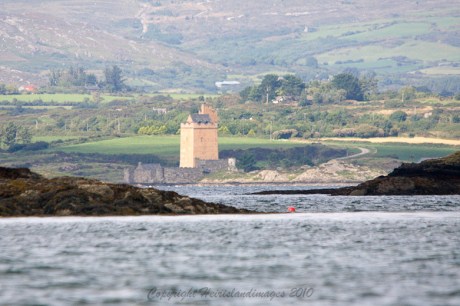
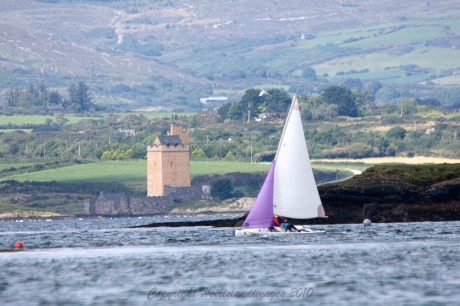
New, recent photos of Kilcoe Castle taken during the Heir Island Regatta 2010, during the third week of August. (Photos copyright Heir Island Images)

Share