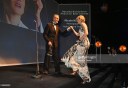
Jeremy Irons in Feb/Mar 2016 AARP Magazine

Jeremy Irons is featured in the February/March 2016 issue of AARP Magazine

Read the original article at AARP.org

AARP2016.2

Photo by Dan Burn-Forti

AARP2016.1

Photo by Dan Burn-Forti

Click on the thumbnails below for larger images.  All photos by Dan Burn-Forti.

Jeremy Irons: What I Know Now

The genteel Brit, 67, weighs in on bad guys, butlers, the joy of motorcycles and why he wore sneakers to the Oscars

by Jeremy Irons, AARP The Magazine, February/March 2016

Definitively bad

I enjoy playing villains. It’s very difficult in many situations to know who the villains and good guys are. People tend to think in black and white, and, of course, we are all gray.
Alfred the butler

My Alfred [Batman’s faithful servant] is a slightly different weight and color than previous Alfreds. One has a feeling that he has training; he’s a good security man, technician, mechanic. He may not make the best martini, but he can get the Batmobile on the road, which Bruce Wayne needs.

Irons INFO

Has been married to actress Sinéad Cusack since 1978.
Won the best actor Oscar for his 1990 role as Claus von Bülow in Reversal of Fortune.
A sailor since age 5, he keeps a 29-foot gaff-rigged ketch next to his home in Ireland.

Me time

I get fussier as I get older. I realize there are not as many years ahead of me as behind me — so you begin to think in terms of making the most of your time. I tend not to work for such long periods on films now, so I get more time to myself. Still, I have to remind myself that it’s not necessary to work as hard as I sometimes do.

Like father, like son?

My elder son, a photographer, opted not to go into the business. He didn’t like the public judgment of actors or the fact that his father was known by people he didn’t know. My younger son is an actor and takes refuge in the certainty of imagined characters. He is very comfortable when he is in someone else’s skin.

Changing the world

My father advised me not to get involved in politics, so I skirt around it. But environmental subjects I have concentrated on; I made a documentary about global waste called Trashed. I worry about genetically modified food because it alters the balance of things. The prison system concerns me. I feel we lock up too many people without caring how they will be when we let them out.

The rubber meets the road

I can make up excuses for why I wore sneakers to the Oscars. They weren’t actually trainers; they were a little smarter than deck shoes and had a thin sole. They were black and white, which is what I was wearing on the rest of my body. There’s a nice feeling of keeping your feet on the ground when wearing shoes with no heel, which maybe is an important thing to do on Oscar night.

Born to be wild

I feel as confident on my motorcycle as I do on my two feet. I call it my urban horse. The joy of motorcycling is real freedom and being in touch with the environment — the road circuits, the temperature, the wind, the smells. It’s a wonderful sensory experience.

Jeremy Irons will appear in Race, The Man Who Knew Infinity, Batman v Superman: Dawn of Justice and Assassin’s Creed this year.

—As told to Margy Rochlin

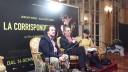
Jeremy Irons in Rome to Promote ‘The Correspondence’

Jeremy Irons, Olga Kurylenko and director Giuseppe Tornatore were in Rome, Italy on Monday 11 January for a press junket for their film The Correspondence. 

The Correspondence hits screens Jan 14 – Article from ANSA.it

Jeremy Irons speaks at the press conference:


http://player.sky.it/external/cinema/50/266104

This slideshow requires JavaScript.


Jeremy Irons Reads ‘Old Possum’s Book of Practical Cats’

Airing on Christmas Day 2015, Jeremy Irons read from TS Eliot’s Old Possum’s Book of Practical Cats, on BBC Radio 4.

Click below to listen to Part 1:

Click below to listen to Part 2:

Screen Shot 2015-12-14 at 12.31.25 PM

Text from the BBC:

On Christmas Day 1937 , nearly two years before book publication, five of T.S Eliot’s Practical Cats poems were broadcast as readings by Geoffrey Tandy on BBC Radio . The Radio Times wrote’ For some time past Mr Eliot has been amusing and instructing the offspring of some of his friends in verse on the subject of cats. These poems are not the kind that have been usually associated with his name’.

Over 75 years later, one of our greatest actors, Oscar- winning Jeremy Irons re-visits the original five poems along with the further ten which make up the Old Possum’s Book of Practical Cats .

In this treat for Christmas day you will find familiar much-loved characters including Growltiger, Mungojerrie , Rumpleteaser, Old Deutoronomy, Mr Mistoffelees, Macavity Gus and Skimbleshanks . These are cats who are notorious , lurk in shadows, baffle Scotland yard, dance by the light of the moon and who must not be woken . They are found on trains, in the theatre, in the high street. They juggle, sleep, conjure, are curious and bore but they all show another side of one of our most important British poets .

T.S Eliot ‘s poems have been enjoyed by many in the musical Cats, but here we return to the poems without any music and celebrate the inventiveness in the original words. Following on from his powerful readings of The Waste land , Four Quartets and The Love song of J. Alfred Prufrock for BBC Radio 4 Jeremy Irons continues his radio journey through the works of T.S Eliot with the cats .

The Naming of Cats
Skimbleshanks The Railway Cat
Growltiger’s Last Stand
The Rum Tum Tugger
The Song of the Jellicles
Mungojerrie and Rumpelteazer
Old Deuteronomy
Of the Awefull Battle of the Pekes and the Pollicles
Mr Mistoffelees
Macavity:The Mystery Cat

Gus:The Theatre Cat
The Old Gumbie Cat
Bustopher Jones:The Cat about Town
Cat Morgan introduces himself
The Ad-dressing of Cats.

Directed in Salford by Susan Roberts.

Jeremy Irons at Associated Studios Christmas Concert

Jeremy Irons was a part of the Associated Studios Christmas Concert on Thursday 10 December 2015, at the Actors Church, Covent Garden, London.

Jeremy read “Letter 1” from Letters to a Young Poet by Rainer Maria Rilke.

Listen to audio of Jeremy’s reading (headphones recommended) and read along with the text below this audio player:

Paris
February 17, 1903

Dear Sir,

Your letter arrived just a few days ago. I want to thank you for the great confidence you have placed in me. That is all I can do. I cannot discuss your verses; for any attempt at criticism would be foreign to me. Nothing touches a work of art so little as words of criticism: they always result in more or less fortunate misunderstandings. Things aren’t all so tangible and sayable as people would usually have us believe; most experiences are unsayable, they happen in a space that no word has ever entered, and more unsay able than all other things are works of art, those mysterious existences, whose life endures beside our own small, transitory life.

With this note as a preface, may I just tell you that your verses have no style of their own, although they do have silent and hidden beginnings of something personal. I feel this most clearly in the last poem, “My Soul.” There, some thing of your own is trying to become word and melody. And in the lovely poem “To Leopardi” a kind of kinship with that great, solitary figure does perhaps appear. Nevertheless, the poems are not yet anything in themselves, not yet any thing independent, even the last one and the one to Leopardi. Your kind letter, which accompanied them managed to make clear to me various faults that I felt in reading your verses, though I am not able to name them specifically.

You ask whether your verses are any good. You ask me. You have asked others before this. You send them to magazines. You compare them with other poems, and you are upset when certain editors reject your work. Now (since you have said you want my advice) I beg you to stop doing that sort of thing. You are looking outside, and that is what you should most avoid right now. No one can advise or help you – no one. There is only one thing you should do. Go into yourself. Find out the reason that commands you to write; see whether it has spread its roots into the very depths of your heart; confess to yourself whether you would have to die if you were forbidden to write. This most of all: ask yourself in the most silent hour of your night: must I write? Dig into yourself for a deep answer. And if this answer rings out in assent, if you meet this solemn question with a strong, simple “I must”, then build your life in accordance with this necessity; your whole life, even into its humblest and most indifferent hour, must become a sign and witness to this impulse. Then come close to Nature. Then, as if no one had ever tried before, try to say what you see and feel and love and lose. Don’t write love poems; avoid those forms that are too facile and ordinary: they are the hardest to work with, and it takes a great, fully ripened power to create something individual where good, even glorious, traditions exist in abundance. So rescue yourself from these general themes and write about what your everyday life offers you; describe your sorrows and desires, the thoughts that pass through your mind and your belief in some kind of beauty Describe all these with heartfelt, silent, humble sincerity and, when you express yourself, use the Things around you, the images from your dreams, and the objects that you remember. If your everyday life seems poor, don’t blame it; blame yourself; admit to yourself that you are not enough of a poet to call forth its riches; because for the creator there is no poverty and no poor, indifferent place. And even if you found yourself in some prison, whose walls let in none of the world’s sound – wouldn’t you still have your childhood, that jewel beyond all price, that treasure house of memories? Turn your attention to it. Try to raise up the sunken feelings of this enormous past; your personality will grow stronger, your solitude will expand and become a place where you can live in the twilight, where the noise of other people passes by, far in the distance. And if out of , this turning within, out of this immersion in your own world, poems come, then you will not think of asking anyone whether they are good or not. Nor will you try to interest magazines in these works: for you will see them as your dear natural possession, a piece of your life, a voice from it. A work of art is good if it has arisen out of necessity. That is the only way one can judge it. So, dear Sir, I can’t give you any advice but this: to go into yourself and see how deep the place is from which your life flows; at its source you will find the answer to, the question of whether you must create. Accept that answer, just as it is given to you, without trying to interpret it. Perhaps you will discover that you are called to be an artist. Then take that destiny upon yourself, and bear it, its burden and its greatness, without ever asking what reward might come from outside. For the creator must be a world for himself and must find everything in himself and in Nature, to whom his whole life is devoted.

But after this descent into yourself and into your solitude, perhaps you will have to renounce becoming a poet (if, as I have said, one feels one could live without writing, then one shouldn’t write at all). Nevertheless, even then, this self searching that I ask of you will not have been for nothing. Your life will still find its own paths from there, and that they may be good, rich, and wide is what I wish for you, more than I can say.

What else can I tell you? It seems to me that everything has its proper emphasis; and finally I want to add just one more bit of advice: to keep growing, silently and earnestly, through your whole development; you couldn’t disturb it any more violently than by looking outside and waiting for outside answers to questions that only your innermost feeling, in your quietest hour, can perhaps answer.

It was a pleasure for me to find in your letter the name of Professor Horacek; I have great reverence for that kind, learned man, and a gratitude that has lasted through the years. Will you please tell him how I feel; it is very good of him to still think of me, and I appreciate it.

The poem that you entrusted me with, I am sending back to you. And I thank you once more for your questions and sincere trust, of which, by answering as honestly as I can, I have tried to make myself a little worthier than I, as a stranger, really am.

Yours very truly,

Rainer Maria Rilke

20151211_004823

Jeremy Irons Attends ICAP Charity Day 2015

Jeremy Irons participated in ICAP Charity Day 2015.  Jeremy raised funds for http://www.mulberrybush.org.uk.

From the ICAP Charity Day Facebook Page: Since its creation, ICAP has always given money to charity. In 1993, when the firm had grown to around 100 people in London, it was decided to do something on a larger and more innovative scale; something that would make a significant difference to charities. The idea of ICAP Charity Day was born; a day on which all revenues and commissions are given away to just a few charities, meaning each would receive a large amount of money which would really make a difference to their operations. This gave the firm and its customers a unique way of contributing to society, especially in view of its position in the financial world.  This method of giving is very different from the normal way that companies choose to give to charity by donating money out of their profits. At ICAP, the brokers themselves are giving away their own commissions to charity, as well as the company giving away its revenues.

This slideshow requires JavaScript.

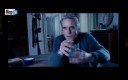
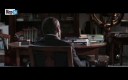
‘The Correspondence’ Trailer

Here’s the newly released trailer for The Correspondence, directed by Giuseppe Tornatore and starring Jeremy Irons and Olga Kurylenko.

Screencaps and stills gallery:

Jeremy Irons at the 52nd Antalya Film Festival

Jeremy Irons was honored with a Lifetime Achievement Award, at the 52nd Antalya International Film Festival in Turkey, on Sunday 29 November 2015.   Jeremy accepted his award from festival director Elif Dağdeviren and Icelandic director Fridrik Thor Fridriksson, the head of the festival’s international feature film competition jury.

On Monday 30 November, Jeremy conducted a Masterclass and also introduced a screening of Dead Ringers.

This slideshow requires JavaScript.


Jeremy Irons in Style Magazine Italia

Jeremy Irons is featured in Style Magazine Italia, for a special issue celebrating the 10th Anniversary of the magazine. The December 2015 issue is available from 24 November.

Jeremy was photographed in New York City by Brigitte Lacombe.

Thank you to Sally Fischer Public Relations and to Alessandro Calascibetta of The Men Issue for these photos. 

Interview by MASSIMO GAGGI.  Photos by BRIGITTE LACOMBE.  Styling by SOFIA ODERO.

Click on the photos in the gallery below, to enlarge them to full size.

An Italian-to-English translation of the interview is at the bottom of this post.

This slideshow requires JavaScript.


The Charm

The Solitary Seducer

(Translated by Google and JeremyIrons.net)


Interview by MASSIMO GAGGI

Photos by BRIGITTE LACOMBE

Styling by SOFIA OD ERO

GROOMING: LOSI PER BIANCA BALCONIS


At 67, Jeremy Irons is still a sex symbol. A modern knight who drives a motorcycle and lives in a castle. Tornatore wanted his enigmatic appearance in The Correspondence.

“I wanted to be in one of the spy films based on the novels of John Le Carré. But there I have never succeeded, even when there was already an agreement with the production and the director: it was blocked by a veto from the writer. He has never forgiven me for an incident in my youth. I was 20, I was his neighbor in London. Our dogs quarreled among themselves and his got the worst. I didn’t apologise because it had been his dog to attack mine. He has never forgiven me. ”

The great actors willingly tell their achievements, their most important films, those for which they won awards. And Jeremy Irons has much to tell: Lolita is his most beloved film. And among the characters he’s played he does not give top priority to Claus VonBulow from Reversal of Fortune for which he won the Oscar, but to Father Gabriel, from The Mission, and to Esteban Trueba from The House of the Spirits.

In this long interview with an open heart to Style, however, Irons says much more: passions and disappointments also, the relationship with success, the need for solitude: sexy icon, acclaimed actor that, just may, retire in his castle in Ireland.

“You know that the first interview I gave in my life was to Corriere della Sera, when I was 16? “. Sitting at a table in a bar in Central Park South, Jeremy Irons talks about politics, of childhood sufferings, his relationship with insularity and the sea (he was born and raised on the Isle of Wight), his image of seducer, his style, his films, his love for Italian cinema, the perfect time for him is spent with dogs on the moor.

You were already in movies at 16 years old?
Nah, I went with my English friends to discover Europe. We had little money, we tried to keep playing. We were pretty good and one day, while we performed in the Galleria Umberto in Naples, a journalist came from the Corriere and he wrote a piece about our story.

With The Correspondence for Giuseppe Tornatore (the movie debuts on January 14, 2016) this is in his third meeting with the Italian cinema.

Do you love Italy or especially our directors?
I played in a Franco Zeffirelli film, with Bernardo Bertolucci and, now, with Tornatore. I knew him for Cinema Paradiso, but we had never met. I like directors who fall in love with their projects and he is one of those. I liked the story, my character, the setting. Especially the loneliness of the island of San Giulio, Lake Orta: I have a special relationship with the islands. The Italian directors have a particular talent in the audience emotionally involved in the story. Surely it is a skill of Tornatore.

Are there other Italian directors you would like to make a film with?
Certainly Paolo Sorrentino. I did him a spot with him for Fiat, years ago. Then I did not know him, since then I’ve seen his films, from Il Divo to La Grande Bellezza.

Jeremy prefers the honest craftsmen of European cinema, but he also goes to Hollywood, but doesn’t love the big U.S. productions. Immediately after The Correspondence, his next film to be released, in March 2016, is Batman v Superman: Dawn of Justice with him in the role of Alfred, the butler of Batman.

What convinced you to accept that role played in previous editions by Michael Caine?
I prefer Europe, it is true. In Hollywood, though, everything is changing with the cable TV networks that develop their hit series. But there are still big American productions that cannot be ignored. Batman I liked for the directing style and they left me full freedom to participate in the rewrite of the character. My Alfred is very active: more a pilot than a butler.

He told me of his favorite movies, about Lolita and about the hostility of the LeCarré incident that prevented him from playing a spy.

Are there roles you’re disappointed to have missed out on? Or films you’ve regretted?
I would have liked to have done Out of Africa, from the novel by Karen Blixen. But then, Robert Redford was stronger than me at the box office. As for the rest, I do not regret anything, not even the films that were more difficult, or those that went less well: I like to test myself even if it means falling on my face. It’s too easy to repeat what you already know how to do. Then, of course, some movies I made them because I needed the money: to restore my medieval castle cost a fortune. I will not tell what movies. It would not be elegant. But for those who know my films, it’s not hard to find them.

His image of a great seducer persists, despite his age. Being still an icon sexy at 67…there aren’t many. There was Paul Newman, Sean Connery and a few others. Is there a secret?

I do not feel like an icon. The charm attributed to me, I believe, comes mainly from the fact that in my career I’ve played a lot of enigmatic characters. People do not understand whether you’re good or bad, and this attracts, it involves.

The seductive look, his style, care of clothes, always boots on. What’s built into his character?
I like adventurous clothing, luggage, but not from Indiana Jones. As for boots, nothing is built. It’s just that I love to go on a motorcycle. I’ve just come from a ride in the Adirondack Mountains in upstate New York. The last time I left London I went to the airport by motorcycle. And when I finished shooting my penultimate film in Italy, Tuscany, Siena, I traveled back to Britain on two wheels. It’s my way to isolate myself from the world, to recover a bit of loneliness.

Does the need for insulation come from being the son of an island?
Wight is the origin of my insularity, sure. But I often need to be with myself – go sailing alone, go for long rides, ride a bike or ride with my dog; also because my childhood was difficult. My parents sent me to boarding school, like many in England. But I went in seven years too early, the separation from family was traumatic. Gradually I learned to be by myself, but I also became a loner. I know being with people, I have to manage the more public role, traveling the world. But often I also need to retire to my loneliness. And you know, wherever I am, that in Ireland there is my fortress waiting for me, the children and Sinéad (Cusack), my extraordinary wife. An actress herself, she understands me like no one else.

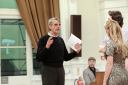
Jeremy Irons: Associated Studios Masterclass

Jeremy Irons conducted a Masterclass for selected students from the Associated Studios current Opera and Musical Theatre courses.  The event was held on Monday 23 November from 6.30-9.30 pm, in London.
Tremendous thanks to Stage Photographer: Andreas Grieger for these photos.  Check out his websites HERE and HERE. Follow him on Instagram @GriegerPhoto.  Follow him on Twitter @GriegerPhoto 

This slideshow requires JavaScript.


Jeremy Irons at the 2015 Evening Standard Theatre Awards

Jeremy Irons was a presenter at the 2015 Evening Standard Theatre Awards, held  in partnership with The Ivy at The Old Vic Theatre on November 22, 2015 in London, England.

Jeremy presented Nicole Kidman with the Natasha Richardson Award for Best Actress, for her role as Rosalind Franklin in “Photograph 51”.

This slideshow requires JavaScript.