Jeremy Irons speaks about 'TRASHED' (2012) at 65th Cannes! | Filmfestivals.com.


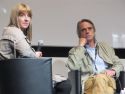


Jeremy Irons speaks about ‘TRASHED’ (2012) at 65th Cannes!
Interview and all photos by Vanessa McMahon
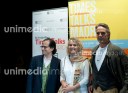
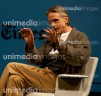
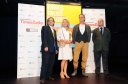
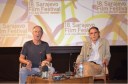
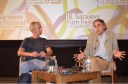
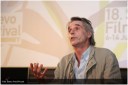
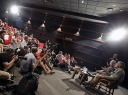
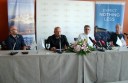
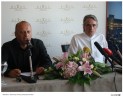
On May 21st, 2012 at the 65th Cannes Film Festival, docu-director Candida Brady and Academy Award-winning actor Jeremy Irons presented their film ‘TRASHED’ (2012) in the Salle Bunuel theater to press. The film is about the horrific state of plastic and garbage, the ever looming and impossible to ignore eco-crises of our planet, which is being consumed by its own waste.
Q and A with Jeremy Irons.
Q: Where does your desire to make this environmental documentary come from?
IRONS: It comes from a desire to do something more useful than just making endless entertainment films. I have the opportunity, as we all do, in some small way raise people’s consciousness about a particular problem. The particular problem we chose was trash. All Im really doing is what I can do to hopefully encourage a different way of living. I think we can all do it in our different spheres, and if everybody did whatever they could do to improve whatever, then I think things might begin to change. But we all know that’s a responsibility and I was delighted when Candida suggested we make a film about trash and the problems of trash, to learn myself and to do whatever I could to push that film forward.
Q: You think that Cannes Film Festival is the best place to talk about waste and garbage?
IRONS: I think beggars cant be choosers. I think there are a lot of journalists here in Cannes and there are a lot of people watching films. I think wherever you can put a message across that you believe is an important message and can communicate with other communicators, in other words yourselves, its got to be a good thing to do. I think it also gives a little bit more relevance to Cannes also. You know, we watch Sacha Baron Cohen and we have a laugh. But actually, why don’t we spend a few moments of our dinner parties or at our drinks parties discussing them as well as whether Brad Pitt needs a haircut or not?
IRONS CONT’D: I do think there’s such a huge lobby for making plastics. I mean we have this enormous petro-chemical industry and bi-products of plastic makers, a lot of people, a lot of money, and it seems to me outrageous that governments everywhere don’t take care of us. It’s what they should be doing. It’s why we elect them, that’s why we pay them taxes. Why are they not monitoring what is going on, what is going into the oceans, what is going into our stomach, what is going into the air. I think it’s outrageous and we know that it’s us that makes government do what they have to do, which is another reason I wanted to make this film and why I’m terribly glad you’ve come, because it makes me really angry. You know, they worry about things which don’t matter a damn, and then things which really affect our lives and our children’s lives, they appear to be blind to and I hope this film will in some small way, make them realize there our future decisions that have to be made, that have to be taken seriously and that the easy option about allowing incinerators to be built because it gets rid of the problem must be looked at seriously. They must take responsibility for our votes.
Q: I was wondering if you could say about an experience that turned you onto this subject?
IRONS: It was really Candy who had done a lot of research and is a documentary filmmaker and when we were discussing what we would make a film about. But I am very aware of my country, because we have to start at home, but as I travel about there are different methods of where you put your rubbish and what is disposable and what is recyclable and what is not and it’s totally confusing: ‘You know, this bit of plastic, is it recyclable? What if it turns out that the bottle is but the cap isn’t? So what do I do then, do I put this here or there? And what about this glass?’ We just need very simple instructions which should be uniform across the globe, so whether or not we do it is one thing, but at least we should know what we should be doing and I found in England that each council was different, each town was different and the same in the US and the same wherever I traveled. I don’t think that’s necessary and that was one reason I thought we should make this film. Also, I think there’s a lot of money, also in trash, which I know is why it’s very difficult to encourage these recycling systems into production. There’s a lot of people making a huge amount of money out of trash, burning it and burying it. So, there’s a lot of people a fight and we have to make people care and make the subject known and public in order to fight this trash lobby.
Q: I wanted to know how much were you committed in the prep for the documentary? How involved were you in the script and research?
IRONS: Not at all in the script. A little bit of feed in when I was talking to people, a little with financing and a little to get Vangelis to do the music and to be there on the screen. But that was all. The research and the construction of it was all Candida Brady.
Q: How is the nonsmoking going? And when you were in London, you were smoking something but it didn’t look like a cigarette so I didn’t know what that was?
IRONS: The nonsmoking is a disaster, but I’m now conscious of every filter, which is a nightmare so some of the pleasure has been destroyed. You’re very perceptive because there was a part in the film, which was supposed to have been cut but obviously one scene remains, so but you know, we’re all sinners. But that doesn’t mean we can’t do anything about it. Just because I produce these horrible filters which kill water flees, I can still do something about it.
IRONS CONT’D: But what we’re trying to do is spearhead the information to the right people. I hope that government members will see it, and local government members when they are giving their consents they will have some information in their heads. I think it’s very important that schools see it, because it’s the new generation who are going to be developing their habits of living while we are all set in our ways. But you know if we can encourage them to realize the idiocy of creating a huge amount of garbage, then things will change. I mean, change happens really slowly. You just have to keep at it, and the worst thing is to accept how things are in whatever state, politically, ecologically, whatever. You’ve got to say: ‘This is wrong. Lets try and change it.’ And how you educate people it’s difficult. Maybe we could have told this story in an animated way so kids rapt to it. I sometimes think we have too much information, too many talking heads, and yet one wants to get so much information in there. You know, we’re playing to an educated audience and it’s the educated audience who will lead the others to change their ways so we have to go towards good solid factual factoid. It’s tricky. I don’t know how one does it. I just think you have to keep trying. I myself recycle. I do have bonfires. I still burn my garden waste, which I think is alright because we’ve been doing that for hundreds of years.
Transcribed by: Vanessa McMahon
June 15, 2012
Categories: Film, Latest News and Posts . Tags: 2012, Blenheim Films, Candia Brady, Cannes, conservation, Documentary, eco-crisis, environment, Festival, Film, France, Jeremy Irons, landfill, plastic, pollution, recycle, recycling, smoking, trash, Trashed, Vanessa McMahon, waste . Author: jeremyironsno1fan . Comments: Leave a comment





















































































































































































































 jeremyirons.net
You must be logged in to post a comment.