Jeremy Irons was in attendance on Wednesday, April 24, 2013, at Florence Gould Hall in New York City for a screening of Trashed, followed by a Q&A session with New York Times columnist David Carr.

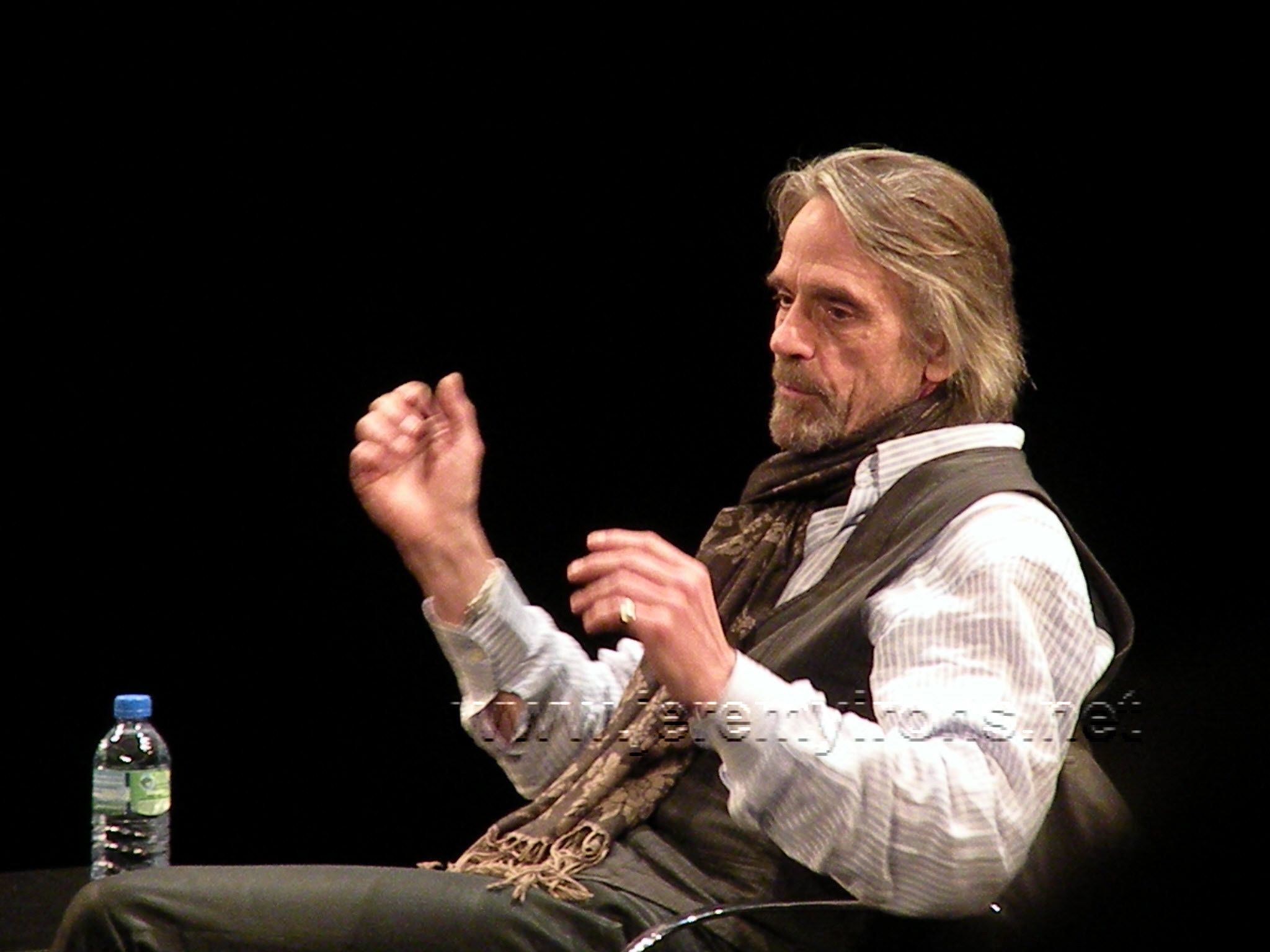
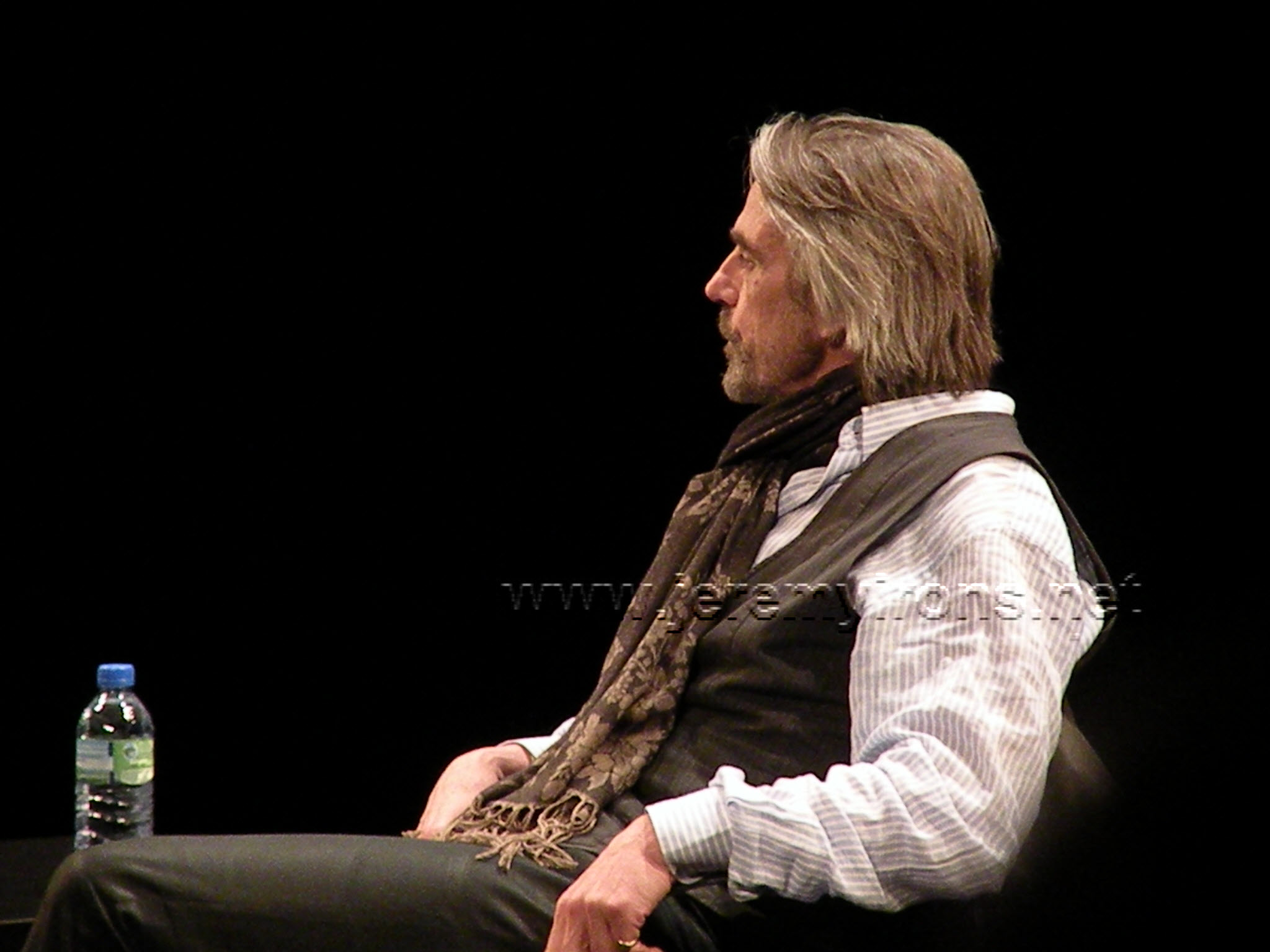


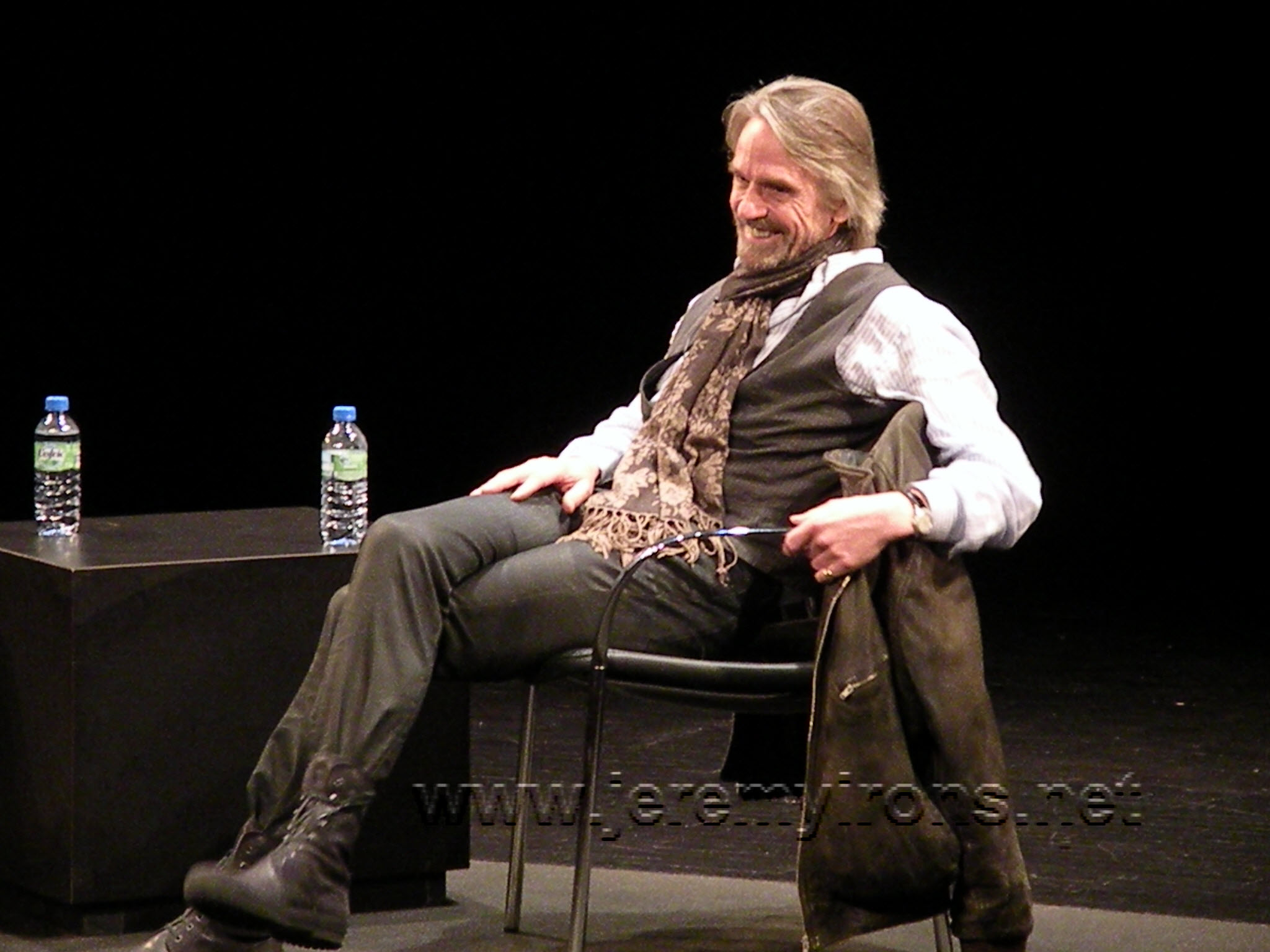
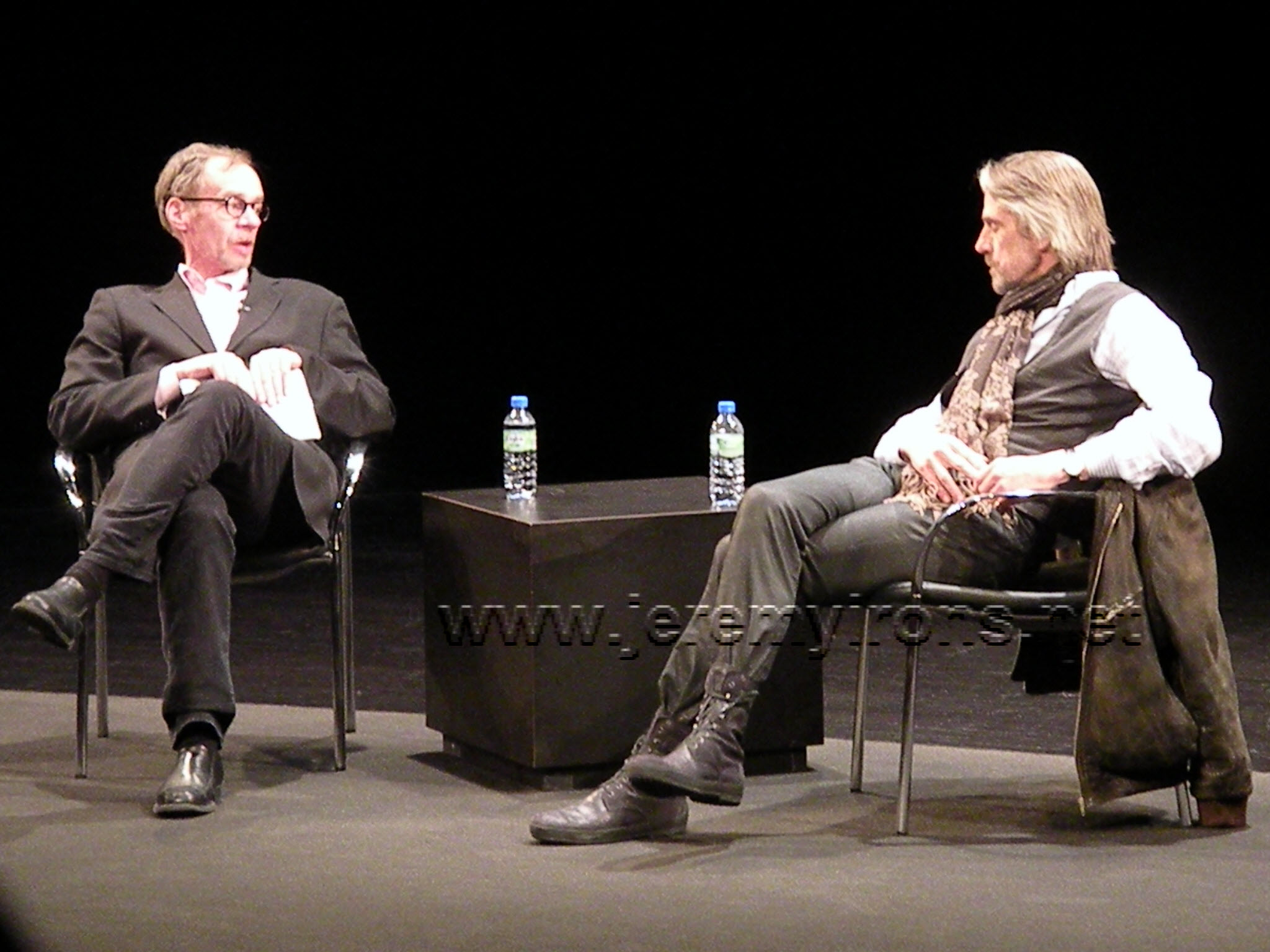

Jeremy Irons was in attendance on Wednesday, April 24, 2013, at Florence Gould Hall in New York City for a screening of Trashed, followed by a Q&A session with New York Times columnist David Carr.
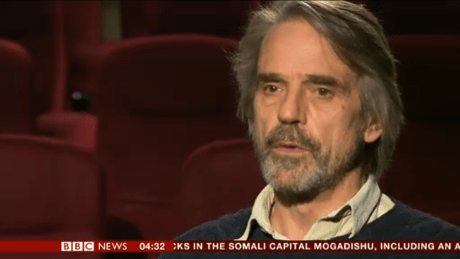
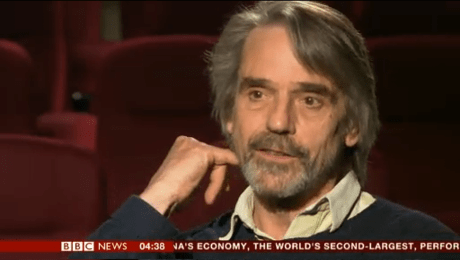
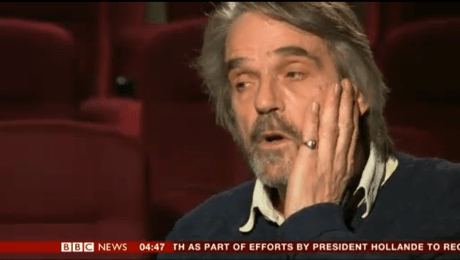
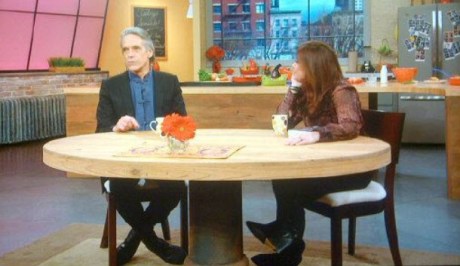
Jeremy Irons was a guest on the BBC News programme Hard Talk. The programme first aired on BBC News on April 15, 2013. Check HERE for iPlayer availability.
Duration: 30 minutes
Stephen Sackur meets one of Britain’s most successful actors, Jeremy Irons. The Oscar winning performer is best known for his portrayal of troubled, brooding upper class men. He has just finished making a documentary about the potentially devastating impact of the mountains of toxic waste polluting our planet. He is an actor with very strong opinions.




Trashed will be screened as part of the Documentary Edge Festival in New Zealand.

Times and locations are as follows:
Sunday 14 April 6:45 pm at the Q Theatre in Auckland, New Zealand BOOK TICKETS
Friday 19 April 1:15 pm at the Q Theatre in Auckland,New Zealand BOOK TICKETS
Sunday 12 May 6:30 pm at the Reading Cinemas Courtenay in Wellington, New Zealand
Friday 17 May 1:45 pm at the Reading Cinemas Courtenay in Wellington, New Zealand
Jeremy Irons will be in attendance on Sunday, April 21 at the BAM screening of Trashed and will participate in a Q & A session after the screening.
The narrator of Trashed, Academy Award-winning actor Jeremy Irons, will participate in a Q&A after the screening.
———————————————————————————————–
There will be a screening of the documentary “Trashed” on the eve of the conference. Seats are limited and the screening will be open to the public. Confirmed conference participants will get priority. The screening will be followed by a conversation with the executive producer, Jeremy Irons.
The screening will be held on 7 pm, Wednesday, April 24 at Florence Gould Hall, 55 East 59th Street. No audio recording or photography will be allowed.
Public tickets can be purchased here: http://www.nytimes.com/marketing/screening/index.html
Confirmed speakers:
Jeremy Irons, actor and executive producer, “Trashed”
in conversation with David Carr, media and culture columnist, The New York Times
——————————————————————————————–
On April 25th –
*Please note, there is a screening of “Trashed” on the eve of the conference. Seats are limited and the screening will be open to the public. Confirmed conference participants will get priority.
Official press release from The New York Times Company:
Mayor Michael Bloomberg, Sec. Shaun Donovan and Jeremy Irons Join Lineup for New York Times Energy for Tomorrow Conference April 25
NEW YORK, March 11, 2013 – The New York Times today announced that New York Mayor Michael Bloomberg will deliver a keynote address at its second annual Energy for Tomorrow conference on Thursday, April 25, at TheTimesCenter. Mayor Bloomberg will address the conference’s theme of building sustainable cities and the question of what we, as global citizens, want from our cities.
Shaun Donovan, U.S. Secretary of Housing and Urban Development, will join New York Times Op-Ed columnist Thomas Friedman in conversation to discuss the Obama administration’s vision for city development as our urban populations grow worldwide.
Jeremy Irons, Academy Award-winning actor and activist, will also speak at the conference about solutions for better waste management and his documentary, “Trashed,” which looks at the challenges posed by waste to the environment and how we can enact change for a cleaner world.
Confirmed conference attendees will be invited to a special screening of “Trashed” with free admission on the eve of the conference, Wednesday, April 24. A talk with executive producer Jeremy Irons and New York Times media and culture columnist David Carr will follow the screening.
Additional New York Times speakers and moderators at Energy for Tomorrow will include Op-Ed columnists Mark Bittman, Bill Keller and Joe Nocera; DealBook founder and columnist Andrew Ross Sorkin; energy and environmental issues reporter John Broder; architecture critic Michael Kimmelman; Op-Ed writer for the Dot Earth blog Andrew Revkin; and international environment correspondent Elisabeth Rosenthal.
Energy for Tomorrow is by invitation only and will be available to the public via live stream, which is free to view, at www.NYTEnergyforTomorrow.com.
The conference will open at 8:00 a.m. with a New York Times newsroom panel breakfast session that explores the issues of climate change, now at the top of the political agenda.
The New York Times Energy for Tomorrow conference series brings together thought leaders from across energy and environment industries to discuss the most urgent and important issues at hand and to explore different ways of fueling our evolving, global economy.
BlackBerry joins The New York Times as presenting sponsor of the 2013 Energy for Tomorrow conference.
To request an invitation to attend and to learn more about the conference, visit www.NYTEnergyforTomorrow.com.
About The New York Times Company
The New York Times Company (NYSE:NYT), a leading global, multimedia news and information company with 2012 revenues of $2.0 billion, includes The New York Times, the International Herald Tribune, The Boston Globe, NYTimes.com, BostonGlobe.com, Boston.com and related properties. The Company’s core purpose is to enhance society by creating, collecting and distributing high-quality news and information.
Contact: Stephanie Yera, 212-556-1957, stephanie.yera@nytimes.com
This press release can be downloaded from www.nytco.com.
Brussels, Belgium. 7th March 2013 — British actor Jeremy Irons participated in a talk about plastic waste at the EU Commission. Jeremy was invited by EU Commissioner Januz Potonik to talk about plastic waste in the world. He added his voice to an EU campaign to ban non-recylable plastics, including plastic bags.
From The New Age
British actor Jeremy Irons brought a rare touch of glamour to the European Union’s headquarters in Brussels on Thursday to talk about an issue close to his heart: Trash disposal.
“I refuse to call it waste. ‘Waste’ is a verb, it is what we do. We are wasting our resources,” he said.
His appearance at the European Commission, the bloc’s executive, was in support of a drive to find ways of reducing the mountains of plastic rubbish generated annually, much of which ends up in the world’s oceans.
“What I’ve tried to do is glamourize trash,” Irons said, conceding that it was not an issue that won many votes.
Irons dismissed the tendency to shelve recycling as a matter to be dealt with after resolving more pressing issues, such as the economic crisis.
He said it didn’t take much effort for people to separate their rubbish, adding, “It doesn’t cost me anything to put out my separate bins and I get rather a pleasure out of it.”
The actor said: “We can make money out of recycling,” adding that it also generated jobs.
He referred to the 12 million euros (15.6 million dollars) that Ireland had made by introducing a 15-cent charge on plastic bags, which he said had also reduced the use of new bags by 92 per cent.
Irons said that by contrast his country, Britain, was doing “spectacularly little” on recycling, failing for example to tax plastic bags – “a symbol of waste.”
He said disorganization and vested interests – specifically those of the companies earning money off rubbish disposal and incineration – stood in the way of progress towards better trash management.
Ultimately, however, Irons said it was up to individuals to bring about change – by refusing to buy plastic water bottles, reusing and repairing old goods or by composting, as he did.
“I’m just a bloke,” the actor said. “There are a lot of blokes and women around in the world,” adding that it was their behaviour that would help bring about change.
“Politicians will therefore, in their normal fashion, be able to follow the current mood,” he added.
Last year, Irons produced and featured in a documentary film, Trashed, highlighting the issue of rubbish disposal and the need for more recycling.
________________________________________________________________
Getting Trashed with Jeremy Irons – from the Wall Street Journal
________________________________________________________________




































The event:
What: 12.30 Joint press conference by European Commissioner for Environment, Janez Potočnik and Jeremy Irons, Narrator and Executive Producer the documentary film Trashed.
The launch will be followed by the projection of the film Trashed in the European Parliament.
When: Thursday 7th March 2013
Where: Berlaymont Press Room, in Brussels
———————————————————————————
The news:
The European Commission is publishing a Green Paper on plastic waste to launch a structured discussion about how to make plastic products more sustainable throughout their life cycle and reduce the impact of plastic waste on the environment. The current EU environmental legislation doesn’t specifically address the particular challenges posed by plastic waste. The Green Paper aims to collect facts and stakeholders’ views on the impacts of plastic waste and a way of mitigating them through a European strategy. The consultation consists of 26 questions and will last until end of May 2013. The result will feed into further policy action in 2014 as part of a broader waste policy review, which will look in particular at the existing targets for waste recovery and landfill as well as an ex-post evaluation of five directives covering various waste streams.
The background:
Once in the environment, particularly in the marine environment, plastic waste can persist for hundreds of years. Up to 10 million tons of litter, mostly plastic, end up in the world’s oceans and seas annually, turning them into the world’s biggest plastic dump. The presence of plastic residues, even in the most remote areas of world seas and shores shows that there is a price to pay for unhampered proliferation of plastic waste. Conventional plastic also contains a large number, and sometimes a large proportion of chemical additives which can be carcinogenic, provoke other toxic reactions or act as endocrine disruptors.

Jeremy Irons Voices the Fight Against Plastic Pollution
On May 16, Heal the Bay honors three supporters who’ve lent their formidable voices to protecting the ocean from plastic pollution at our annual benefit gala Bring Back the Beach.
In 2010, Oscar-winner Jeremy Irons narrated our mockumentary “The Majestic Plastic Bag”, lending gravitas to the story of a single-use plastic bag as it migrates to the Great Pacific Garbage Patch. The film screened at the Sundance film festival and remains popular on the film festival circuit. To date, The Majestic Plastic Bag has been viewed more than 1.8 million times on Heal the Bay’s YouTube channel.
We honor Jeremy Irons, not merely for sharing his rich, haunting voice with us, but for his ongoing work to stop the proliferation of trash. In his new feature documentary “Trashed: No Place for Waste,” Irons takes a different journey, this one following the migration of rubbish, the tons of waste that goes unaccounted for each year. Irons serves as the film’s chief investigator as well as the executive producer.
Heal the Bay will also honor our longtime champion Mark Gold for his years of laser-like focus and tireless advocacy in support of clean water. Mark was Heal the Bay’s first employee and served with our organization for 25 years, leading and inspiring our work as our executive director and president. He continues to support us as a researcher, fundraiser and board member. We can count on Mark as a sounding board, resource and guiding force as we tackle future attacks on clean water.
Philanthropist Dr. Howard Murad will be honored on May 16 for raising awareness for environmental issues and causes. Employees from Dr. Murad’s skincare company Murad, Inc. have joined us on numerous beach cleanups, as well as solidly supporting our efforts in curtailing marine debris.
You’re invited to join our celebration of these eco warriors on May 16, 2013 at the Jonathan Beach Club.
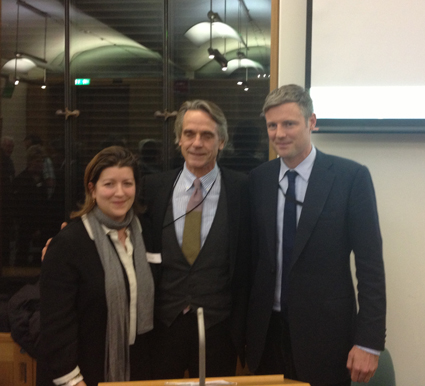
Trashed was screened for Members of Parliament at Portcullis House on Thursday 7 February 2013.
Trashed documentary highlights wastefulness – from resource.co.uk
Trashed documentary shown at House of Commons review from letsrecycle.com

Photo via @FreegleBrighton on Twitter

Photo via Trashed Film on facebook
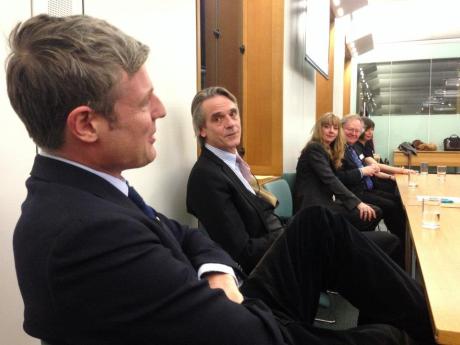
Photo via Trashed Film on facebook

Photo via Candida Brady on Twitter









 jeremyirons.net


 jeremyirons.net
You must be logged in to post a comment.