Q&A: Jeremy Irons Talks About The Borgias

Q&A: Jeremy Irons Talks About The Borgias
By Anna Carugati
Published: September 21, 2011

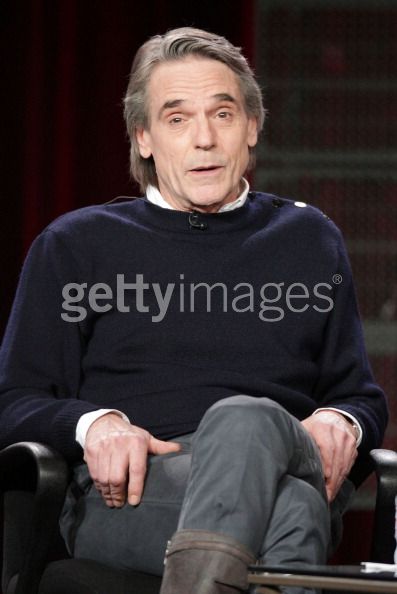
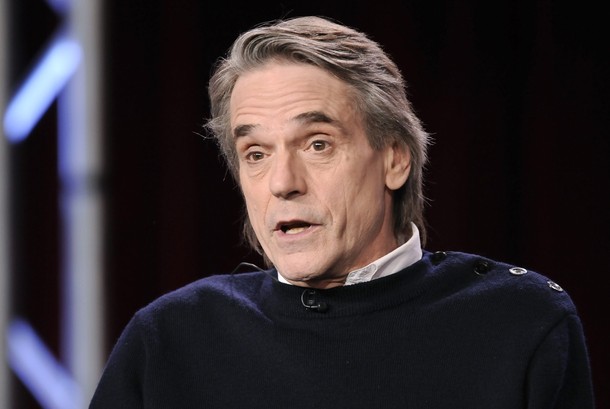
With a voice that is rich, deep, mellow, sometimes unsettling, always convincing, and smooth as a glass of good cognac, Jeremy Irons is a prolific and versatile actor who won the Academy Award for Best Actor for his performance as Claus von Bülow in Reversal of Fortune. He has often played complex, conflicted, sometimes less-than-ethical characters, most recently Rodrigo Borgia, Pope Alexander VI, patriarch of the infamous and powerful family at the height of the Renaissance, in Showtime’s series The Borgias. Irons, who has also won two Golden Globe Awards, a Primetime Emmy and a Tony, took time out from filming the second season of the series to speak with World Screen.

WS: How did you become involved in the project?

IRONS: I was approached by [the director] Neil Jordan, who told me he was writing a series. He’d had a film for a long time he was trying to get made about the Borgias; finally, he decided he would offer it to a television company as a series. So for the first time in his life he was writing a television series and he asked me if I would be interested in playing Rodrigo, who becomes Pope Alexander VI. I said, “Let me think about it,” and I did some research and discovered that Rodrigo was an immigrant from Spain. He was a very large man. I’m not a large man, so I said to Neil, “You really should get somebody who looks more like him,” He said, “No, no, no, no, it’s all about power and the abuse and use of power. You know all about that. You can do that. No one knows what Rodrigo looked like.” So I thought, I’d love to work with Neil. We had talked about it a lot in the past; he is a consummate filmmaker. In the past I had done a program about F. Scott Fitzgerald for Showtime and they had aired Lolita and I’d been very affected by the way they show their product—they take a lot of care about it. So that was all good. The idea of a five-month stint [it takes five months to shoot a complete season of The Borgias] and doing something possibly for future years worried me a little bit, but I had been watching how better and better work was being done on American television. Some of the series are really splendid in the way they are made. So I thought, why not? Let’s go for it. That’s how it came about.WS: Rodrigo Borgia is nothing if not complex. What appealed to you about his character?
IRONS: It’s interesting, he was a newcomer amongst the Roman families. He was very powerful and, like many of the rulers of that time, very Machiavellian, as we would now call it. When Rodrigo died he was vilified by a succeeding pope and [then developed] a bad reputation, not only Rodrigo as a pope, but the whole family. When you delve into the history books and the biographies, you discover that that was not necessarily the truth. One book in particular I was researching listed all the adjectives that had been used to describe Rodrigo. They were extraordinarily broad in spectrum. He was a great church organizer. He was quite concerned and quite successful about strengthening the Vatican, which was in a very weak position when he became pope. He was wonderful company, great bon viveur, a man of great appetite for food and for women and for all of life, really, in that Spanish and Mediterranean way. And on the other end there was the fornicator, the murderer and the assassin and a lot of very negative adjectives. And I thought, this is very interesting, let’s try and find out what makes this man—either good or bad—[behave the way he does]. A man who, while being head of the church with an explicit belief in God, a man of his time, also managed to have 12 children and many lovers. I thought that is a very interesting character to try to weave through. From my research, reading as widely as I could, a lot of it writing that was written while he was alive, Neil and I together really tried to create this powerful man who loved and lived hard, and who I suppose in modern eyes, probably behaved quite badly on occasion.

WS: Are there still parallels from the Borgia reign to certain realities in our world today?
IRONS: I certainly see them. The seat of power is a very complicated place, whether it be Washington or Brussels or wherever. I don’t think people change. I’ve always felt that [throughout] history, reading what people have said and what people have thought, their ideas may change as they build on each other’s, but I don’t think people are any different, and the way power is used and abused is really no different. The methods may be different but still, if we decide from a seat of power to get rid of somebody, that person is got rid of. We still spin or lie, however you’d like to call it, to cover our tracks. I don’t think the wielding of power has changed at all.

WS: What challenges does a TV series present to you as an actor that are different from the challenges that shooting a feature film would present?
IRONS: Well, one of the great gifts of television is that one has more time. We’ve had nine hours to tell the story that we have transmitted [in the first season]. We are going to have ten hours to transmit the second. If it goes to four seasons, which it might well do, there will be 39 hours to tell the story of 12 years, which means that you can go into much greater depth. You can play the inconsistencies. You can have the luxury that you don’t have in a feature film—which in a way is more like a short story—to go into depth of character and depth of story. And although with The Borgias there are many stories happening and so everybody gets their allotted time, you are still able to have the luxury of a greater amount of time than you do in a film. So that is one of the main advantages. The challenge is that it’s a long haul; it’s five months. Fortunately, we are shooting in Budapest, which is a very nice place to shoot. I like that I have the occasional couple of days to sort out my life. So I would say that the challenges are just keeping your concentration up, keeping your enthusiasm up. One of the great things is that over [the course of a season] we have four directors, so one of the challenges is adapting to the new way the director will work. But all in all it’s a very pleasurable job, actually.

WS: Throughout your career you have often played roles that were conflicted or not completely ethical. What sort of roles appeal to you?
IRONS: I’ve had some great opportunities but I’ve always known that I wanted characters that really interest me, who don’t necessarily add up immediately, who have enigmatic qualities, who have the complications which we as human beings have. It’s very rare, apart from people like Shakespeare or Harold Pinter or some of the great dramas, that you get characters who are flawed as we all are and yet possibly good at times, who have many layers. That’s what I always try to look for, people who interest me…. It’s sort of a gut instinct that I have when I read something. In a way, one of the joys of acting is you have an opportunity to explore someone else, and it’s quite nice to explore someone who is a fascinating character. That’s what I’ve always looked for, apart, of course, from always wanting good directors and good production, so that one’s work is backed up. And then, of course, good sales at the end, so that hopefully one’s work is seen. Too much drama is made, especially in film, which is really interesting and which never really gets out there, unfortunately. With DVDs we have a longer run, but it’s terribly important that the work we do does get seen, otherwise we are wasting our time.

WS: Can you reveal anything to us about season two of The Borgias or is it a guarded secret?
IRONS: Season two will probably move a bit faster. We’ve spent a long time in season one setting up the whole situation, and now the characters are off and flying. You’ll see new characters, but that’s probably about all I can say.

WS: What other projects are you involved in?
IRONS: The picture Margin Call, which I made with Kevin Spacey, is based loosely around the Lehman Brothers collapse, which I think will be an interesting film. I have a picture I just finished called The Words, which will probably be coming out next spring. I’m looking forward to the re-release in 3D of The Lion King [Irons was the voice of Scar], which will be fun for everybody.

And after this I’m going off to make Henry IV parts one and two, which will be for British television, directed by Richard Eyre. It will be nice to get back to some Shakespeare. And then I’m off to make a picture with Bille August, the director I worked with in The House of the Spirits, and then a picture called Night Train to Lisbon. That’s what I have in store. I can’t see a lot of time out, but that’s how I like it.


‘The Borgias’ UK Premiere – Press Articles

The Borgias premiered in the UK on Sky Atlantic on Saturday 13 August 2011. Here are a few articles from the UK press regarding the series:

The Guardian  “Irons is fabulous….It’s a mesmerising performance”

The Telegraph – [Borgias review]

The Telegraph – Jeremy Irons: Why I said yes to a fornicating pope.

The Daily Mail

Digital Spy UK – ‘The Borgias’ David Oakes interview: ‘Playing a hedonist is fantastic’

BBC – Newsbeat


‘The Borgias’ go to the Sziget Festival

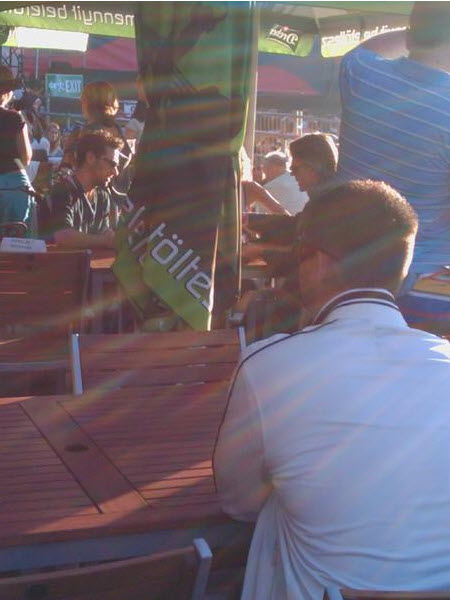
Jeremy Irons and fellow castmates from The Borgias – David Oakes (Juan Borgia) and Ronan Vibert (Giovanni Sforza) – attended the Prince concert at the Sziget Festival in Hungary on 9 August 2011.

Source

photo via @jelenakrajsic on Twitter

Jeremy Irons in Parade Magazine

Read the full, original article at Parade.com, complete with a link back to the Kilcoe Castle page at jeremyirons.net!

Here’s how the article appears in Parade Magazine in newspapers: (Click for a much larger high-res image…)

If there’s a cad or a creep to be played, Jeremy Irons’s antennae shoot up. “Characters who live on the outer edge of acceptable behavior have always been to my taste,” says the Oscar winner, now starring as the power-mad patriarch of Showtime’s series The Borgias (Sundays, 10 p.m. ET/PT). Irons, 62, chats with Steve Daly about his affinity for sinners.

Why are scandalous families like the Borgias so fascinating?
Whether it be in The Borgias or Shakespeare or The Godfather, we love watching people doing what we don’t dare do. Murder and mayhem, from the safe position of our armchairs, can be delightful.

What will audiences make of Rodrigo Borgia, who became Pope Alexander VI in 1492 but kept multiple mistresses?
He wouldn’t see that as hypocritical. He wasn’t a god—he was a man, and man was born a sinner. He’s rather endearing, in a strange way. He’s as pathetic as all men are. They want everything, don’t they?

Will people be surprised at the brutal Vatican politics?
The Vatican at that time was nothing like it is now. In a way, it was a medieval West Wing—the center of power in the known world.

Sundays have changed since Borgia days. What do they mean for you?

I’m a bit sorry we have all the shops open. But we all have to be encouraged to buy, buy, buy, to keep society going, so I suppose one has to accept that. For me, it’s a day I can have a lie-in and a relaxed brunch. I think we need a down day. Otherwise we’d just go bananas.

Your 25-year-old son, Max, is co-starring in Red Riding Hood. What’s it been like watching him deal with the publicity?
Well, it fills me with concern. I’m very happy he’s doing what he loves. But my nightmare as a young actor was to be taken up too quickly. A plant needs to get its roots into the soil before it can withstand the wind and the ice and the cold. Nowadays, the business has a huge appetite for youth and tends, when it’s tired of it, to spit it out. But I think he’s got his head screwed on quite straight.

You’ve played some very dark roles. Which gave you the most pause before saying yes?
I think Reversal of Fortune, because the protagonists [Claus and Sunny von Bülow] were still alive—or partly alive, anyway. But Glenn Close persuaded me that if I didn’t do it, someone else would. And I knew Lolita would cause fireworks. I said to my agent, “You’d better get me a wage that will keep me the next three years, because I don’t think I’ll work much after this.” That was indeed what happened.

You’re skilled at sailing the ocean and riding horses and motorcycles fast—not the safest activities. Are you a daredevil?

Living on the edge, for me, has always been one of life’s great pleasures. It’s not really the speed; it’s the fact that you have to do it well in order to survive.

Ever pushed it too far?
Oh, I have. At any time, you can tumble, but that adds to the frisson. It reminds you there is an edge. And I think we need constant reminders: The edge is there. Don’t fall over it.

Acclaimed actor Jeremy Irons talks about the Irish castle he’s renovated. Plus, Irons gets passionate about the controversial ban on smoking in New York City.

On the 15th century castle in Ireland he owns and has renovated.
“Renovating scared the wits off me. I didn’t know what it was going to cost or how long it would take, or that I’d manage to do it. People were sort of surprised, ‘cause they think I’m an extremely wealthy actor. They thought, ‘You’ll get architects in, you’ll get builders, and they’ll do it.’ But I didn’t want to do it that way. I wanted to be as hands-on as I could.

“It was open to the sky, but structurally sound. The walls had stood for 500 years, despite people’s attempts to pull them down for the stone they contained. They’re 100 feet tall, 9 feet thick at the bottom and 4 feet thick at the top. All the fine carving around the windows had either been eroded or stolen. No heating, no plumbing, no electricity.

“When we were going flat-out on it, I had 40 guys working there every day. I was the main contractor, so my job was to make sure that those guys, who were getting paid by the hour, were fully occupied, that they had all the equipment and materials they needed.

“I didn’t put a lift [elevator] in. The purist inside me said, ‘You’ve got to earn that height. If you want to get up there, you’ve got to walk.’ I’m sort of glad about that, even though when I’m 80 I may be cursing that decision.”

On the unusual color the castle is painted.
“It’s a sort of orange terra cotta—the color of newly-born seaweed. It’s a color that’s found a lot around the castle, and also in strands of the [local] rock that has copper in it. I think it fits [the setting] quite well, but it did surprise everybody when we first took the scaffolding down. There was a sort of sharp intake of breath from those in the neighborhood. I once asked my direct neighbor, who’s a farmer, ‘What color would you have done it?’ He said, ‘I suppose grey.’ Because of course it had been grey for the last 400 years. However, he said, ‘It’s yours! You can paint it whatever color you like.’ And now they rather like it. The fishermen and the ferrymen use it as a landmark. And I have to say it looks stunning, especially in low morning or evening light.
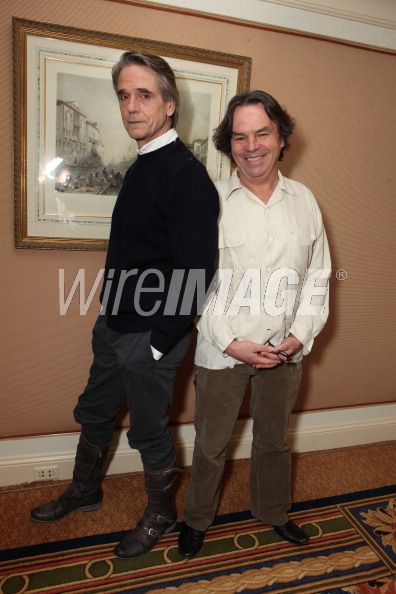
See photos of Jeremy’s stunning castle in Ireland

On the public-area no-smoking regulations he hates.
“I think they’re appalling. It’s what I call bullying a minority. Because if you say, ‘I really think I should have the right to smoke in the street or in the park or at the beach,’ people will say, ‘You shouldn’t be smoking at all. It’s bad for you.’ Well, I think we can choose what’s bad for us. I mean, there are many other things in life that are bad for us. Being surrounded by boring people is very bad for us—it attacks the heart. And being surrounded by mass consumerism, as one is in most urban areas, is bad for you, making you believe that if you buy something, it’ll make you happy. But all those things people are allowed to get away with.”

Just Like You Imagined – NY Magazine

Just Like You Imagined

Jeremy Irons plays himself very well.

Photo by Matt Carr/Getty Images

By Jada Yuan
Published Mar 27, 2011

Read the original article HERE

Jeremy Irons is laughing heartily outside Le Bilboquet on East 63rd Street, surrounded by attentive females. It’s a cold day, but he seems oblivious to the chill as he sips an afternoon Kir Royale and languidly smokes a hand-rolled cigarette. You approach and introduce yourself. He springs up, grabbing both your arms, and stands back to appraise you. At 62, he still possesses a liquid-eyed hotness. He cheek-kisses good-bye his coterie of women (publicists, managers, friends—it’s unclear), lays his hand on your shoulder, and gently guides you through the bistro door, all the while staring deeply into your eyes, so absorbed that he is halfway through the room before he realizes he forgot to put out his cigarette. With apologies, he takes his leave amid a chorus of dismay. “Are you kidding? He can smoke wherever he wants! He’s so cool!” says one entranced male diner, upon whom Irons bestows a two-palmed handshake before stepping outside to carefully deposit his cigarette butt in a trash bin.

Jeremy Irons is just so Jeremy Irons—that is to say, the man of flesh is very much the man of your fantasies. He doesn’t so much occupy space as consume it. Eyes follow him, then stare, rapt. And Irons, something of an attention hog, plays to his audience. He chooses the corner that allows him to face out and survey the room as it surveys him right back.
Irons calls out for a round of “Château Bloomberg” (a.k.a. tap water), “straight from the East River!” He has, he declares, “turned vigorously against the mayor because of the new law [banning] smoking in parks or on the beach, which I think is ludicrous and a terrible bullying of a minority that cannot speak back.” Irons, his teeth a testament to a life of indulgences, believes smokers ought to be protected like “handicapped people and children.” Though he clearly relishes declamation, he is getting notably heated over a law that is very briefly touching his life. The actor spends most of his time in an Oxfordshire village or at Kilcoe, an actual ­fifteenth-century castle (“You’d call it a keep,” he clarifies) on a bay in Ireland. Kilcoe’s ­hundred-foot, lovingly restored towers help to explain a spate of early-aughts parts in “sub–Lord of the Rings stuff” like Dungeons & Dragons. “It’s the shit you do,” he says, to “pay for another six months.”

Irons is in New York to reprise a guest role as a sex addict turned sex therapist on Law & Order: SVU (airing March 30) and to publicize his new Showtime show The Borgias (debuting April 3), a part he took at the behest of his friend Neil Jordan (The Crying Game), who wrote the series and directed the first two episodes. Irons plays Pope Alexander VI, despite having zero resemblance to the real man—an enormous, hook-nosed Spaniard with an insatiable appetite for corruption, food, women, and murdering his enemies. “I Googled Rodrigo Borgia, and he’s a voluptuary,” says the actor. “And I said, ‘I think I’m a bit of an ascetic, really, for that.’ And Neil said, ‘No, no, no. Because it’s all about power and what power does to you and how you deal with it. And you can play all that.’ ”

Yes, powerful and dark, Irons can do. He broke out as a heartthrob in the BBC series Brideshead Revisited, then romanced Meryl Streep in The French Lieutenant’s Woman. But by his forties, he was playing against his good looks, choosing dangerous, even creepy characters—like the twin gynecologists in David Cronenberg’s Dead Ringers and Claus von Bülow in Reversal of Fortune, for which he won his Oscar.

In his Borgias role, an outsider beset by a Roman aristocracy bent on destroying him, Irons sees parallels with Barack Obama. “Just look at the gossip about your current president being from Africa or being a Muslim,” he says. “Alexander was getting all of that.” On the other hand, Irons thinks Alexander had it easier than another of our presidents. “The medievalists would see the reaction to Clinton, for instance, and the cigars, as being deeply prohibitive. He’s a man! We ought to forgive and say, ‘Yeah, he’s got a lot of testosterone, and he’s great at what he does, and he loves a bit of lady, and there you go.’ We see all these marriages breaking because they’re under intolerable strains, because we expect to get all our happiness from our husband or our wife. Impossible! How can you get that from one other person? I don’t want a saint to be my leader. And maybe his wife after fifteen years won’t be able to provide everything he needs. That’s fine. That’s life.”

Irons’s wife of 33 years, the actress ­Sinéad Cusack, is apparently fine with this; no doubt she’s used to her husband’s decrees—including his disdain for organized religion (she is a practicing Catholic): “I don’t really approve of religion … I’m not quite sure the relevance Christianity has.” Their son Max, 25 (brother to Sam, 32), is currently starring in Red Riding Hood. Irons hasn’t seen the film, but he did catch the Jimmy Kimmel appearance in which Max talked about his eternal embarrassment over his dad’s driving around in a horse and buggy in the town where he grew up. Irons smiles indulgently. The father is resigned to letting the son find his own way. “I hope he never gets out of touch with theater, and I hope he doesn’t get too seduced by the money and all that,” says Irons. “I wish him well. But it’s always, for any parent, a slightly heart-in-the-mouth situation when you see your child climbing a rock face.”

Should The Borgias come back after the first season, the actor is committed to the series for five months out of the year, perhaps for three or four years. He is aware of and on guard against the lusty tendencies of cable TV’s costume dramas: “I know there are some series where there is a bit of history and a bit of fucking and a bit of history and a bit of fucking,” he says. “I think [Showtime] would have liked to have made it even more about that, but I wouldn’t want to be involved in something that’s just as obviously … You know, if you want fucking, there’s a lot of other channels.” (For the record, there is still quite a lot of fucking in The Borgias.)

As he’s telling me about his desire to play King Lear (“The next fifteen years, I’ll be right for it. And the next ten, I’ll be able to remember my lines”), a man approaches to ask if Irons would mind posing with his giggling female companion. The actor lets out an exasperated sigh. It is the first indication that being Jeremy Irons might be a bit of work. Then it’s gone, the Irons of your imagination returns, and it’s impossible to tell if his annoyance was real or feigned. He looks up at the woman, leaning awkwardly over him, and wraps his arm around her waist: “You’re falling over. Come and sit down. Just don’t show it to my wife. Ha. Ha. Pleasure. My ­pleasure.”

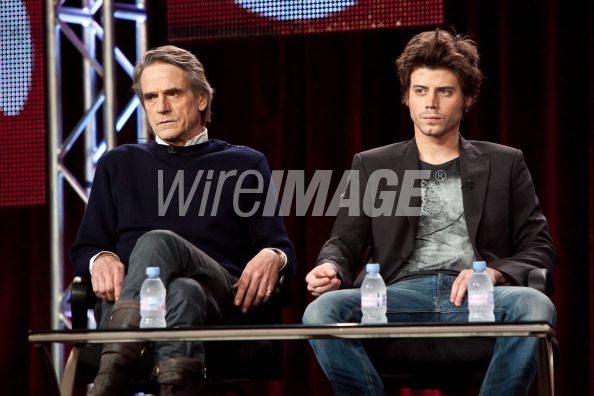
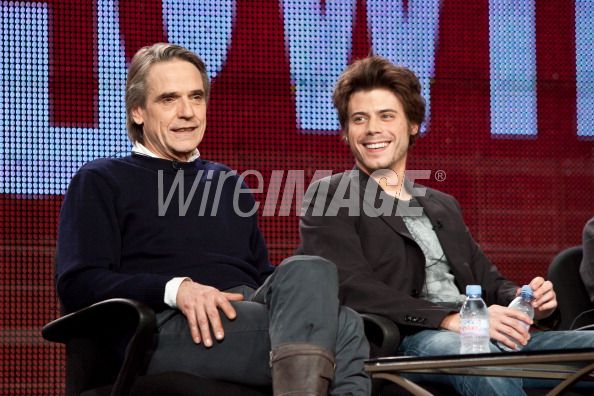
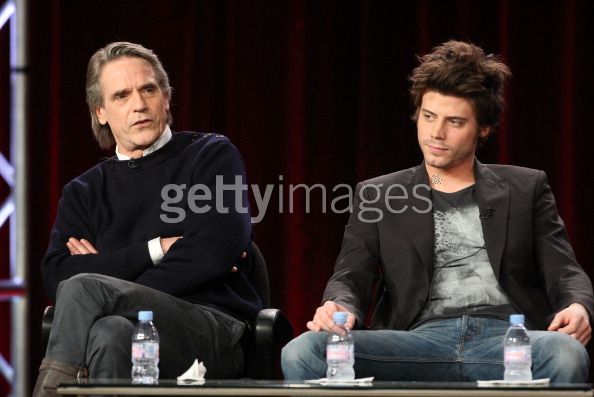
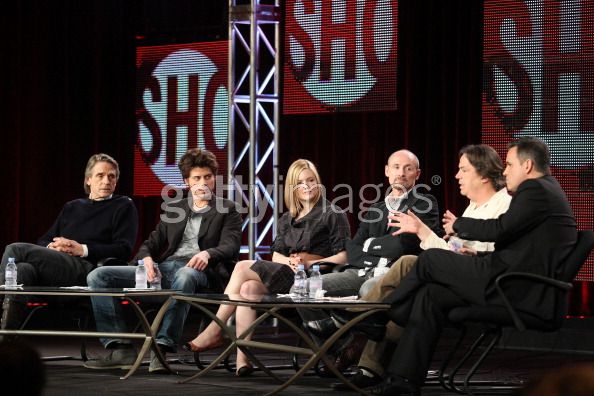
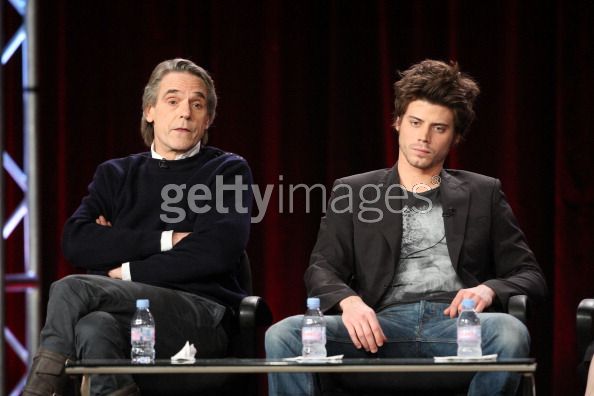
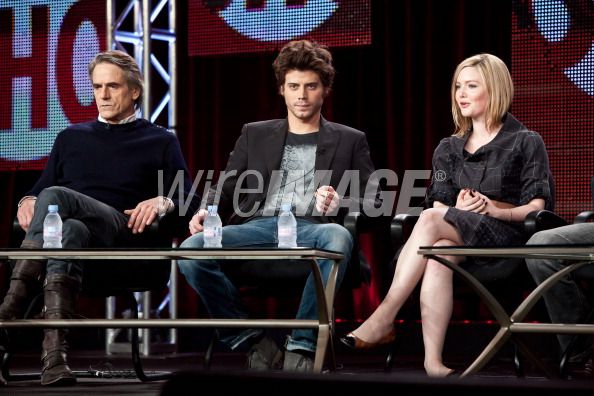
TCA Press Event Photos and News

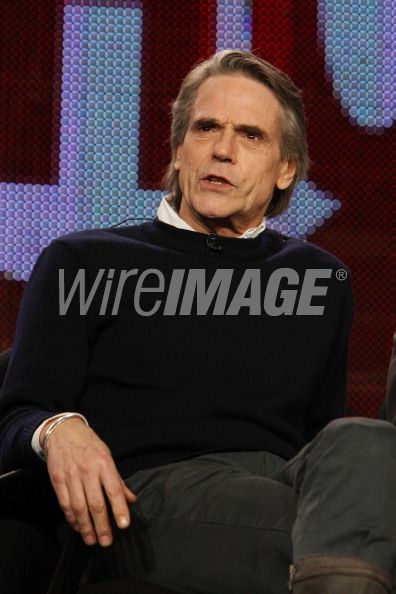
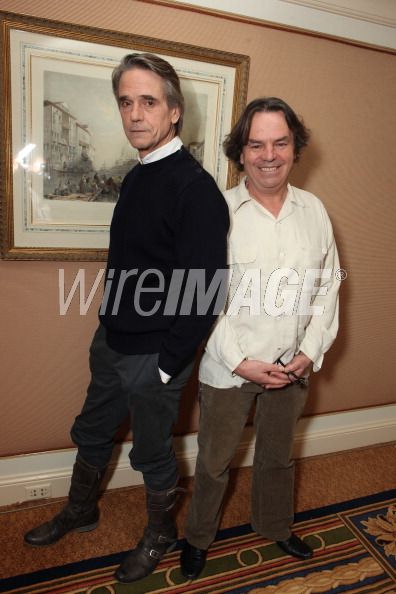
The Borgias will premiere on Showtime on Sunday, April 3, 2011, from 9:00 to 11:00 pm EST.  It will move to its regular time slot of 10:00 pm, the following week.

This slideshow requires JavaScript.

From Elise Crane Derby via Twitter

Click on any of the thumbnails for a larger image:

Jeremy is not in this video, but Colm Feore, who plays Cardinal Della Rovere in “The Borgias”, speaks about working with Jeremy and he gives a lot of interesting details about the filming of the series.

__________________________________________________________________________________________

From Brittany’s TCA 2011 Blog:

The Borgias

Please stop calling Showtime’s The Borgias a sequel to its wildly successful The Tudors. According to Borgias star Jeremy Irons, the shows are alike “as much as Hamlet is the same as MacBeth.”

Borgias-010511-0001.jpg

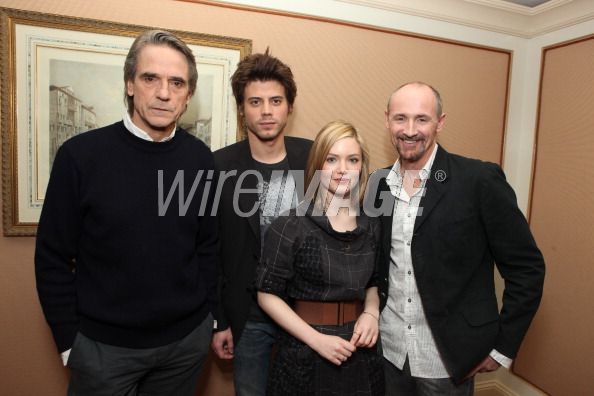
Billed by Showtime as “the original crime family,” the series depicts the titular family as Rodrigo Borgia (Irons) “builds an empire through the corruption of the Catholic Church and orchestrates a relentless reign of power and flamboyant cruelty” once he begins Pope Alexander the Sixth. The same qualities are seen in his children as Juan (David Oakes) becomes head of the papal armies and Cesare (Francois Arnaud) is made a Cardinal, while Rodrigo plots to marry off daughter Lucrezia (Holliday Grainger) as a means of further improving the family’s political position. Sex, violence, and chaos abounds.

“The series is about power and God and how they interact,” creator, writer, director (of the first two episodes) and executive producer Neil Jordan said. Co-star Colm Feore added that it’s a “very difficult problem. Maybe they don’t work together.”

Yet with all the sin, debauchery and cruelty perpetuated by the Borgias, are they going to repel some viewers who find them too objectionable? It’s possible, but no one seemed particularly bothered. Asked that question, Irons replied, “It’s for us to judge them, and wonder how much has changed [since then].” He added that the fact that people are afraid of skeletons in closets may have something to do with ‘why we have such boring people as leaders” – because they don’t want their misdeeds inevitably exposed by their candidacy.

On top of that, The Borgias faces another hurdle. With religion involved, controversy sometimes follows. Jordan doesn’t expect a backlash, however, saying that “these events are so well-documented and [Rodrigo] did try and protect the institution [of the Catholic Church]. I don’t think the Church will be unhappy.” Yet there’s only so far history can take the fictional Borgias. Asked how much research the actors did, Fiore said that it doesn’t matter as much as we might think, since “you’re only going to be doing the bit selected for the story.” Arnaud concurred: “It’s not about history so much anymore as it is about what we’re telling you.” In other words (mine, not theirs), die-hard history buffs should expect some dramatic license.

If there’s one thing in common between The Borgias and The Tudors, it’s that once again there’s no shortage of salacious content, with plenty of nudity and implied sex acts in the clip reel alone. However, unlike how it became a marketing point for The Tudors, it “just happened to be part of the story” of The Borgias, Jordan said. Yet that’s where the similarities end.

__________________________________________________________________________________________

Memorable quotes from The Borgias TCA panel discussion:

1. I read something about Pope John the Pope John Paul, is it, the Polish Pope. And it was from a Catholic theologian who said he wrote, actually, ‘Habet duos testiculos et bene pendentes.’ He said, ‘This man is well hung. That’s why he deserved to be Pope.’ Now, certain things the Vatican will not reveal to all of us, but there is a chair, apparently, a Porphyry Chair, with a large circular hole in it to so these examinations can be made. Now, many people will deny that, but I’ve read I read reputable historians who says it happens, okay? Perhaps no longer, but then it did.” – Neil Jordan, “The Borgias” (Showtime)

2. “I think (Rodrigo Borgia) is a pretty good guy just doing the best he can. I mean, power corrupts, you know. It was a time quite unlike the time we live in today. There were murders in Rome every night, poisonings most weekends. There was incest here and sodomy there. You know, it was a good old rolling, rollicking society. And if you’ve got to try and run that, which the Pope attempts to do, then, of course, you’ve got to play by some of the games, by some of the rules that society follows. I didn’t judge him at all. I just tried to hang on by the…hang onto the position and do what he wanted too. I think it’s up to the audience to say what is good, what is wrong, what is right, and then think how much… wonder how much has changed as you look at present day Italy or present day almost anywhere of power. I think there are huge parallels about what people get up to in order to hang on to power and in order to get their way. I don’t think anything has changed, and perhaps those thoughts will go through our minds when we judge these people. I played him. I thought I was quite a good guy. But George W. Bush probably thought he was quite a good guy, too. Stalin probably liked himself.” – Jeremy Irons, “The Borgias” (Showtime)

3. “As a director, (’The Borgias’) is a nightmare because (the actors) all come with the books about their character. ‘Hang on, I didn’t do that. Look, it says here he did this. It says here he did that.’ Stop, please.” – Neil Jordan, “The Borgias” (Showtime)
__________________________________________________________________________________________

From Ray Richmond, who is contributing to Deadline Hollywood’s TCA coverage:

There’s no mystery where Showtime is taking its marketing orders from in promoting its forthcoming historical costume drama series The Borgias that premieres April 3. The tagline hypes it as “the original crime family,” documenting life in the Italian Renaissance of the late 1400s and the corrupt rule of Rodrigo Borgia, who would become Pope in 1492. As he described during a TCA session this afternoon, the man playing the Borgia patriarch, Jeremy Irons, saw the notorious Rodrigo as “a pretty good guy doing the best he can.”

Irons continued, “It was an interesting time. There were murders every night. Poisonings most weekends. Incest here, sodomy there. It was a good old rolling, rollicking society. If you’re going to run that as a Pope tends to do, you’re going to have to play by some set of rules. I don’t judge him at all. I think it’s up to the audience to say what is good, what is wrong, what’s right. There are huge parallels today to how things were back then as far as what people get up to and what they do to get their way. I don’t think anything has changed really. I played him as someone who thought he was a pretty good guy. I’m sure George W. Bush thought he was a good guy, too. Stalin probably liked himself.”

Share

New Photos of Jeremy in Budapest

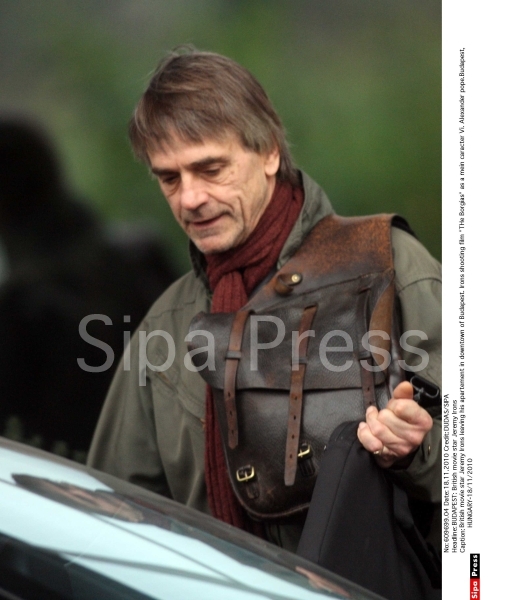
British movie star Jeremy Irons leaving his hotel in downtown  Budapest.
Budapest, HUNGARY-18/11/2010
Credit:DUDAS/SIPA

This slideshow requires JavaScript.

Share

The Borgias: 15th-century Sopranos for a 21st-century audience

From the Toronto Globe and Mail
(Photos follow the article)

The Borgias: 15th-century Sopranos for a 21st-century audience
ELIZABETH RENZETTI
BUDAPEST— From Saturday’s Globe and Mail

‘Put down your hot dogs and put on your helmets!” the first assistant director barks, an order relayed in Hungarian to two hundred lunching extras who have grabbed a very quick break on the set of the upcoming miniseries The Borgias. Dutifully, the Hungarians – who are dressed as 15th-century French soldiers – put away their cellphones, cigarettes and frankfurters, take up their helmets and pikes, and march haphazardly toward one of history’s wickedest women.

Except that Lucrezia Borgia, as played by British actress Holliday Grainger, looks less like an (allegedly) murderous, incestuous schemer than a 20th-century pop princess, all pink cheeks and lush blonde hair. Lucrezia sits on her black horse, looking across a Hungarian field which, thanks to the miracles of CGI, will be filled on television screens with thousands of soldiers of the Papal army, led by Lucrezia’s brother Juan (whose minor crimes, including military incompetence and seducing his brother’s wife, make him the good Borgia.)

The Borgias were the Sopranos of the 15th century, and the producers of the nine-part miniseries are clearly hoping, come next spring, to fill the gaping hole in torture, sex, historical semi-accuracy and codpieces left when The Tudors finished its hugely successful run. But mention the T-word on the set of the Canadian co-production and you run the risk of being run through.

“I’m not allowed to say it’s more tasteful than the Tudors,” says David Oakes, the British actor who plays Juan Borgia, with an impish smile. “It’s very different. If The Tudors started to make period drama accessible to Americans on television, then this is a step up again. This is film quality.”

Of course, that includes the odd hot poker and heaving bosom. Producer James Flynn worked on both shows and while he acknowledges The Borgias is trying to replicate The Tudors’ appeal to a young, male audience, he insists the new show is painted on a wider canvas: “There’s intrigue and sex and violence, it’s a heady cocktail that should attract a large audience. But it’s really about the journey of a ruthless man with huge ambition … It’s about family, it’s about loyalty.”

At the head of the family is Rodrigo Borgia, later Pope Alexander VI, the first pope to openly acknowledge his illegitimate children. (He especially favoured the useless Juan: You could say he put all his ego in one bastard.) As wily as he is licentious, Borgia was once described by Alexandre Dumas as “the most perfect incarnation of the devil that perhaps ever existed.”

“Well, yes,” says Jeremy Irons, who plays Rodrigo, with a not entirely pious smile. “But history belongs to the winners, doesn’t it? And the Borgias had many enemies, because they were Spanish interlopers.”

The Borgias is the baby of Irish director Neil Jordan, who has dreamed for 20 years of making a movie about the Spanish upstarts who arrived like a hurricane in Rome, and came to rule the Catholic church through a recipe of murder, intimidation, bribery and the occasional orgy. It is said that Mario Puzo based The Godfather on the family of Rodrigo Borgia and his bloodthirsty children.

Jordan wrote all nine episodes and directed the first four. The quality of the series extends to the high Canadian content in cast and crew, including director Jeremy Podeswa, Montreal actor François Arnaud as the diabolical Cesare, and, as the Borgia nemesis Cardinal Giuliano della Rovere, Stratford’s Colm Feore.

Della Rovere, who went on to become Pope Julius II, is only moderately corrupt and ambitious, which makes him the good guy of the piece. “The Borgias are heinous, no question, but so was everybody at this period,” says Feore, dressed in severe black vestments, an anachronistic plastic cup of apple cider in hand. “There was a lot of truly corrupt, horrible stuff going on. My guy wasn’t a whole lot better but he did have perhaps a stronger moral centre.”

Feore and the other actors have been shooting near Budapest since July. The $45-million production, which will debut on Showtime in the United States in early April and then Bravo and CTV shortly after, is an American-Irish-Hungarian-Canadian co-production, cobbled together with talent and financing from those countries. Hungary has become a magnet for large-scale miniseries like The Borgias and The Pillars of the Earth because it offers tax breaks, medieval landscapes largely free from cell-phone towers, and crews that are technically knowledgeable while not requiring the same concessions as their North American counterparts.

On this cool October day, for example, the crew don’t actually stop for a lunch break but grab hot dogs or buns that are, quite literally, tossed their way. As with any ambitious television production, they’re racing the clock and hoping to wrap the outdoor scenes while the weather is good. On a nearby soundstage, two hundred carpenters have built a miniature Rome, not in a day, but in a few months.

At that time, everybody who could hold a paintbrush or write a treatise passed through Rome, which allows The Borgias to indulge in a type of storytelling you might call Hits of the Renaissance. The script contains roles for Whore Number One and Arrogant Young Nephew, but also for Savonarola and Leonardo da Vinci and Machiavelli, who based his political treatise The Prince on Cesare Borgia. “I had dinner with Machiavelli and Medici the other day,” Feore says. “Fabulous guys, really fun.”

While not attempting to bury nor praise the Borgias, Feore points out that in the late 15th century, Rome was in tatters, ruined and crime-ridden, and perhaps needed a strong arm like Rodrigo’s to make things run smoothly. And, of course, to bring God’s word to the infidels, by force if necessary.

The strong man always makes enemies, and sometimes war: This entire morning Feore’s been on his horse shooting a scene where della Rovere, the French King Charles VIII and their hostage Lucrezia prepare to battle Juan and the papal army. Two weeks before he left to join the production, Feore got a call: “Um … can you ride?” He took a few lessons in Stratford and discovered a professional affinity with horses: “They’re like actors,” he says. “They’re sort of pretty, most of them, but they’re stupid.”

On cue, Holliday Grainger gallops from the French King’s side and crosses the battlefield to convince her brother to surrender before he gets a holy drubbing. This is not actually how it happened in history; Rodrigo Borgia’s mistress and her companion were taken captive, not his daughter. But then, loins are already being girded against challenges of historical inaccuracy.

“There is poetic licence,” allows producer Flynn. “If they filmed what actually happened,” says Feore, “it would be condemned as an improbable fiction.” Oakes, the young actor playing Juan, offers just one example: The Chestnut Ball, a party organized by Pope Alexander VI, who hired all the courtesans in Rome to surround a field of chestnuts and pick them up … without using their hands. “If we showed that,” says Oakes, “people wouldn’t believe it.”

This slideshow requires JavaScript.


Share

Jeremy Irons dines at Fogado

“The Borgias” co-stars Jeremy Irons and Joanne Whalley both dined at Rokusfalvy’s Fogado restaurant in Etyek, Hungary on 4 August 2010.  Both actors signed the guest book:

Jeremy Irons
Such wonderful food & hospitality
Thank you
2010.08.04.
Joanne Whalley
Thank you
2010.08.04.

Share

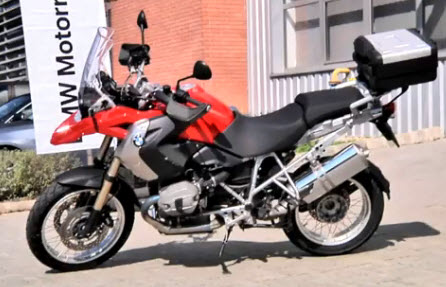
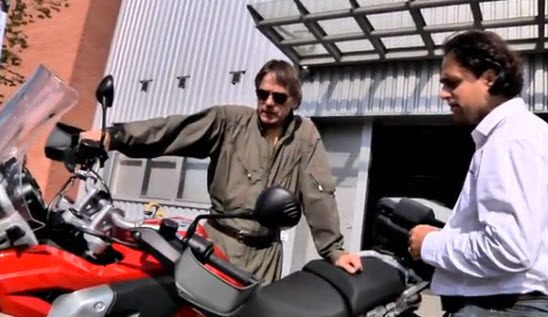
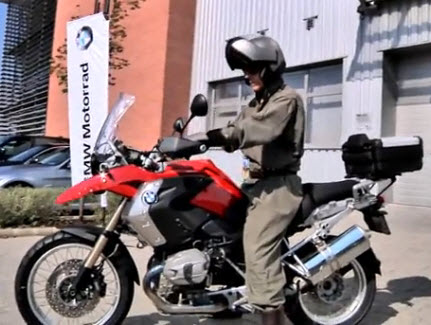
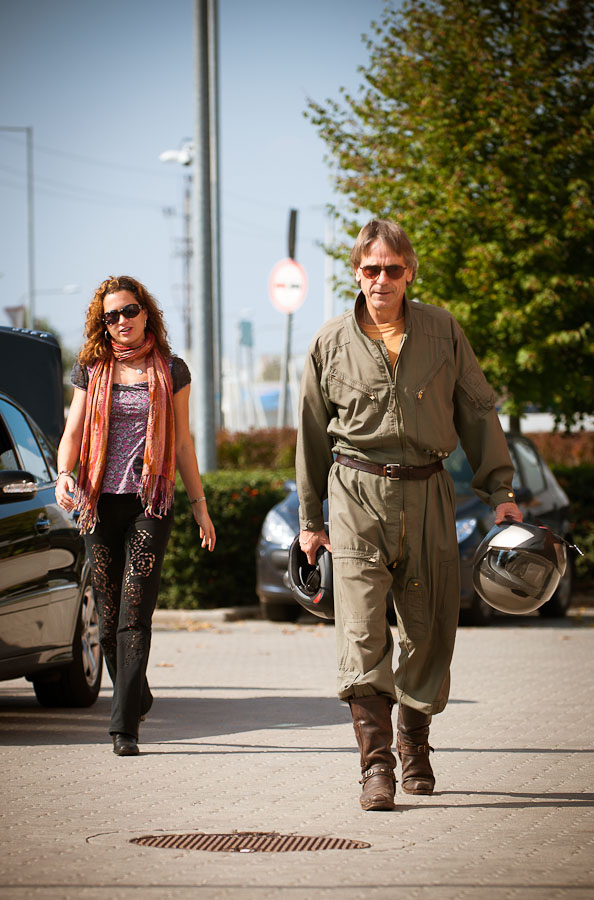
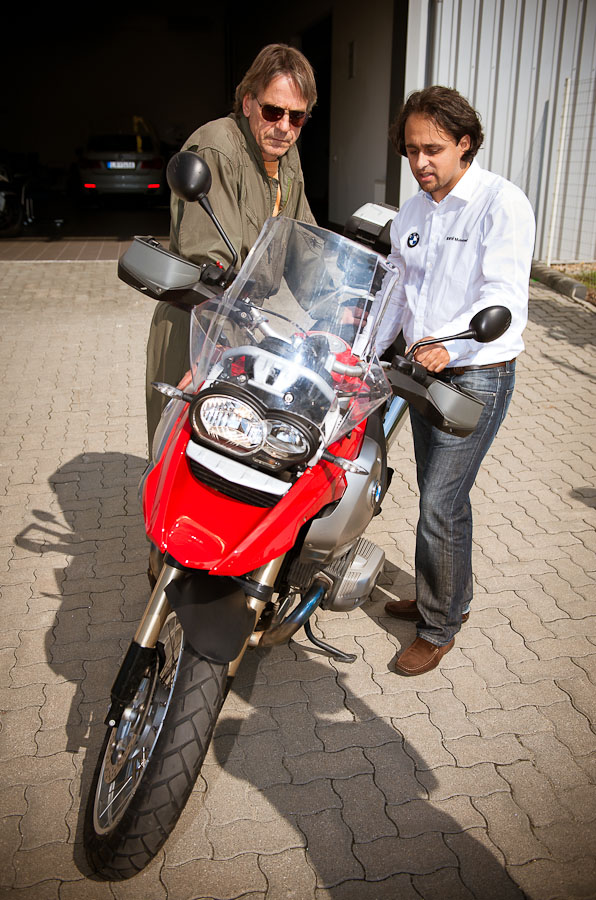
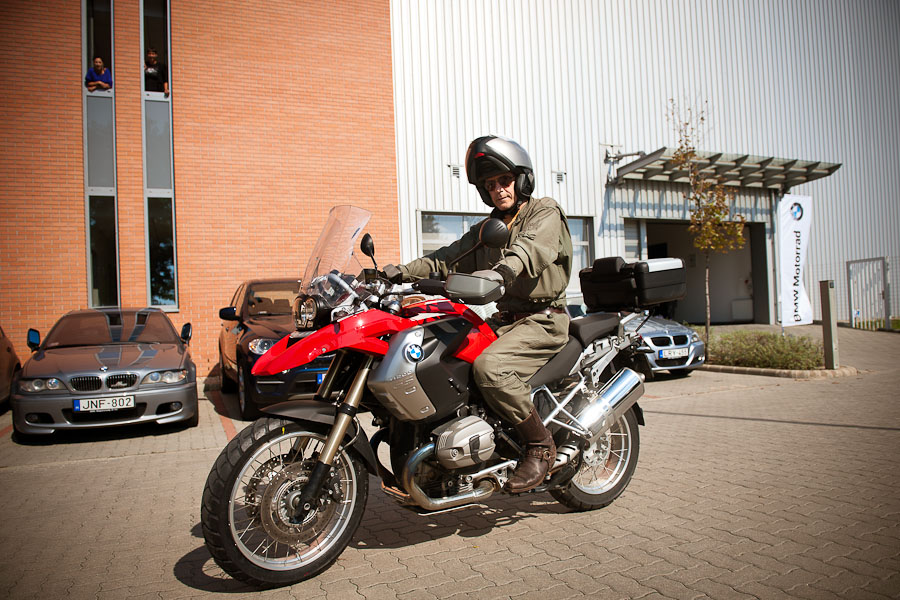
Jeremy Irons picks up BMW R1200 GS

21 September 2010

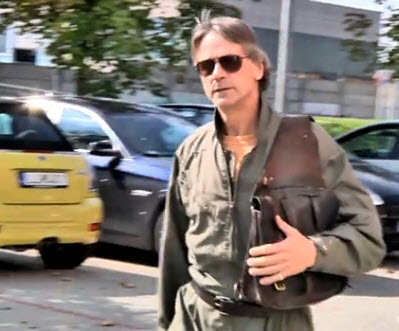
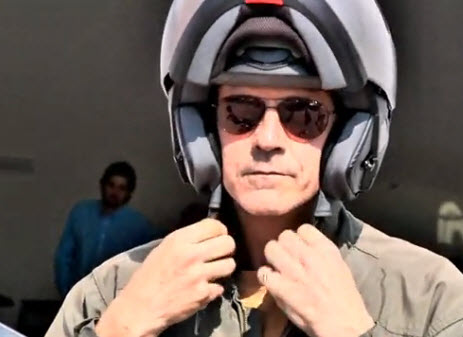
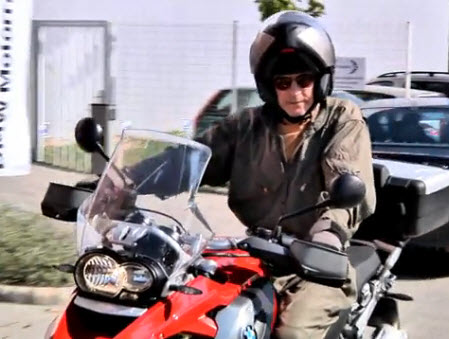
Jeremy Irons picked up a BMW R1200 GS motorbike to use in Budapest, while filming The Borgias:

Vodpod videos no longer available.

This slideshow requires JavaScript.

Share