Thank you to Shiloh Fernandez Source for the video links:

Thank you to Shiloh Fernandez Source for the video links:
Jeremy Irons is currently working with Blenheim Films on a documentary about the world’s trash and pollution. He has worked with Blenheim Films previously.
Blenheim films is an independent production company based in Oxfordshire, England, created in 1998 by Candida Brady and Titus Ogilvy.
_______________________________________________________________
Jeremy Irons was in Iceland in April 2011 with a crew from Blenheim Films.
_______________________________________________________________
Jeremy Irons is to be in San Francisco Thursday and Friday, April 14 & 15, 2011, with a British film crew making a worldwide documentary about recycling, for the BBC. San Francisco was chosen, said Robert Reed of Recology, because it has become known internationally for recycling, and, in particular, a compost program that collects food scraps at restaurants and compostables from all properties, then creates compost for 200 vineyards.
Since this program began, it has created enough benefit to offset all emissions from traffic crossing the Bay Bridge for more than two years. “We make the really premier compost in America,” Reed said. “The vineyards can’t get enough of it.”
Q + LA – Jeremy Irons – LA Times Magazine – Read original article here.
photo by ANDREW MACPHERSON
Of course Jeremy Irons makes his own cigarettes. He keeps in his pocket a two-sided leather pouch. One half holds the tobacco, the other those dark brown rolling papers favored by the Brits. He is unrepentant about what most everyone labels a vice. In March of 1987, despite her admonishments, he famously puffed away while sitting next to Princess Diana at a charity gala on the U.K.’s National No Smoking Day.
He’s chimney-esque. It’s why we’re sitting outside, mid February in New York City, when the forecast calls for rain. But Irons has the most exquisite vocal cords, and perhaps tar and nicotine are the elements of his phonetical magic. To beat a dead horse here: Up close and in person, his pipes are almost unnerving, having an effect not unlike the enveloping THX surround-sound promo that’s played before movies start.
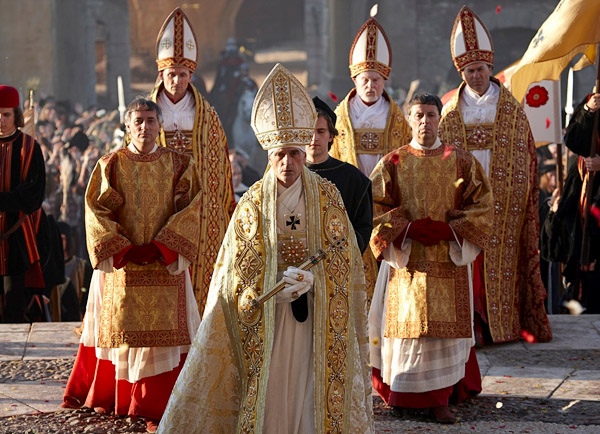
Irons downplays his golden larynx with a proper Englishman’s manners, but everyone else has taken notice. He’s frequently called upon to narrate spoken-word recordings and documentaries, most recently The Last Lions from National Geographic, about the big cats in Botswana. (Familiar sonantal territory—who can forget his terrifying turn as Scar in The Lion King?) This month, that voice—and the body that houses it—stars in The Borgias, Showtime’s new drama series about a Spanish cardinal who ascended to the Papacy by decidedly Machiavellian means. Let’s hear it for the silver-tongued cads.
What drew you to The Borgias?
Neil Jordan, because he’s a director and writer I admire, and I was aware that a lot of the best writing and filming was happening on American television. [Also] the Borgias [1492–1503] is a very interesting period.
How far from history does the show veer?
Not that far. It’s difficult to get accurate historical information from that time, but there was a huge amount of wild stories about [Pope Alexander VI].
Are you anticipating flack from the Catholic Church?
Obviously they’re nervous, but I hope it’ll be rather like if Queen Elizabeth went to see a production of Richard III. She wouldn’t say, “This is absolutely disgraceful.” She’d think it was historical, and I hope the Pope and the Vatican hierarchy take that attitude. It’s partly about how all power corrupts. That hasn’t changed.
What age were you when you thought, I want to make acting my life’s work?
Very late. Something stirred in me when I saw Lawrence of Arabia and saw what Peter O’Toole did in that. I thought, I’d love to be involved in that sort of thing, but I never in my wildest dreams thought I would be.
So, you were born on an island off an island off an island?
The village where I was born wasn’t actually an island, but it was always known as the Isle of Geese, within a harbor on the Isle of Wight [off the southern coast of England]. I learned to sail when I was 10. I have a little boat of my own, and I did part of the round-the-world race—from New Zealand to Australia.
In Reversal of Fortune, we see your Claus von Bülow character on a boat. Do you ever run into him in London?
Sometimes, but I didn’t meet him until about four years after the movie. I knew he wouldn’t tell me anything I didn’t already instinctively know. I couldn’t ask whether he tried to kill his wife. I think I know the answer, and that’s how I played it in the film. He’s funny. We met at a cricket match at Paul Getty’s, who was a mutual friend.
Did you know ahead of time that he’d be there?
No, I arrived, and Paul said, “Claus is in the house looking around the library. I know you’ve never wanted to meet him, and so I won’t mind if you skedaddle off.” And I said, “Well, I’d quite like to meet him now.” I was sitting watching the cricket, and I heard this voice behind me saying, “You see—I’m not fat!” I turned round and said, “I never said you were fat. I used to do interviews, and I said you were bigger than me. Well, you’re a bigger man than me.” He said, “Do you hear from Alan Dershowitz?” and I said, “No, actually. Since the movie I haven’t heard from him.” And so [von Bülow said], “I understand he’s representing Michael Tyson and Leona Helmsley.” I said, “Yeah, I read about it.” [He replied,] “You haven’t been asked to play either of them, have you?” And I said, “I thought Mike Tyson might be beyond my range, but I’d have a crack at Leona.”.
I would think it’d be weird to be face-to-face with someone you’ve portrayed onscreen.
Quite. Originally I didn’t want to do Reversal of Fortune. I thought it was a bit tasteless. [Sunny von Bülow] was in a coma, the kids were still about, and I thought, Why rake over these coals? It won’t be much fun for them. But Glenn [Close] persuaded me. She said, “If you don’t, someone else will.”
What makes you nervous?
I get slightly nervous when I don’t find work that really tests me or when I’m riding horses or I have to change my routine. It gets harder as you get older to learn lines, and sometimes I get nervous I’ll forget them. Not seriously so. A little adrenaline is good, but nerves tend to defeat what you’re trying to do.
When did you first set foot in Los Angeles, and what were your initial impressions?
I had just made The French Lieutenant’s Woman. I stayed at the Chateau [Marmont] and had a meeting with Natalie Wood and Robert Wagner about some project. It was all very nice. Of course, nothing came of anything. A lot of fat is chewed in L.A. I wasn’t seduced. I was a bit excited about meeting famous people for a while, and there are some nice people there, but I knew I never wanted to live over the shop.
Has anyone ever rendered you starstruck?
Yeah. I was doing The Real Thing at the Plymouth [on Broadway]. There was a knock, and a voice said, “Mr. Irons.” I looked, and it was Paul Newman. He blew me away.
When you won the Best Actor Oscar for Reversal of Fortune, you thanked your Dead Ringers director David Cronenberg and said, “Some of you may understand why.” Tell me what you meant by that.
I’d made that film the year before, which got a lot of feedback in Hollywood [with people] saying, “It’s outrageous that you’re not nominated.” I was playing twin gynecologists, and it was quite eye-catching but not Oscar subject matter. But without that movie…This is why I thanked David Cronenberg.
Did the twins of the movie really die together, both from barbiturate withdrawal?
I don’t know whether it was cold turkey or…The problem is if you’re doing cold turkey and you take more drugs, you’re in trouble. They were found naked in their flat, just wearing socks.
When you were walking up to accept your Oscar, you stopped and kissed Madonna, who was sitting front row with Michael Jackson during their famous 1991 Oscar date.
I would have stopped to kiss to anybody!
Are you two chummy?
No! But at that moment, I nearly kissed Michael Jackson.
Can you enjoy a Jeremy Irons film the way the rest of us can?
It takes me about 20 years. I saw The Mission about 20 years after I made it, and I was able to see it quite dispassionately and see the guy on the screen. I thought, He looks a bit like my son. Who’s that?
You’ve had the same people in your inner circle for decades.
I like longevity. You get to know people, their ups and their downs, their goods and their bads. I’ve always thought the devil you know is better than the devil you don’t.
You’re known for having one of the greatest voices in the world. What is your favorite word to say?
Crepuscular. The crepuscular hour is when the sun dips. In movie terms, you call it the magic hour. I also like excellent. Excellent is a word I use because it’s very encouraging, and I learned long ago that when anybody came up with an idea I would say, “Excellent.”
But what if the person’s idea is actually horrible?
Well, you just don’t do it.
Stylist: Brandon Palas
Groomer: Helen Jeffers
Shirt: Ann Demeulemeester
British actor Jeremy Irons traveled to Ísafjördur in the Icelandic West Fjords last weekend along with a crew from the production company Blenheim Films, which is making a documentary on pollution. Irons is the film’s narrator.
The outgoing editor of Iceland Review’s print edition, Bjarni Brynjólfsson, served as an assistant to the crew. He said the filmmakers learned of the dioxin pollution caused by the waste burning station Funi in Ísafjördur and wanted to include it in the documentary.
The project is international and covers problems caused by pollution all around the world. Brynjólfsson told Morgunbladid Irons had not wanted to give any interviews during his stay in Iceland.
These additions have just been posted on the Charities page.
This information is nothing NEW, but it’s worth mentioning again…
Jeremy supports Freeing the Human Spirit and the Prison Phoenix Trust.
Freeing the Human Spirit is a National Not-for-Profit Registered Charity which provides inmates with a program of meditation and yoga. Meditation and yoga are ancient ways of creating internal silence leading to a feeling of peace. Jeremy Irons is an honorary patron. See the ON STAGE page for more on Jeremy’s efforts to support the chairity.
The ability to not judge others is a rare, but admirable, trait.
Oscar-winning actor Jeremy Irons describes his Canadian friend and mentor Sister Elaine MacInnes – an 83-year-old Catholic nun and Zen master – as one of the most non-judgmental persons he has ever had the fortune to meet. “I’ve only met four or five amazing people in my life, and she is one.”
Zen brings quiet solitude to solitary
What an interesting woman – Sister Elaine MacInnes
Freeing the Spirit…Through Meditation and Yoga – paperback at Amazon.com
Jeremy Irons is a patron of The Prison Phoenix Trust.
The Prison Phoenix Trust encourages prisoners in their spiritual lives through meditation and yoga, working with silence and the breath.
They offer individual support to prisoners and prison staff through teaching, correspondence, books and newsletters. People of any faith or no faith can benefit. They honour all religions.
The Prison Phoenix Trust was registered as a charity in 1988. They work all over the UK and The Republic of Ireland in prisons, young offender institutions, immigration removal centres, secure hospitals and probation hostels.
A key aspect of our work is training and supporting qualified yoga teachers to teach in prison and other secure conditions.
Irons dissects complex character – Toronto Sun
Jeremy Irons on playing Pope Alexander VI as a regular dude – Montreal Gazette
Playing Jeremy Irons’ son was intriguing for actor – Sioux City Journal
Liz Smith: The Borgias Will Slay You
‘Borgias’: Showtime couldn’t make this stuff up – USA Today
Oh God, you Devil! – New York Post
Jeremy Irons on finding the good side of bad guys – Toronto Globe and Mail
Showtime takes on a scandalous Pope Alexander VI with The Borgias – L.A. Times
Review: Jeremy Irons Brings Charisma to ‘The Borgias’ – Maureen Ryan, TV Squad
Family values – ‘Borgias’: historical, incestuous, murderous fun – New York Post
The Borgias: We are family – from TV Soundoff
The Borgias: The Original Crime Family – from Pop Culture Passionistas
The Family That Sins Together – Toronto Star
Showtime’s sinister ‘Borgias’: Vile, corrupt, addictive – The Washington Post
Jeremy Irons stars in Showtime’s The Borgias – ABC News and Associated Press
Jeremy Irons has admitted acting doesn’t get any easier with age – from Yahoo News
“Borgias” doesn’t let facts get in way of sexy story – Los Angeles Times
Read the full original article at: http://www.nytimes.com/2011/03/27/arts/television/the-borgias-a-showtime-mini-series-starring-jeremy-irons.html
March 25, 2011
Plum Role: History’s Ultimate Godfather
By CHARLES McGRATH
ALTHOUGH they lived in the 15th and 16th centuries, the Borgias, the subject of a new nine-part Showtime mini-series that begins next Sunday, were a family made for TV. The Borgias were rich, ruthless, scheming and corrupt, and so sexually voracious that, if you believe the rumors, they slept with everyone, including one another. Mario Puzo, who worked on a novel about them, called the Borgias the Corleones of the Renaissance. They also resemble “The Sopranos” a little. Imagine if Tony, instead of running a garbage hauling business, had bought himself the papacy.
“The Borgias,” which cost $45 million to make, was created, written and produced by the film director Neil Jordan, who also directed several episodes. It is Showtime’s latest entry in what is becoming a high-stakes game on cable TV now that it’s no longer enough merely to show Hollywood movies or the odd sporting event. If you want to sell cable subscriptions these days, you need not just original programming but a long-running, franchise-defining series like “The Tudors,” Showtime’s recent hit.
A bankable star doesn’t hurt either, and in the new series the Borgia paterfamilias, Rodrigo, who became Pope Alexander VI, is played by Jeremy Irons, not exactly typecast. To judge from his famous portrait by Cristofano dell’Altissimo, the historical Rodrigo, corpulent and hatchet nosed, looked as if he had been inflated with a tire pump. At the time of his death, or so the legend goes, he was so bloated and debauched that when his body was inserted into the coffin, someone had to jump on the lid to get it shut.
“When we first talked about the part, Jeremy was worried that he didn’t have that bulbous weight,” Mr. Jordan said recently, speaking by phone from his house in Ireland. “I told him that if we can get this guy properly situated, torn between God and politics, the weight wouldn’t matter.” He added: “I wanted someone who would understand the kind of history here. ‘The Borgias’ isn’t just a saga of poisoning and nubile women, like a Ken Russell movie. Well, we do have all that, but we also put this figure in historical context.”
Mr. Irons, still elegantly handsome at 62, doesn’t look much like Pope Alexander. He nevertheless has, both on screen and in person, a slightly detached, regal quality, a darting, glinting intelligence, and occasionally an air of weary melancholy, all very useful papal attributes. He also has a long history of playing characters who are morally ambiguous if not outright villainous: Humbert Humbert in “Lolita”; the deranged twin gynecologists in David Cronenberg’s “Dead Ringers”; the accused wife poisoner Claus von Bülow in “Reversal of Fortune” (for which he won an Academy Award); even Scar in “The Lion King.” And with that deep, rumbling voice, like an organ echoing in a cathedral, he sounds the way a Renaissance pope should sound: the sibilant S’s, the luxurious drawn-out vowels suggesting knowledge acquired outside the seminary.
Mr. Irons speaks this way in real life too, and in New York recently, draped over a chair in his suite at the Lowell hotel, he employed that same voice to say, “We don’t talk about my voice.” He doesn’t like to be made conscious of it, he explained, recalling a conversation he had years ago with the actor John Hurt. “You know all these young actors coming up, 18, 19, 20 — rather good, aren’t they?” Mr. Hurt said. “You know what I do? I go up and say, ‘You’re a great actor, with such a fantastic voice. Have you ever listened to it?’ ”
And then they’re finished, Mr. Hurt said gleefully.
Mr. Irons was a late bloomer. He grew up well to do, on the Isle of Wight in England and went to Sherborne, a midlevel boys’ boarding school, where he was a good athlete but such an indifferent student that the headmaster predicted he would wind up as a paratrooper. He tried being a social worker before becoming an actor and then had such trouble finding parts that for a while he supported himself as a home remodeler. His breakthrough didn’t come along until 1981, when he was cast as the earnest, proper Charles Ryder in the 11-part television adaptation of Evelyn Waugh’s “Brideshead Revisited.”
“We had just come through the ‘Look Back in Anger’ phase, and actors like Tom Courtenay and Albert Finney were sort of fashionable — what I call the kitchen-sink actors, actors with local accents,” he said. “It was ‘Brideshead’ that made it acceptable to have someone who was tall and English and spoke properly as a hero.”
Nevertheless he mostly sees his archetypal Englishness as a liability rather than a strength. “The American version of the Englishman is rather like the English version of the American — sort of one-dimensional and not very attractive,” he said. “I’ve tried not to capitalize on my Englishness. If I had the charm of David Niven or Hugh Grant, then maybe I would, but I don’t. I’m dirtier and more odd.”
The roles of characters who are strange or morally enigmatic have come to him, he went on, partly by accident, or because he has a reputation for playing them, and partly because he has sought them out. “Certainly they attract me,” he said. “I’m always interested in good and evil, who’s a good person, who’s a bad person, believing, really, that we’re all rather gray.”
No one is grayer than Rodrigo Borgia, who bought the papacy in a rigged election, had numerous mistresses and fathered four children yet was also a skilled diplomat and renowned patron of the arts. Mr. Jordan said he thought the whole family has suffered from bad press: “A lot of the history was written by Rodrigo’s successors, especially by Cardinal Giuliano della Rovere, who became Pope Julius II. There was no Gibbon or Niall Ferguson to write about the Borgias, and so they become a little demonized.”
He added that what he found interesting in writing the script was that once Rodrigo was put in the context of his family, he remained attractive no matter how evil he became. Oddly, the villain of “The Borgias” is Rodrigo’s rival, della Rovere (played by Colm Feore), a model of probity and holiness.
Mr. Irons said that in researching the part he made a list of all the qualities attributed to Rodrigo Borgia. “It was like a rainbow,” he said. “The list goes all the way from ‘generous man,’ ‘wonderful company,’ ‘a great organizer’ to ‘poisoner,’ ‘cruel’ and ‘despotic,’ all the worst adjectives you can think of. I thought: ‘That’s very interesting. Maybe it’s all true. Maybe from different vantage points all those adjectives could be seen to be the truth.’ Film is always a kind of patchwork anyway, and my hope is that Rodrigo will emerge as a man of many different colors and many different behaviors. He’s completely different when he’s being persuaded by his daughter or bullied by the mother of his children or negotiating with the Spanish ambassador. I never judge. That’s not my job. I just try to link all those attributes.”
Mr. Jordan said: “Jeremy does manage to humanize the monster, doesn’t he? I loved him as Claus von Bülow. You had absolutely no idea what that character was thinking.”
About playing the pope, a character who is always being deferred to while being lugged around on a throne or gliding through his palace in robes, Mr. Irons said, “It’s daft, really, but someone’s got to do it.” Then he became serious and went on, “I hope the Vatican doesn’t go down the obvious path of creating a great controversy over this, though I’m sure Showtime would love that.”
He added: “I think the great strength of Neil’s script is that because he’s a very bright man and a historian who reads very widely, he’s found something possibly nearer the truth about the Borgias, though God knows what the truth really is. I’m hoping that the audience will be totally confused about whether to root for this man. It’s a bit like von Bülow, you know. Did he do it or not?”
The Wall Street Journal
ARTS & ENTERTAINMENT
MARCH 25, 2011
Feeling Wrong for the Role, at First
By AMY CHOZICK
Read the original article here – Wall Street Journal Online
Thirty years after he played Charles Ryder in the British miniseries “Brideshead Revisited,” actor Jeremy Irons takes on another TV role that involves Catholicism, opulence and distrust: Rodrigo Borgia, the scheming patriarch and corrupt Pope Alexander VI in Showtime’s “The Borgias,” premiering April 3.
Watch a scene from Showtime’s new drama ‘The Borgias.’ The series stars Jeremy Irons as Pope Alexander VI. Courtesy Showtime.
Mr. Irons, 62, is perhaps best known for film roles including Claus von Bülow in “Reversal of Fortune,” for which he won an Oscar, and Humbert Humbert in “Lolita.” He also starred in TV miniseries like the 2009 Lifetime biopic “Georgia O’Keeffe” with Joan Allen and “Elizabeth I,” with Helen Mirren.
His deep, languid voice is currently in theaters as the narrator of wildlife documentary “The Last Lions.” (He voiced the villain Scar in “The Lion King.”) In “Margin Call,” an upcoming film about the financial crisis, Mr. Irons plays an embattled Wall Street CEO based on Lehman Brothers’ Richard Fuld.
Mr. Irons was reluctant to commit to an ongoing TV series, but the nine-episode cable run and the fact that Irish director Neil Jordan (“The Crying Game”) would write and direct “The Borgias,” convinced him.
The Wall Street Journal: Why is “The Borgias” being touted as a kind of medieval version of “The Godfather”?
Mr. Irons: There’s an element in common in that Don Corleone was an Italian in America. Rodrigo is a Spaniard in Rome. Yes, that element of the manipulator and the immigrant trying to find power and how to hold onto it and influence people as the head of the family. But those parallels don’t run very deep. I think it’s sort of a marketing idea Showtime had. [Mario] Puzo wrote a novel [“The Family”] about the Borgias, of course.
You’ve said you don’t think you’re right for the role of Rodrigo. Why not?
Neil [Jordan] said “Do you want to play Rodrigo Borgia?” I got home and Googled him and I told him “Christ, you don’t want me. You need James Gandolfini.” I could think of four or five actors who would physically be right for the role. I said “I can’t play that guy.” I have an aesthetic quality that is expected from a pope, whereas this guy was a big, sweaty Spaniard with a big appetite—a lot of food, a lot of women.
So why did you change your mind?
Neil said “No, it’s all about power and how power corrupts you and how you manipulate it. No one knows what he really looked like.” So he convinced me.
Even though Rodrigo is an evil megalomaniac, there’s some humor in him. Did you bring that to it?
I think it’s all in Neil’s writing. There’s sort of a natural amusingness about the situation which one doesn’t have to play. You just do what you do and it brushes off on somebody and there’s a smile there.
Speaking of humor, why wasn’t the 1997 film version of “Lolita” you starred in funnier? The book is very funny.
That book is full of irony. I think we were so nervous about the subject when we were making it that we were walking on egg shells. We could have used a lot more irony. The Kubrick version had more irony but it missed a lot of other things.
In addition to “The Borgias,” you’ve recently done a couple of episodes of “Law & Order: Special Victims Unit.” How did that come about?
Well, “SVU” is a different kettle of fish. I was in Budapest finishing “The Borgias” and they asked and I said I don’t know the show. They sent me an episode with Robin Williams and one with Isabelle Huppert. I said “This is good, it’s fine. It is what it is.” For an actor it feels a little like you’ve just finished reading Proust and you think “I’m going to read a Dick Francis novel and it will take me a day and be great.”
“The Tudors” did very well for Showtime but it got criticism for being soft porn in costumes. Will “The Borgias” have as much sex and nudity?
No. There are a lot of channels doing that. I think we can do better than that. This adaptation, for example, and there have been loads, doesn’t fall into the trap of writing all these stories about incest. In those days whole families used to sleep in the same bed. It’s better to get inside characters, who they are and why they do what they do than to make it sensationalist.
You seem to regularly go from film to TV to theater. Which do you prefer?
It’s just the material. They all have good things about them and they all have bad things about them. Theater is great because you can really stay in one place and work on the character in depth over a long period. It doesn’t pay as much as movies, but is often better written. The problem with TV is people are watching soccer at the same time. I’m really lucky to hop around. I’m a jobbing actor.
How is developing a character for TV different from one for film?
The huge luxury is time. A two-hour movie—and, if you’re lucky, it’s two hours—you can tell a story but it’s hard to develop the inconsistencies of a character and have time to bring all those inconsistencies together.
Are you Catholic?
My wife is. My children are. I don’t belong to clubs.
It may shock a lot of Catholics to see a Pope who behaves like Rodrigo Borgia.
Well, the medieval mind would’ve had no problem with a pope who has a mistress. Why do you expect him to be a God? He’s not a God. He’s a man, with all the weaknesses and failures. [Today] we expect our leaders to be squeaky clean and when they turn out to be normal people with normal desires, we say this person shouldn’t be our leader. Man is just doing his best.
Have you discussed a second season with Showtime?
We have a little. Neil has talked to me about some ideas. It’s hard to get the Pope out of the Vatican. I’m very grateful Showtime was hands-off when we were shooting. They left us alone. I hope that will continue because I don’t think you can make movies or TV series by committee.
Printed in The Wall Street Journal, page D5

Copyright 2011 Dow Jones & Company, Inc. All Rights Reserved
You must be logged in to post a comment.