Thank you to scarletthammer on Tumblr for the scans.
Radio Times 30 June -6 July 2012
Kings of Cool – Classic Shakespeare with Britain’s biggest stars
Click on the images for full size:


Thank you to scarletthammer on Tumblr for the scans.
Radio Times 30 June -6 July 2012
Kings of Cool – Classic Shakespeare with Britain’s biggest stars
Click on the images for full size:
From the London Times, Saturday 23 June 2012.
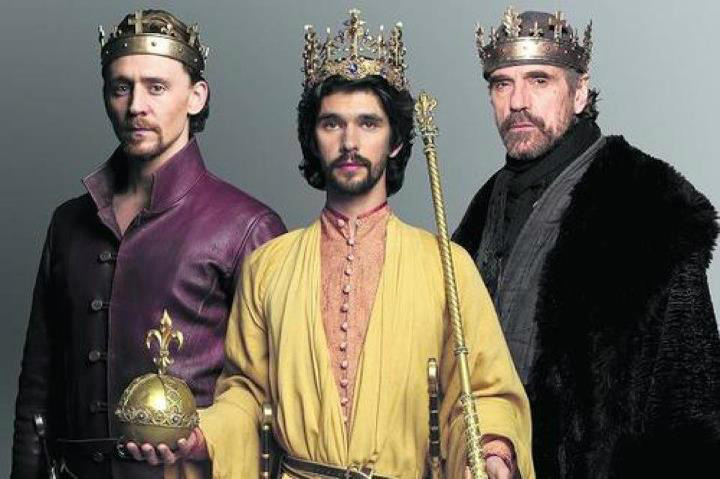
Ben Whishaw, Jeremy Irons and Tom Hiddleston are bringing the history plays to the BBC. Andrew Billen talks to them.
Uneasy lies the head that wears the crown — uneasy even, one imagines, if it is worn merely for Harry, England and the BBC. Any actor playing the king in Shakespeare’s second tetralogy of English history, the Henriad, composed of Richard II, the two parts of Henry IV, and Henry V, must feel the crown’s weight. It has rounded the mortal temples of Alec Guinness, Paul Scofield, Derek Jacobi and Mark Rylance (among the Richards), of John Gielgud, Jon Finch and Tom Fleming (the last of whose Henry IVs became the voice of royal ceremonial for the BBC), and, most burdensomely, of an army of hyper-distinguished Hals led by Ralph Richardson, Laurence Olivier, Richard Burton and the just-knighted Kenneth Branagh.
But for Ben Whishaw, Jeremy Irons and Tom Hiddleston, who sequentially play the kings in the BBC’s new cycle, The Hollow Crown, there is another responsibility. Shakespeare on TV has fallen out of fashion. The once familiar BBC Shakespeare production — there were more than 60 between 1945 and 2000 — has disappeared to be replaced by the occasional BBC film of a hit stage version. Even with Ian Holm as Lear, David Tennant as Hamlet, and, tomorrow on BBC Four, Jeffrey Kissoon as the RSC’s current Julius Caesar, this is not quite the same. The BBC’s last Richard IIs, for instance, were Fiona Shaw (from the gender-swapping 1995 National Theatre production) and Mark Rylance, filmed at the Globe in 2003. Incredibly, there has not been a BBC Henry V for 32 St Crispin Days. That play begins by apologising for cramming “so great an object” within the “wooden O” of the stage. Today, the question is whether Shakespeare, with his worrisome language, lengthy scenes and habit of arriving DOA in classrooms, is interesting enough to fill our great plasmatic rectangles.
Well. I have seen all four films in the BBC’s The Hollow Crown series, and my living room echoes resoundingly “yes”. When the BBC announced the project in September 2010, the histories seemed an odd place to begin a Bard revival. Now, in the summer of the Jubilee, as the kingdom again ponders a succession, they seem oddly relevant, if not as controversial as when Richard II’s abdication scene was removed from print editions so as not to offend the first Elizabeth. Politicians now, as Shakespeare’s monarchs then, strain for legitimacy amid shifting alliances. Nor is there anything remote about sending young men abroad to die for opaque causes: as the grunt Williams tells Henry V just before Agincourt, when he dares to speak of the justice of his cause: “That’s more than we know.”
Taking advantage of the nation’s widescreens, the executive producers Sam Mendes and Pippa Harris have opened the dramas out, cinematically, into Britain’s countryside, castles and cathedrals. The plays’ respective directors, Rupert Goold, Richard Eyre and Thea Sharrock, have encouraged their casts to deliver often heavily-cut speeches conversationally. Soliloquies, following the convention of Olivier’s 1948 Hamlet, are delivered as voiceovers. But what casts! Not even counting those kings, to whose number one must admit the dourly brilliant Rory Kinnear as Richard’s successful challenger Bolingbroke, there is the fat-suited Simon Russell Beale as a delicate, scheming Falstaff, Joe Armstrong as Hotspur, and, down in Falstaff’s unruly alternative court in Eastcheap, Julie Walters as Mistress Quickly. Again and again, actors we have taken for granted prove true Shakespeareans.
But it is when the kings wrangle over the crown that the films electrify. Ben Whishaw as Richard, reluctantly persuaded to abdicate in Bolingbroke’s favour (“Here cousin!”), bursts into tears, almost hands over the crown, takes it back and finally rolls it truculently towards Kinnear, who is wearing an expression that might be texted as “WTF?”.
“When someone is that deluded about themselves, it is always slightly comic,” says Whishaw, last seen in The Hour on BBC Two, and, at 31, two years younger than Richard at his deposition and death. “I felt his story was the story of someone who was forced to confront their vulnerability, who has constructed an identity of power and invulnerability and godlike authority, and whose illusions about himself are shattered.”
Whishaw dresses for his sacking in a priestly white gown trimmed in orange. In an earlier beach scene, in which he makes a stage of a rock, he wears his crown over a scarf worn a la Lawrence of Arabia. Mixed in with his divinity is a dessert helping of camp. “What Rupert [Goold] and I talked about was a Michael Jackson parallel. That was our reference in terms of his theatricality, the sense that everything is a performance and everything is about maximising the mystery around him. And like Jackson he is surrounded by people who just say yes to him.”
But there are more mundane parallels for an age of economic uncertainty. Whishaw sees Richard both as a megastar and a bloke who loses the job that defined him. Yet, once reduced to nothing, in his cell, his imagination spring opens and he identifies with others, even his old horse. “When I had finished working on this play — and maybe all Shakespeare is like this — I had the sensation that the play seemed to be about everything in life,” Whishaw says. “It is at once very specific and completely universal.”
For Jeremy Irons, who takes over from Kinnear as Henry IV in the two plays that follow Richard II, the story burrows towards the particular and the personal. Henry, so assured when he was Henry Bolingbroke, a duke unjustly exiled by the whimsically despotic Richard, is now plagued by ill health brought on by guilt at having usurped a divinely anointed king. The barons, not liking their new monarch much more than the last, again divide the kingdom. Any actor playing this Henry finds the plays’ form following their content. He is the star in title only. In performance he vies for attention with his tearaway son-and-heir Hal, his rebellious rival Hotspur, and, above all, Falstaff, who not only represents that hedonistic boozer faction in the English character but is a dissolute second father to his son. For many theatre-goers over the centuries, and for Orson Welles in his movie Chimes at Midnight, the star ofHenry IV is Sir John Falstaff.
Irons’ solution to the plays’ divided attentions is to make Henry’s throne its own centre of gravity, turning it into a virtual sick bed. Irons, 63, six years older than Henry at his death, wears the hollow crown over a hollow face, in a performance informed by his research into the real Henry, a “dazzling youth”, champion jouster, unjustly exiled and rightly outraged when Richard takes the estate of his dead father (Patrick Stewart’s John of Gaunt). “You would think he would be perfect, but in fact illness got him,” Irons says. “He used to have these fits. He would lie there apparently dead for ten, 20 minutes and then he would revive. No one quite knows what it was.” But it adds to the scene when Hal believes his father dead.
In a 1979 Henry IV, the BBC gave Jon Finch’s king leprosy, allowing for some Pilate-style hand-washing undermined by an off day in the continuity department that resulted in the king both wearing and not wearing gloves at the time. This time Richard Eyre determined leprosy would only mean Irons getting up even earlier into make-up. Instead Irons complicates his malaise with a father’s despair.
“For me it is a domestic play and a play about a father and a son — quite common themes: I am missing a boy who is not there and is up to I-know-not-what. I think quite a lot of fathers go through that time with their sons when they are demanding their independence. I certainly had it with my first boy. He pulled away and some years later he came back and realised how similar he was to me.”
Sam Irons is a photographer, but Max Irons is already, at 26, a Hollywood leading man (Red Riding Hood). He has talked openly of being expelled from Bryanston when a master caught him having sex. “Now Max is trying to steal my crown,” his father jokes. “But you also think of our current Prince of Wales. He is not up to making a fool of himself, but he has no function and he is trying to find his place. Of course, like Hal, as soon as he gets the job, I am sure he will be magnificent.”
Richard Eyre rang Tom Hiddleston to say he had won the part of Hal/Henry V on the wedding day of Prince Charles’s elder son two Aprils ago. Tom said yes. Now 31, barely two years older than Henry at Agincourt, he had been alerted to the “muscular, visceral” Shakespeare as a schoolboy when he saw Branagh’s 1989 film ofHenry V. Over a term at Rada, he paperbacked his way through Shakespeare at a Café Nero near Archway, London. “I distinctly remember the weekends I read the histories. When I got to Henry IV and Henry V, I thought to myself, very privately: ‘What a prospect that character is! What a journey he goes on!’ ”
No prep, however, could forearm him for his first day of filming, which, owing to the professional commitment of Beale, was onHenry V (15 weeks later Hiddleston’s reverse journey would end in the studio that mocked up Eastcheap in Henry IV). “It was an extraordinary thing. Day one, take one, slate one was riding along the moat of Arundel Castle and then delivering, ‘Once more unto the breach.’ ”
Branagh renders the Harfleur battle speech from a white horse, crisply and at speed, revving up the “r” in “tiger”. Olivier before him, riding an equally pristine steed, waits for perfect quiet and speaks unlisping Churchill. But Hiddleston dismounts and kneels amid a group of soldiers, fixing them in turn. Breathlessly, almost desperately, he gives his pep talk as if the English are one-nil at half time and he is going on himself. The playing owes much to the realism of HBO’s Band of Brothers (which, of course, owes much to Shakespeare).
“The play is an examination of war through the eyes of this one man,” Hiddleston says. “There are brutal speeches in there that are not pretty. I must be careful. Thea Sharrock has not made an anti-war film but it is certainly a pro-peace film. When Henry tells Williams ‘every subject’s duty is the king’s, but every subject’s soul is his own’ it is an exhortation to accountability. Take responsibility for who you are and what you stand for.”
Hiddleston, who has played in several father-son struggles (Randolph Churchill to Albert Finney’s Winston in The Gathering Storm, Loki to Anthony Hopkins’s Odin in Thor last year) clashed lightly with his scientist father about whether to go into acting. One of the funniest moments of his Henry is when he delivers a perfect Irons impression down at the Boar’s Head. But the Henriad has got to him deeper than that, either that or 4am starts, pre-dawn runs and filming till dusk did.
“I don’t want to sound too pompous or pretentious but people I have spoken to who have played Hamlet and other huge, totemic parts say they change you permanently. And having played Henry V, I tend to agree. Part, I think, of the appeal and strength of Henry V as a character is his astonishing ability to back up words with action. I truly think I understand the nature of responsibility a little more.”
The responsibility of returning Shakespeare to television was not the three kings’ alone, but Whishaw, Irons and Hiddleston have more than delivered. As Whishaw says, we are told, and sometimes think, that Shakespeare doesn’t work on television: “His poetry needs a space to live in. It is metaphorical. Blah, blah, blah.” The Hollow Crown refutes such pessimism. Shakespeare is as intimate as television and as outsized as its widest screen. Our wooden O is the box in the corner of our little rooms, confining mighty men, and liberating them too.
The Hollow Crown begins with Richard II on BBC Two, June 30 at 9pm

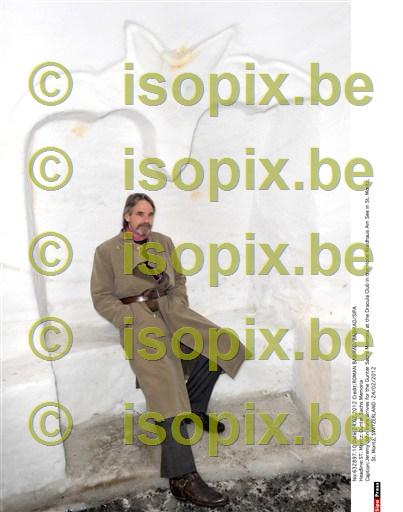
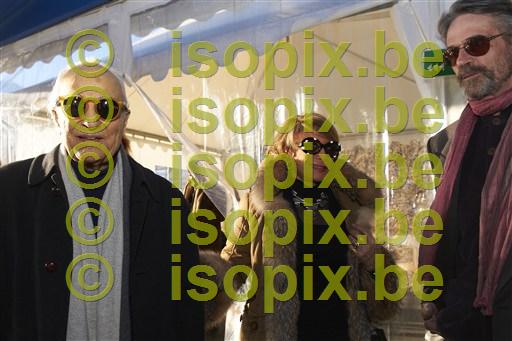
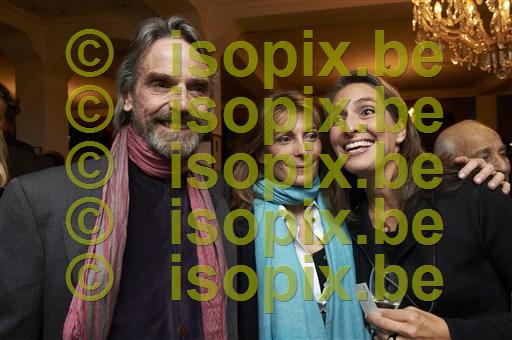
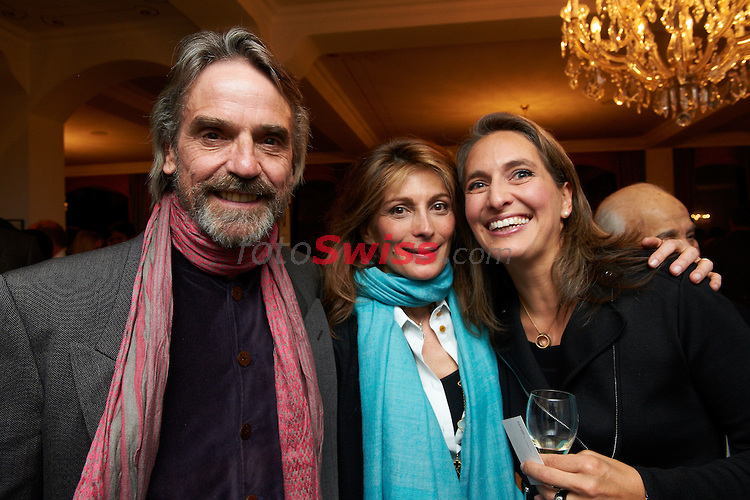
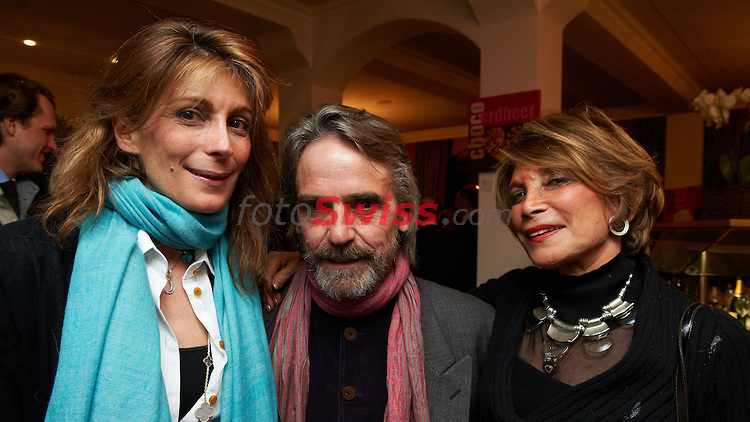
Jeremy Irons was in St. Moritz recently to ski and to attend the Gunter Sachs Memorial Service, St.Moritz, Switzerland – 24 Feb 2012 – at the Dracula Club in the Hotel Waldhaus Am See.
They had the ease of a couple who have been friends for years as they strolled around St Moritz arm-in-arm.
Actor Jeremy Irons and writer Maryam Sachs were seen taking in the scenery in the Swiss ski resort last week, looking thrilled to be in each others’ company.
The pair walked along in the resort, looking in the shop windows, as they headed back after a long day of skiing.
 Old friends: Jeremy Irons was seen strolling around the Swiss ski resort of St Moritz with Maryam Sachs last week
Jeremy, 63, looked typically eccentric in his cord trousers, red jumper, leather gilet and grey hat, teamed with a red scarf and black boots.
Meanwhile, Iran-born Maryam wore a fur-trimmed hat, fringed jacket and leggings, accessorised with a pair of knee-high boots.
Jeremy, who is happily married to Irish actress Sinead Cusack, has been out of the spotlight in recent months, but will be returning to his acting roots in the two television movies Henry IV, Part I and Part II later this year.
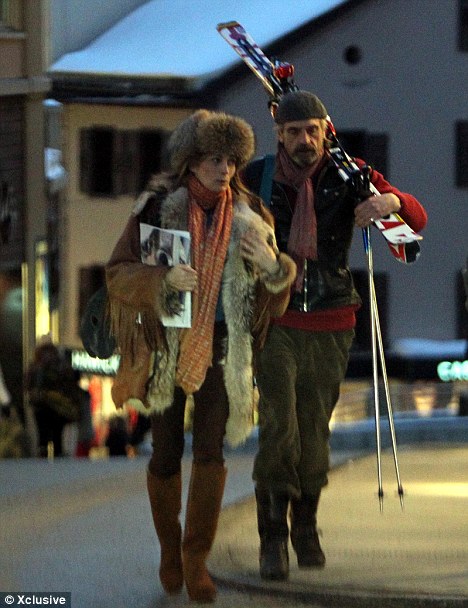 It’s been a long day: Jeremy carried his skis and ski poles as he headed back after a full day of skiing.
 Deep in conversation: Writer Maryam and actor Jeremy appeared deep in conversation at points during their walk together
The British actor takes the title role of the monarch in the movies, which will also star Downton Abbey’s Michelle Dockery and War Horse star Tom Hiddleston.
Confirming the cast earlier this year, Pippa Harris, Executive Producer, Neal Street Productions, said: We are delighted to confirm Jeremy Irons and Tom Hiddleston as our remaining Kings who, along with Ben Whishaw as Richard II, are leading a phenomenally talented ensemble of cast and crew.
‘With the support of NBC Universal and the BBC, we have been able to bring a new scale to the films never before attempted for television.’
The television films will be aired as part of BBC Two’s Shakespeare season later this year.
Read more: http://www.dailymail.co.uk/tvshowbiz/article-2108243/Jeremy-Irons-Maryam-Sachs-strolls-St-Moritz-arm-arm-skiing-trip.html#ixzz1nnkBol5N













Jeremy Irons was interviewed by Shira Lazar for Oscar Dailies, from one of the filming locations for Henry IV. He spoke about winning his Oscar and his thoughts on what he values in a director.
SOURCE No copyright infringement intended.
Click here for a version of this video viewable in all countries.
Vodpod videos no longer available.
Click here for a version of this video viewable in all countries.
Vodpod videos no longer available.Filming is underway on Henry IV
[Scroll down to click on the gallery thumbnails and enlarge the photos to full size.]
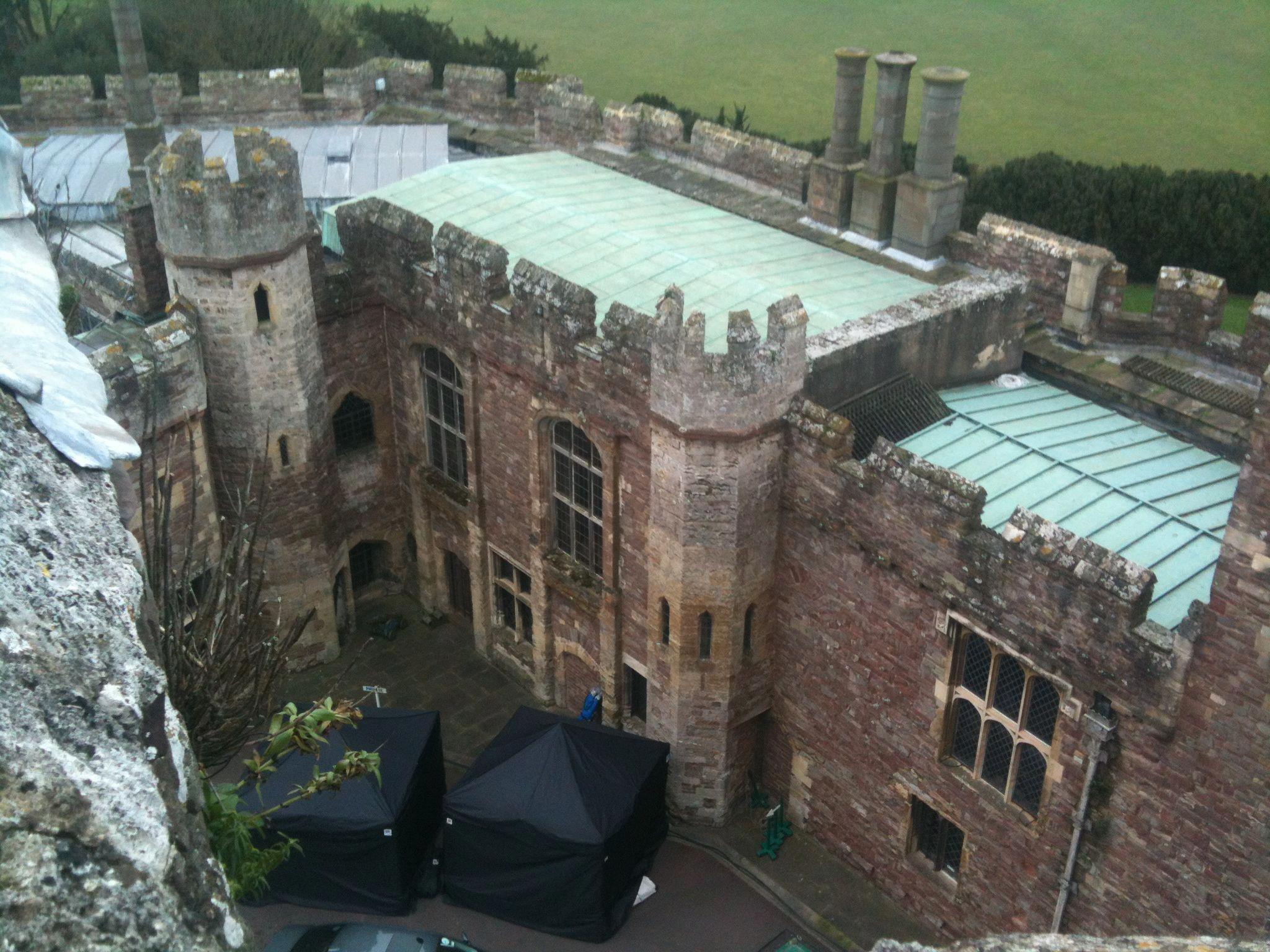
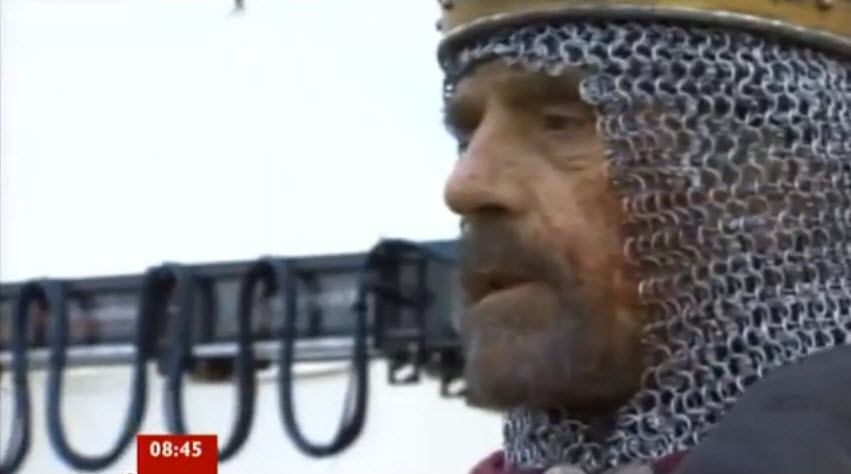
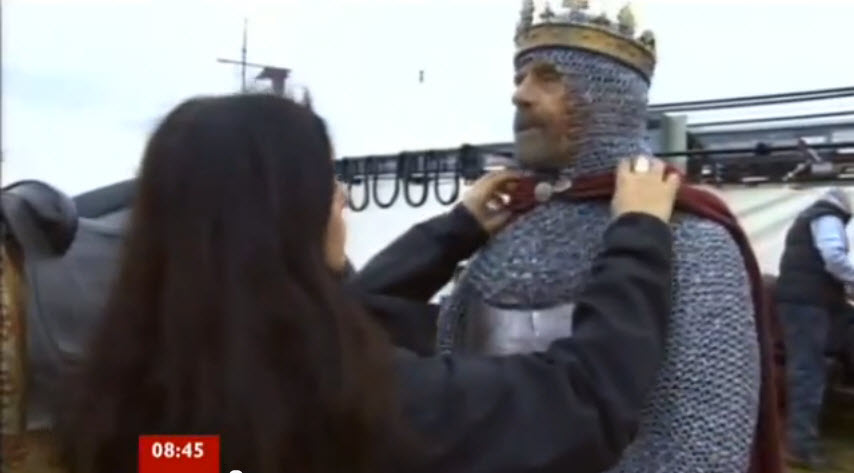
Production on Henry IV, Part 1 and Henry IV, Part 2 has begun. A cast read-through took place the first week of January. Filming began on the 9th and will last nine weeks for both films. Locations include Caerphilly Castle in Wales, which is apparently being used as the site of Hotspur’s meeting with Owen Glendower. Filming also took place at Ashridge.
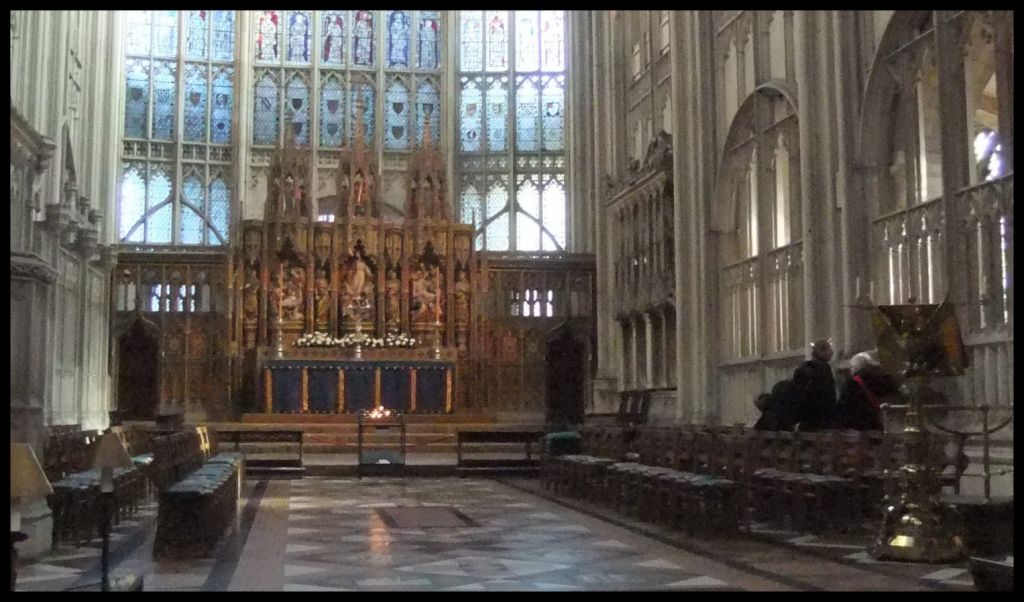
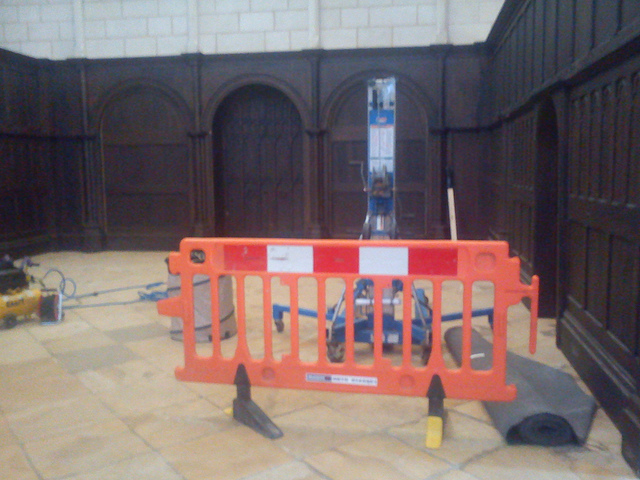
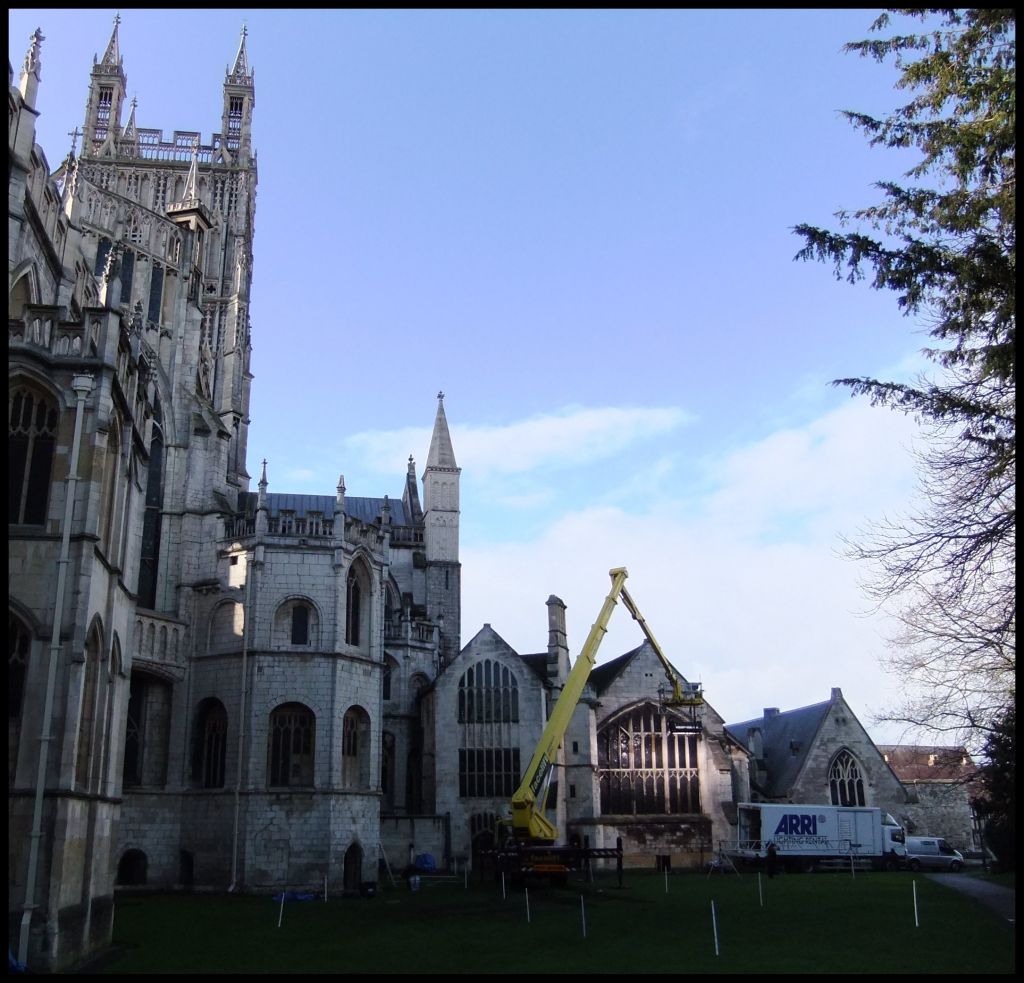
Filming will take place at Gloucester Cathedral from 25 January, for about two weeks.
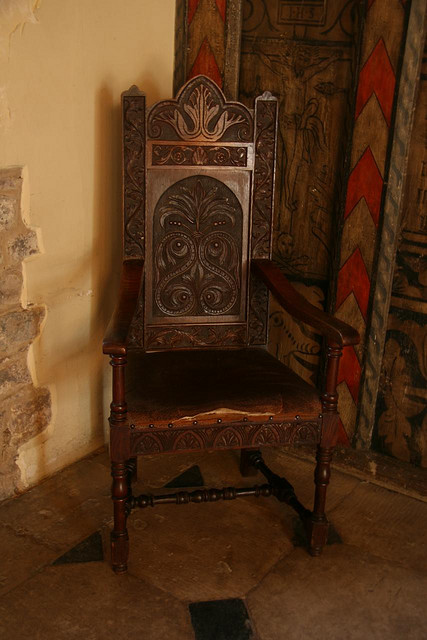
In February, filming moves to Berkeley Castle in Gloucestershire.
From the official BBC Press Release:
Continuing with the incredibly high standard set by Richard II, Jeremy Irons plays the role of King Henry IV in this production adapted and directed by Richard Eyre. Tom Hiddleston joins the cast as Prince Hal, Simon Russell Beale plays Falstaff and Alun Armstrong plays the Earl of Northumberland. Lady Northumberland is played by Niamh Cusack with Hotspur played by Joe Armstrong.
As with Richard II and Henry V, these bold adaptations are set in the medieval period and are being shot at some of the UK’s most stunning locations. The films will bring a new scale to Shakespeare in one of the most ambitious television projects of recent years.
Henry IV, Part 1 is expected to air on BBC2 in the summer of 2012 along with the other three films in the series: Richard II, Henry IV, Part 2 and Henry V. The four films will also be shown in the U.S. on Great Performances on PBS.










From the BBC Media Centre:
The definitive cast list for the BBC Two Shakespeare films including Henry IV (Parts I and II) has been confirmed.
Featuring some of the greatest Shakespearean actors and directors of our time, four films have been commissioned by BBC Two for their Shakespeare season in 2012 as part of the BBC’s contribution to the London 2012 Festival and the Cultural Olympiad. The films were commissioned by Ben Stephenson, Controller BBC Drama Commissioning and Janice Hadlow, Controller BBC Two.
Set in the medieval period, these bold adaptations of four of Shakespeare’s most acclaimed history plays will produce some of the most ambitious television of recent years. As principal photography begins on Henry V, the previously announced Kings – Ben Whishaw, Jeremy Irons and Tom Hiddleston – will be joined by a phenomenal ensemble cast.
Ben Whishaw said: “Playing Richard II has been a hugely rewarding experience. Working on this beautiful play with Rupert Goold and an amazing cast has been one of the most magical and memorable experiences of my career.”
Jeremy Irons said: “I am most grateful to have this opportunity of returning to Shakespeare, to film under the experienced eye of Richard Eyre, alongside such exciting actors.”
Tom Hiddleston said: “I am incredibly proud and privileged to be playing Prince Hal and Henry V in these new adaptations. He was one of England’s great kings and one of Shakespeare’s great men, and it is an extraordinary honour to have been asked to play him. I will be steeped in mud, blood, and warrior poetry for the next four months, led by two of the greatest directors working today, alongside a group of actors I have admired and respected all my life. I can’t wait.”
Henry IV (Parts I and II)
The second and third films will see Jeremy Irons (The Borgias) playing Henry IV, supported by Tom Hiddleston (Thor) as Prince Hal. Simon Russell Beale (Spooks) will play Falstaff and Julie Walters (Mamma Mia, Mo) will play Mistress Quickly. Hotspur will be played by Joe Armstrong (Robin Hood) and Michelle Dockery (Downton Abbey) is to play Lady Percy alongside Maxine Peake (Criminal Justice) as Doll Tearsheet. Lady Northumberland will be played by Niamh Cusack (A Touch of Frost) with Alun Armstrong (New Tricks) as Northumberland. Reece Shearsmith (The League Of Gentlemen) will play the role of Davy, Tom Georgeson (Notes on a Scandal) will play Bardolph, Pistol will be played by Paul Ritter (Friday Night Dinner) and Douglas Henshall (South Riding) will play Mowbray. Iain Glen (Downton Abbey) will play Warwick and Geoffrey Palmer (As Time Goes By) will play Lord Chief Justice.
Completing the confirmed cast of Henry IV are Henry Faber, James Laurenson, David Hayman, Robert Pugh, Alex Clatworthy, Stephen McCole, David Dawson, Ian Conningham and Nick Jones.
Henry IV Production Designer is Donal Woods (Downton Abbey, Cranford). Director of Photography is Ben Smithard (Cranford) with Annie Symons (Gideon’s Daughter, The Crimson Petal and the White) as Costume Designer.
Henry IV is directed and adapted for the screen by Richard Eyre (Notes on a Scandal, Iris). Filming on Henry IV will begin in January 2012.









 jeremyirons.net
 jeremyirons.net
You must be logged in to post a comment.