In US cinemas September 7, 2012







‘The Borgias’ Season 2 – DVD Release Dates
The Borgias – Season 2 – Uncut Edition will be released in Canada on September 4, 2012. It’s NTSC Region 1. It’s available now to pre-order through Amazon.ca.
The Region 2 UK Edition of The Borgias – Season 2 is also available to pre-order through Amazon.co.uk. It will be released on November 5, 2012.

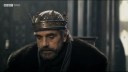
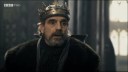
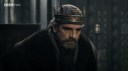
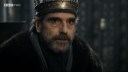
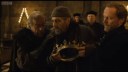
Henry IV, Part 2 – Video, Screencaps & Reviews
The Hollow Crown: Henry IV: Part 2, BBC Two, review – from The Telegraph
The Hollow Crown: Henry IV Part 2, BBC Two
Irons’s ailing king steals Shakespearean diptych – from The Arts Desk
The Hollow Crown: Henry IV Part 2 continued the series in brilliant fashion – from Metro.co.uk
Review: The Hollow Crown – Henry IV Part 2 – from The Yorker
The Hollow Crown, Henry IV Part Two. B.B.C. Television Review – from LS Media – The Independent Liverpool Student Newspaper


































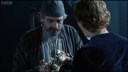
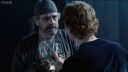
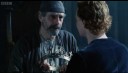


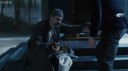





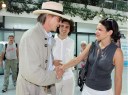
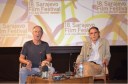
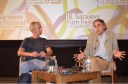
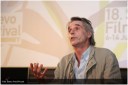
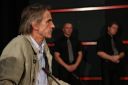
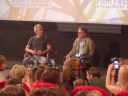
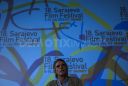
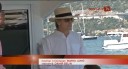
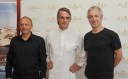
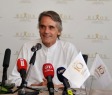
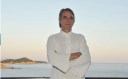
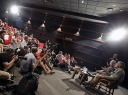
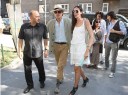
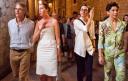
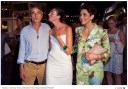
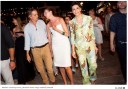
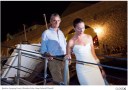
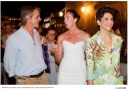
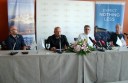
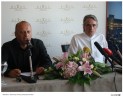
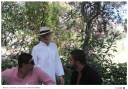
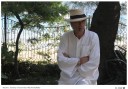
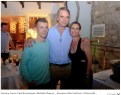
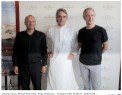
Jeremy Irons at 2012 Sarajevo Film Festival
Some photos via @chrisdz and @vjosab on Twitter, @neshill and @m_juric on Instagram, Nikolina Vicelic @NikolinaVicelic on Twitter, and Ranko Vucinic @rankovucinic on Twitter and Sinisa Sunara / Cropix .
Jeremy Irons Guest of the Sarajevo Film Festival
With a great pleasure the Sarajevo Film Festival announces arrival of one of the greatest actors of today, the Oscar winner, Jeremy Irons.
Jeremy Irons returns to Sarajevo in capacity of the curator of Katrin Cartlidge Foundation, which will award one young artist this year again.
Sarajevo audience had a chance to greet this big friend of the Sarajevo Film Festival, the actor with a fascinating international career, during the Sarajevo Film Festival in 2007 when he presided the Grand Jury of the 13th Sarajevo Film Festival’s Competition Programme.
British actor realized his roles in around seventy films, among which only some to single out, “Waterland”, “The Man in the Iron Mask”, “M. Butterfly”, “The Mission”, “Reversal of Fortune” for which he won Oscar and Golden Globe for the Best Actor in the Leading Role.
On the occasion of Jeremy Irons’ arrival to Sarajevo, on Saturday a special screening of the film TRASHED, directed by Candida Brady will take place in the Meeting Point Cinema, starting at 2.30 p.m. After the screening, a Q&A with the special guest, Jeremy Irons, will take place.
________________________________________________________________________________
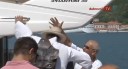
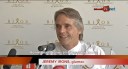
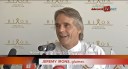
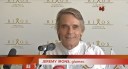
Jeremy was also in Dubrovnik and attended a press conference there.





















































































Henry IV, Part 1 – Video
Follow the links below to watch The Hollow Crown: Henry IV, Part 1
Part 1 – http://www.youtube.com/watch?v=rgZYAUQ9Wno
Part 2 – http://www.youtube.com/watch?v=YSmPplAquJE&feature=relmfu
Part 3 – http://www.youtube.com/watch?v=nKm6QCifJ08&feature=relmfu
Part 4 – http://www.youtube.com/watch?v=g8k1Fg_Oquk&feature=relmfu
Part 5 – http://www.youtube.com/watch?v=yMRZkQlz8wY&feature=relmfu
Part 6 – http://www.youtube.com/watch?v=AXaaG0GMh1E&feature=relmfu
Part 7 – http://www.youtube.com/watch?v=xKqFmcEHAiQ&feature=relmfu
Part 8 – http://www.youtube.com/watch?v=nIQqtFnDnOw&feature=relmfu
Part 9 – http://www.youtube.com/watch?v=MRWk1NqEjPY&feature=relmfu
_______________________________________________________________________________
Shakespeare Uncovered Episode 5 – Jeremy Irons on the Henrys
_______________________________________________________________________________
From the BBC TV Blog – Henry IV & Henry V: Q&A with the Costume Designer
The Hollow Crown – As good as TV Shakespeare can get?
From the Guardian.co.uk

The Hollow Crown: as good as TV Shakespeare can get?
The BBC’s new Shakespeare films, starting this weekend with Richard II, show that the Bard can play as well on TV as in the theatre
During TV conferences and festivals, at least one delegate always argues that Shakespeare, if he were around today, would be writing EastEnders or Holby City. This claim is based on the fact that theatre, at the time Shakespeare’s plays were written, was a mass audience form rather than the relatively elitist entertainment it has become; and also, more subtly, on the contention that the playwright’s fondness for parallel plots and cross-cutting to some extent anticipates screen narrative.
And yet, despite these affinities, Will has always tested the will of TV producers. The BBC TV Shakespeare – a late 1970s attempt to film all 37 plays as an educational tool – became a headline calamity, helping to establish Clive James’s reputation as a critic through his pitiless Observer reviews of shaking scenery and stagey acting. The original production of Much Ado About Nothing (starring Penelope Keith and Michael York) was never transmitted because, according to the minutes of BBC management meetings I have seen, it was considered such a failure.
The original producer, the late Cedric Messina, left the project and Jonathan Miller came in as an emergency replacement. Miller steadied the shipwreck – with productions including John Cleese as a brilliant Petruchio in The Taming of the Shrew – and it’s good to have a permanent record of, for example, Derek Jacobi’s Hamlet. But, in general, the experience cemented the view that Shakespeare is a weapon to be deployed on television only when particular performances called to be immortalised – Laurence Olivier’s King Lear and Ian McKellen’s and Judi Dench’s Macbeths on ITV, Patrick Stewart’s Macbeth by the BBC – or when there is a special occasion, such as BBC licence fee renegotiation or, this summer, as part of the Cultural Olympiad alongside the London Games.
Bringing together four of the Shakesperean English history plays under a group of high-class stage directors, The Hollow Crown begins this weekend on BBC2 and marks a significant advance in the medium’s fight with this writer.
The troubled BBC Complete Shakespeare taught several lessons – that not all of the works merit the attention of the audience; that studio recordings create an uneasy limbo between theatre and TV; that the pace and fluidity of made-for-TV dramas can make stage plays seem slow and staid; and that it is vital to have an overall producer who understands both Shakespeare and film.
The Hollow Crown brings a full set of ticks to this checklist. Present from the start, rather than parachuted in as Jonathan Miller was, Sam Mendes has executive produced the series, while also presiding over another English cultural icon: the new James Bond movies.
And this BBC TV Shakespeare is sensibly restricted to a discrete and particular 9% or so of the collected works. The linked sequence of Richard II (directed by Rupert Goold), Henry IV Parts 1 and 2 (filmed by Sir Richard Eyre) and Henry V (under Thea Sharrock’s direction) tell a sequential story, with recurring characters and so have a structural similarity with the four-part family drama, a staple of TV fiction. In this sense, The Hollow Crown can be seen as a relative of The Tudors, though with significantly better dialogue.
Mendes and his directors have also assimilated the wisdom of TV property shows: what matters in filming Shakspeare is location, location, location. Instead of a studio mediaeval England formed from hardboard, we get actual castles, taverns and forests.
The two productions that I have so far seen – Richard II and the first part of Henry IV – also convincingly show that, rather than being a triumph over limitations, filmed Shakespeare has some advantages over theatrical versions. In the often-bewildering opening scene of Richard II, which begins with a list of characters and their achievements, Goold’s camera can simply close in on the noble being mentioned, easily establishing characters in a way that, in the theatre, would require much fumbling with a programme in the dark.
And, in Henry IV, Eyre employs every trick of cinematic fluidity to match the quick flow of modern screen drama: cross-cutting and dissolving between the three main locations (the court, the rebels, Falstaff’s dens) and turning soliloquies into their natural screen equivalent of voice-overs.
Another benefit of television is the available cast: because it isn’t asking for a three-month run or global tour to make the budget back, The Hollow Crown simultaneously retains a group of actors that even the most famous theatres could only accumulate over several seasons. Theatre-goers have long anticipated Simon Russell Beale’s eventual Falstaff but he gives it here first: cloud-bearded and earthy, a portrait of ambition and intelligence chiselled away by appetite. And, if SRB does play Falstaff in the theatre, it is highly unlikely, for budgetary and logistical reasons, to be in a company that also includes Julie Walters, Lindsay Duncan, David Suchet and David Morrissey.
There remains a basic flaw in the theory that because Shakepeare was a populist writer in his time, he should naturally suit TV now: the mainstream television audience, often made suspicious of classic theatre by education and school theatre outings, would take much persuasion to tune in to these dramas. But, despite that caveat, The Hollow Crown feels as good as TV Shakespeare is going to get.
Radio Times – Kings of Cool
Thank you to scarletthammer on Tumblr for the scans.
Radio Times 30 June -6 July 2012
Kings of Cool – Classic Shakespeare with Britain’s biggest stars
Click on the images for full size:


-

-

-

-

-

-

-

-

-

 jeremyirons.net
- Jeremy Irons Speaks About Rembrandt’s Lion
- Jeremy Irons at the Mayor of Kensington and Chelsea’s Christmas Carol Concert
- Jeremy Irons Interviewed by Brendan O’Connor
- Jeremy Irons Breaks Down His Most Iconic Characters for GQ
- Jeremy Irons to Play Villain Opposite Henry Cavill in “Highlander” Amazon MGM Remake
- Jeremy Irons’s Walk of Fame – The New Yorker
- Jeremy Irons Joins the Cast of AppleTV’s ‘The Morning Show’
- Jeremy Irons to Star in Neil Jordan’s ‘The Well of Saint Nobody’
- Jeremy Irons and Glenn Close to Star in ‘Encore’
- Jeremy Irons LIVE at The Hollywood Bowl for The Lion King 30
 jeremyirons.net
You must be logged in to post a comment.