Jeremy Irons on ‘The View’ 23 April 2012

This slideshow requires JavaScript.

Watch ‘The Borgias’ Season 2 Premiere Full Episode

Watch on YouTube

Also watch on Xfinity TV

This slideshow requires JavaScript.

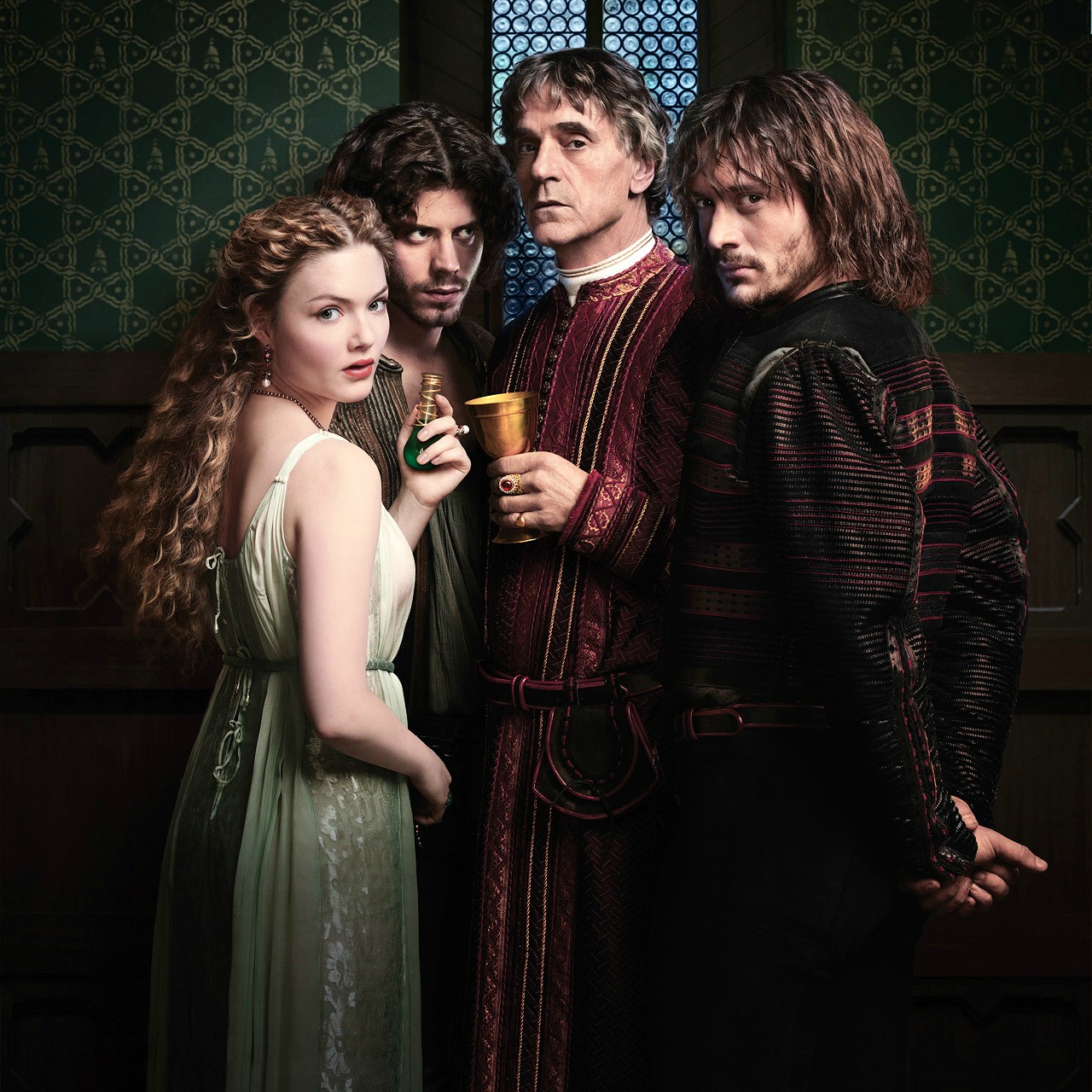
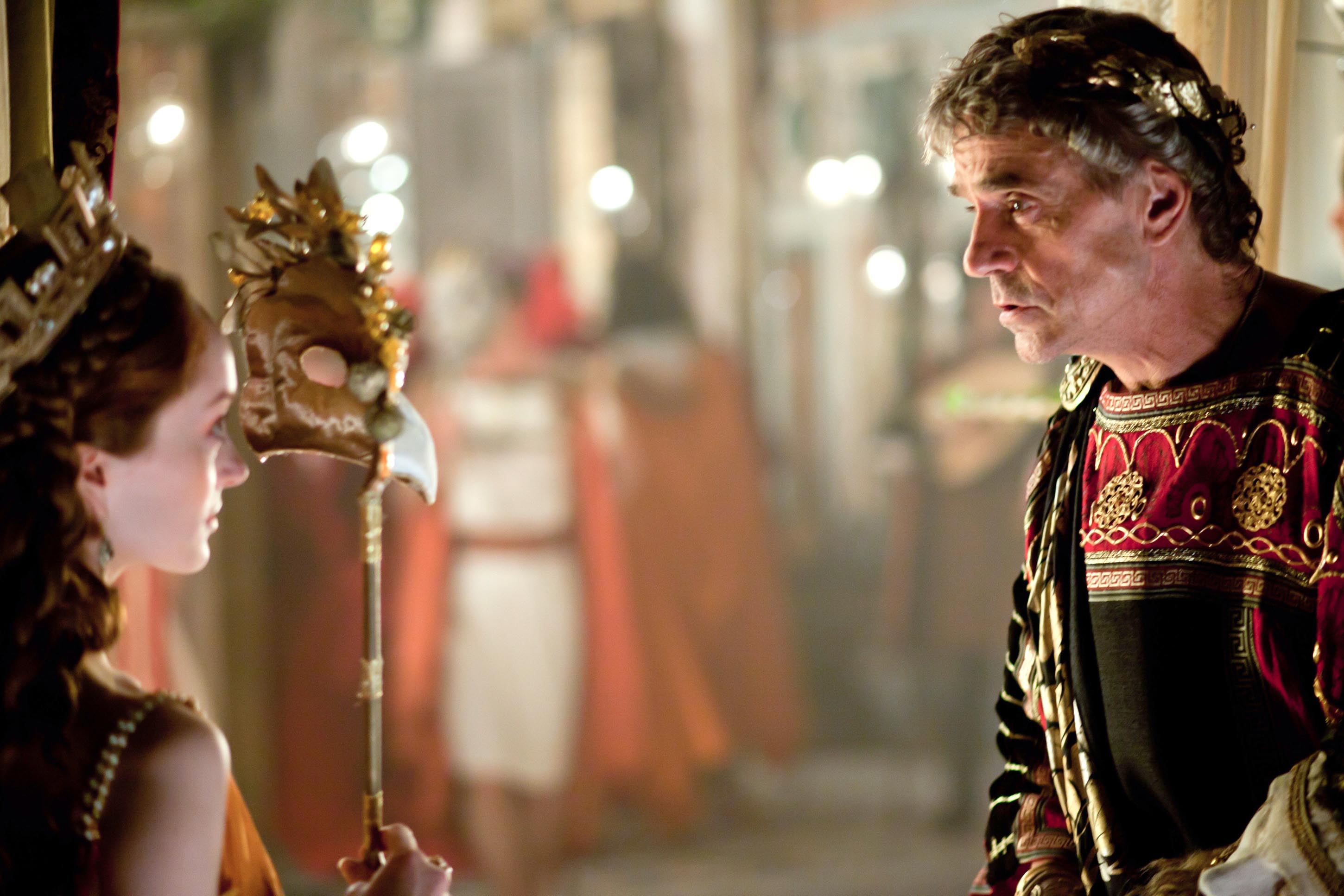
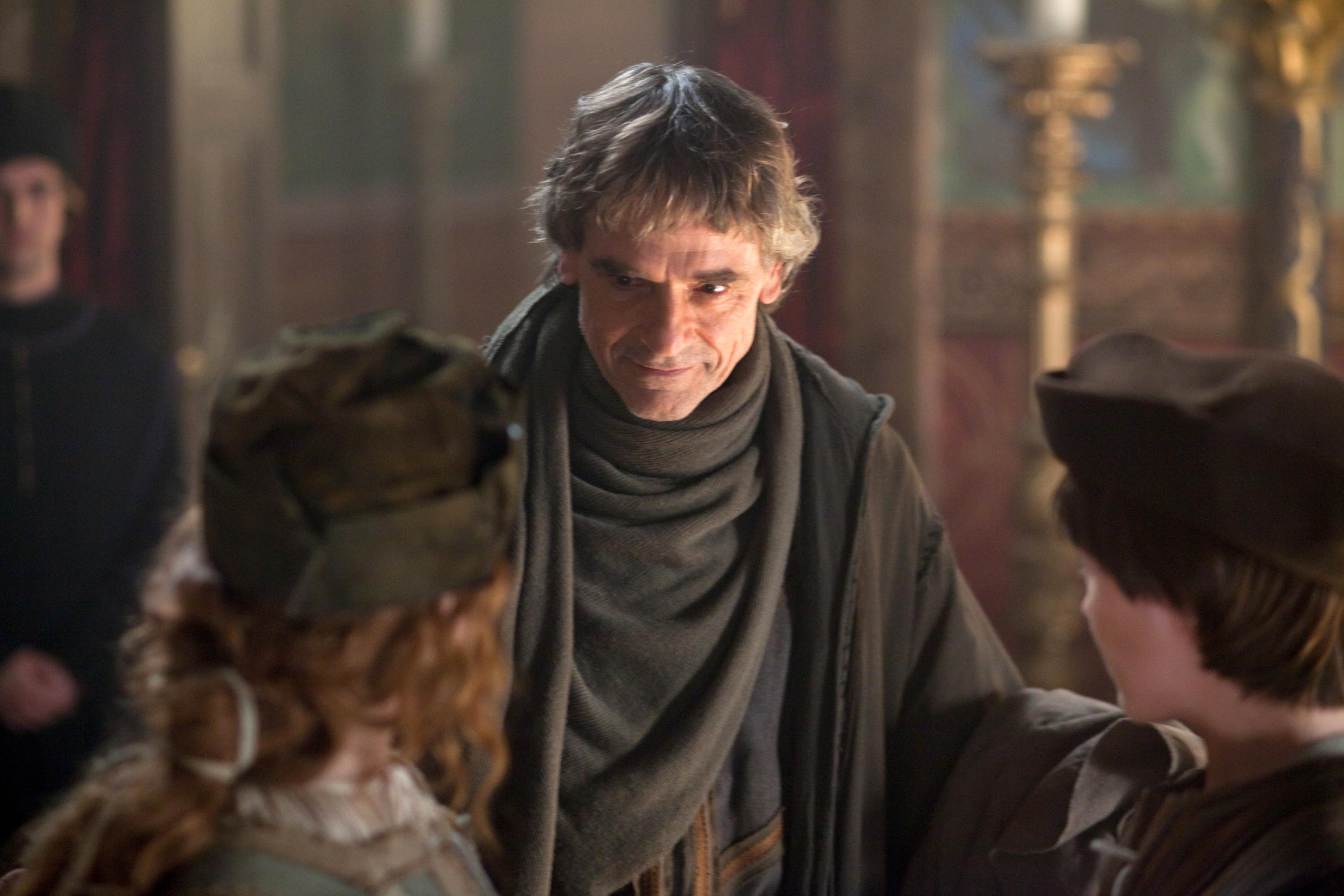
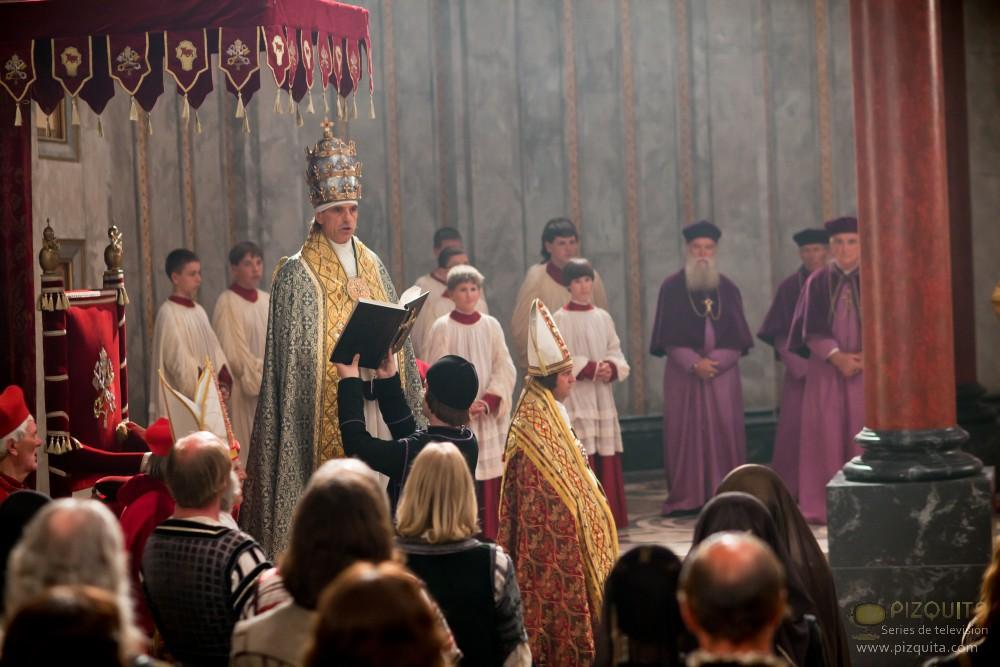
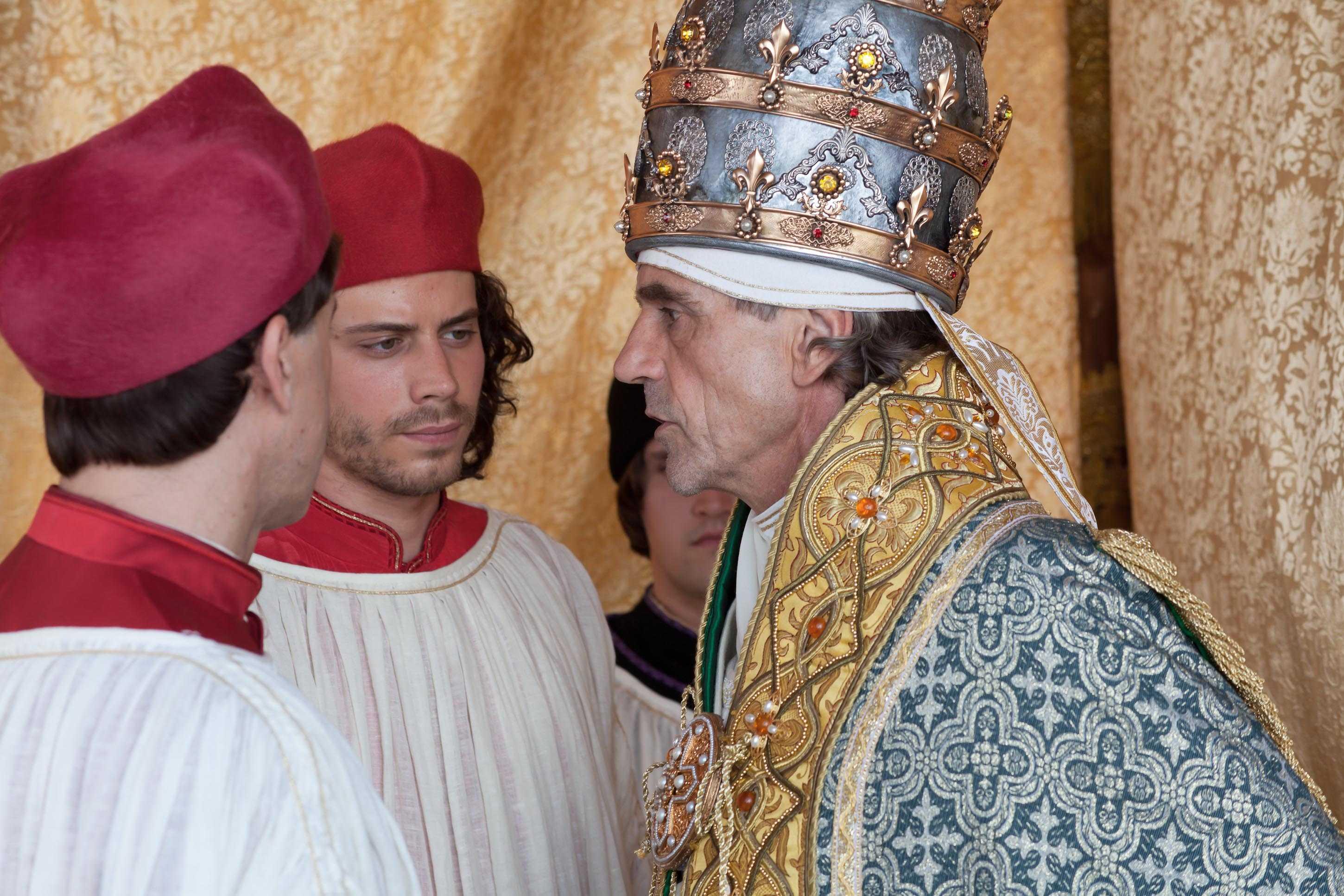
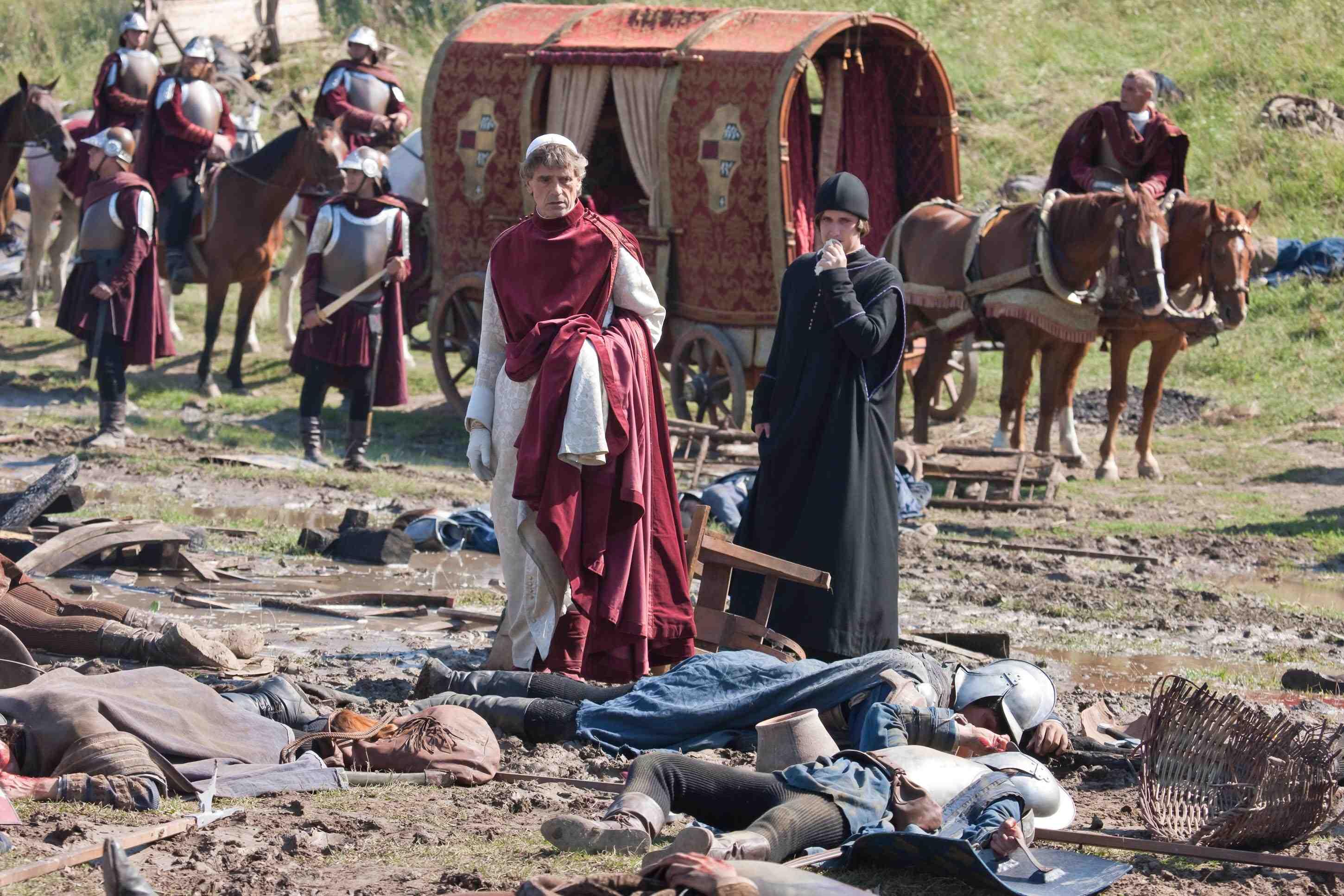
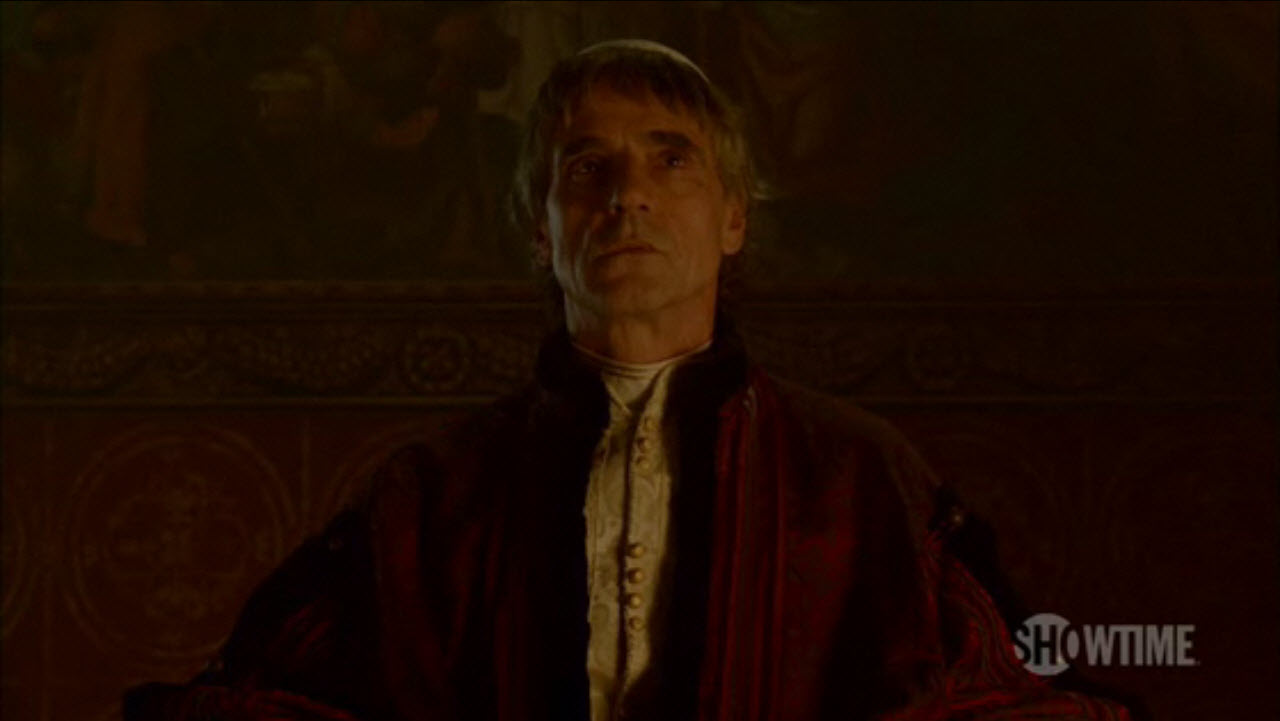
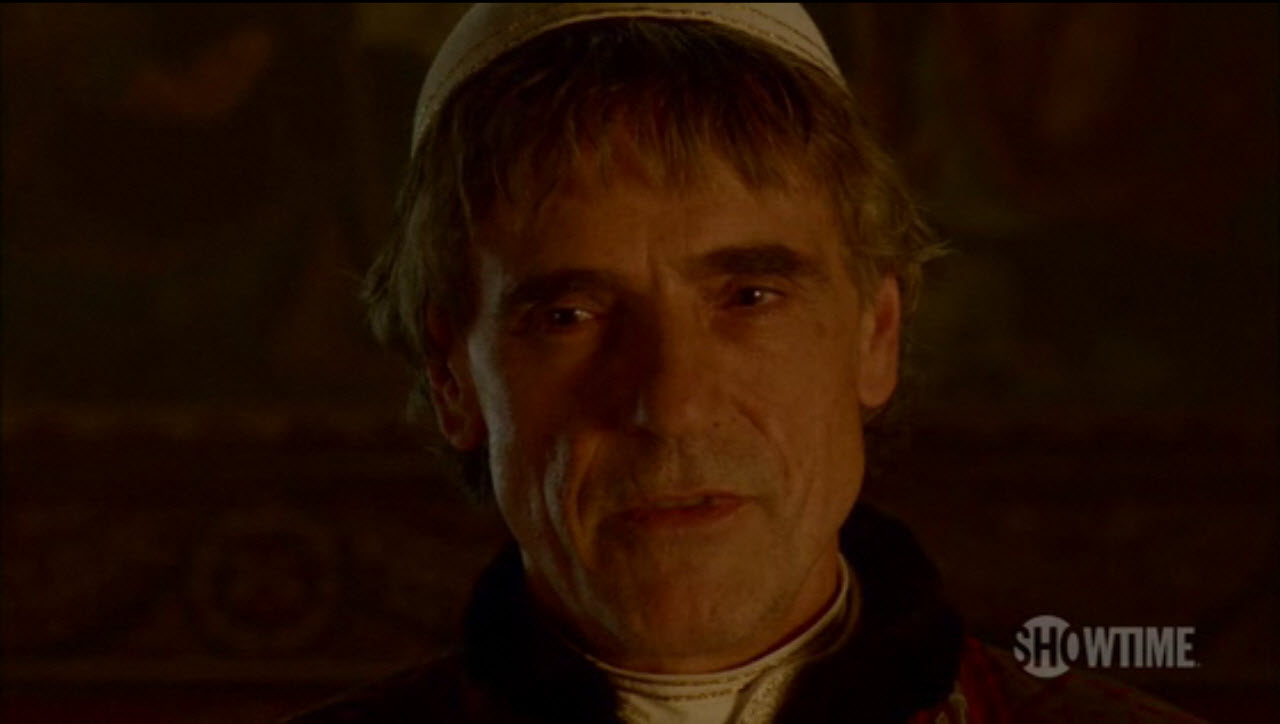
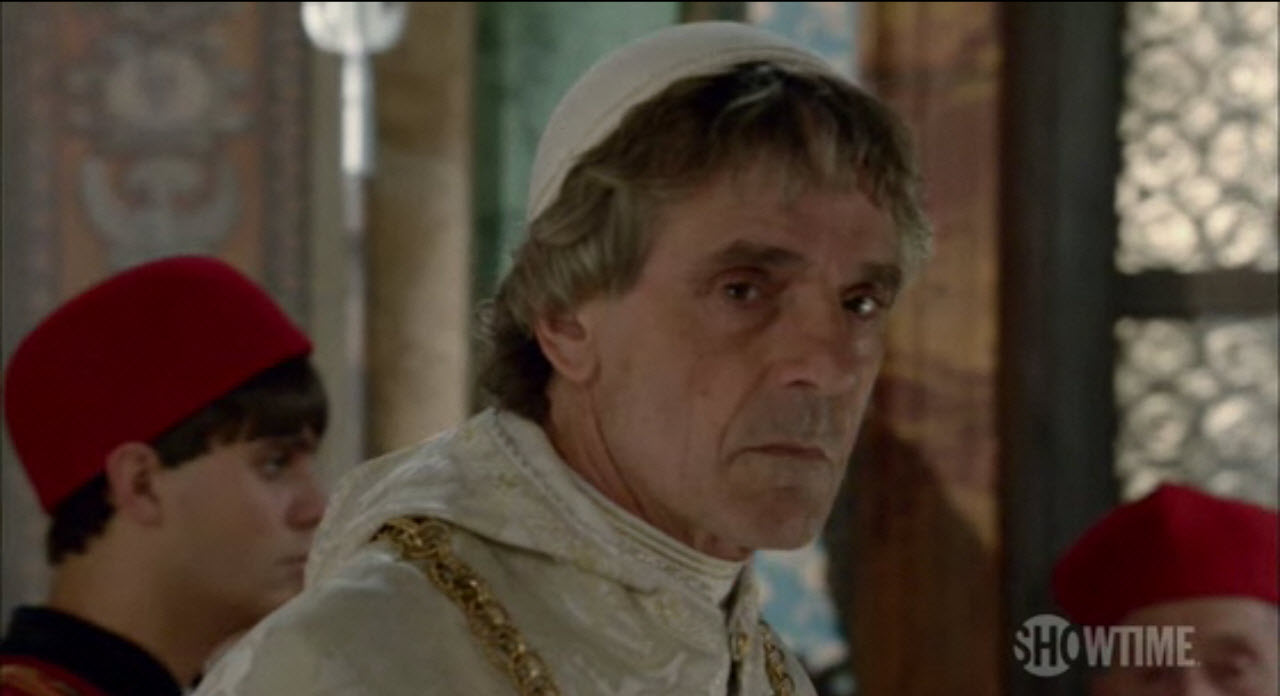
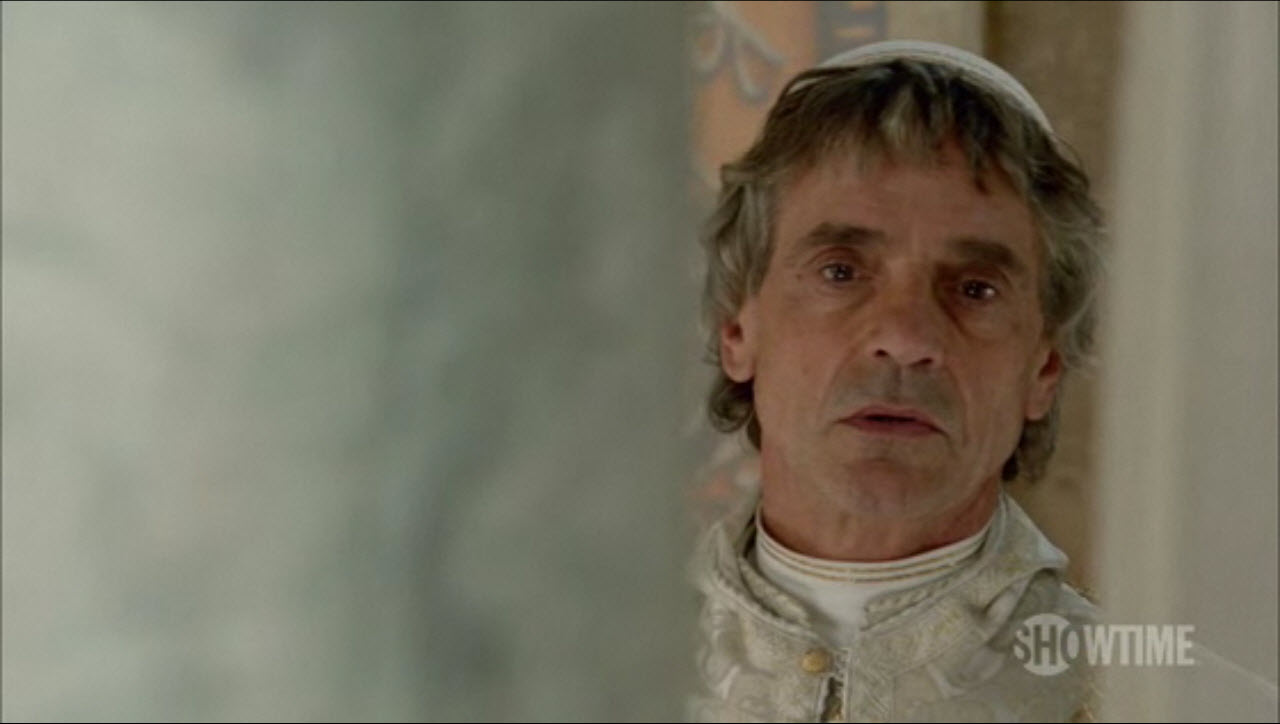
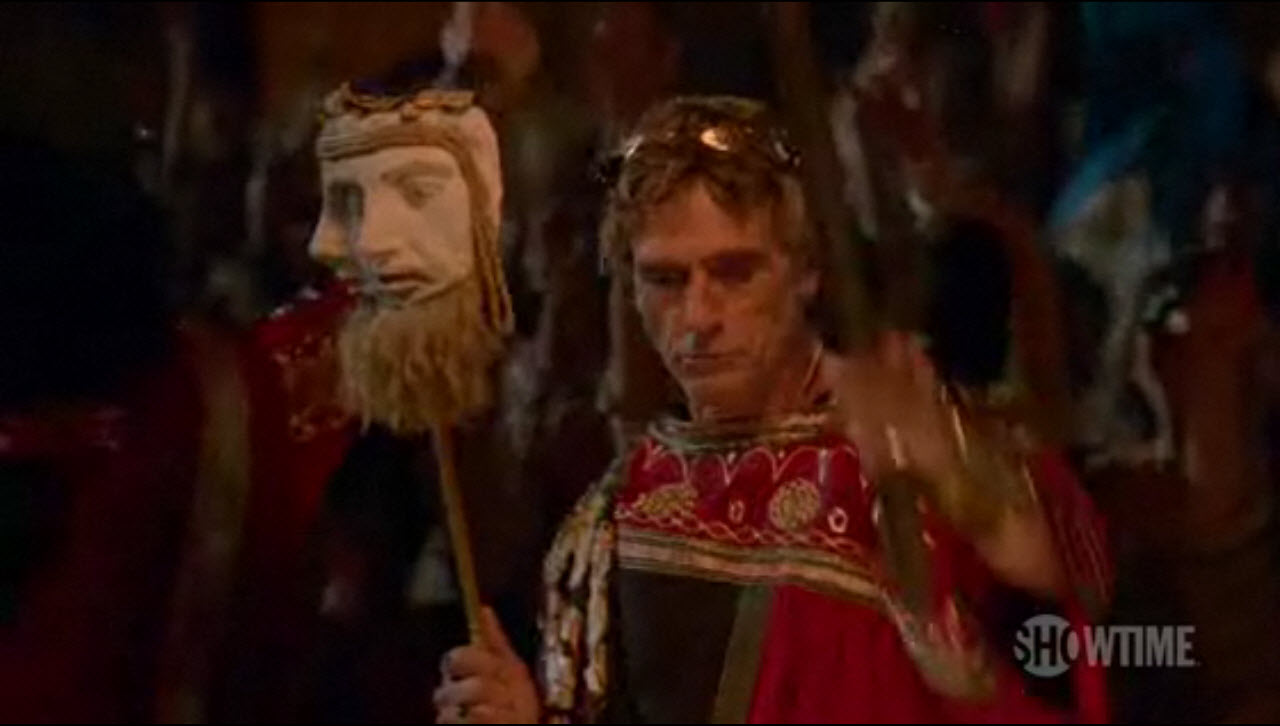
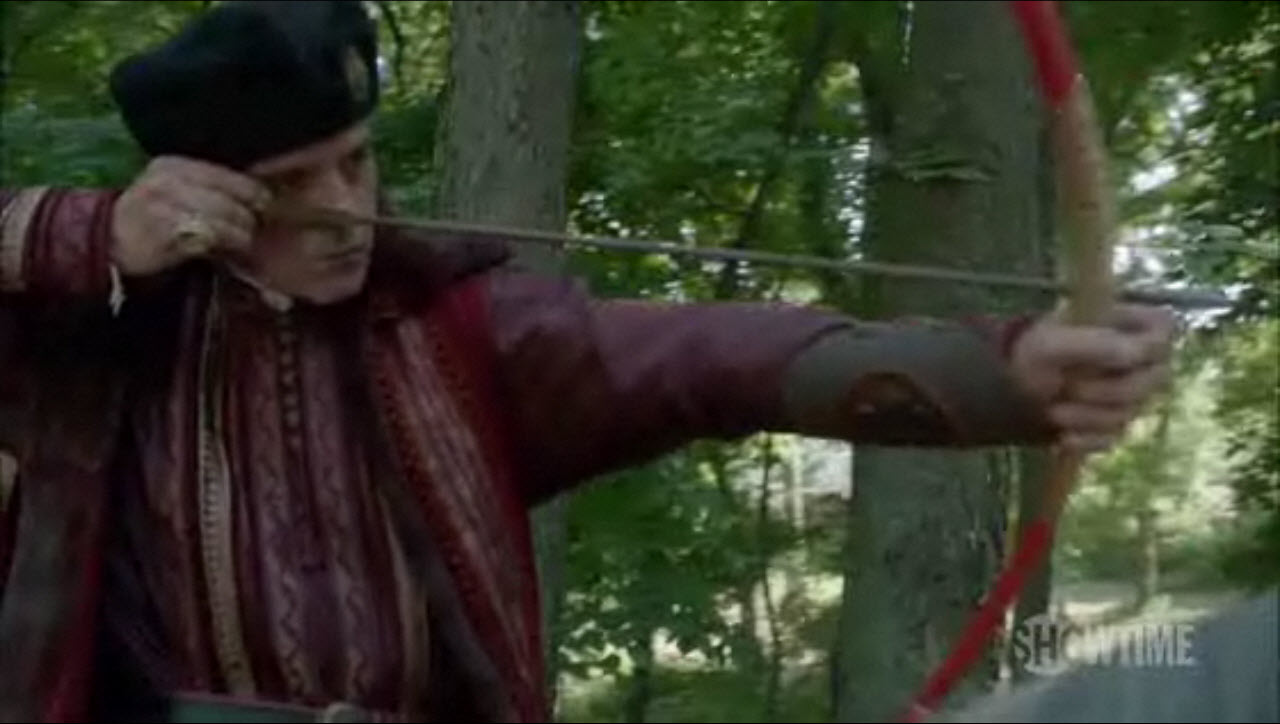
‘The Borgias’ – Season 2 Promo Pics and Stills

Scroll down for the gallery. Click on the thumbnails and permalink for full sized images.

The Borgias returns to Showtime on Sunday 8 April 2012 for Season 2 with its first episode entitled “The Borgia Bull”.

This slideshow requires JavaScript.

Jeremy Irons is back as bad guy on ‘The Borgias’
BY LUAINE LEE
McClatchy Newspapers

British performer Jeremy Irons didn’t enter acting to become an actor. He joined to become a gypsy, he says.

“I had this sort of romantic vision of the life I wanted. I always say to kids now, ‘Find out what makes you happy and try to make a life that gives that to you, whatever that may be doing.’ I wanted a job which allowed me to move from society to society, not to be stuck in a conventional rat race,” he says in the courtyard of a hotel here on a chilly winter’s day.

He considered three options: life in the circus, the carnival or the theater. “I went and looked at circuses and carnivals, and I looked the accommodations they gave to the staff, and I thought, ‘I think I’m too middle-class for that. I don’t think I could live in something that small. I think maybe I’ll look at the theater.’ So I went and joined a theater in Canterbury when I was 18.”

The actor, who has illuminated the screen in films like “Reversal of Fortune,” “The Iron Mask” and “Die Hard: with a Vengeance,” returns Sunday as the evil Rodrigo in Showtime’s “The Borgias.”

It doesn’t matter whether Irons is playing the consummate hero in “The Man in the Iron Mask” or the Machiavellian pope in “The Borgias.”

“I’ve always been interested in gray,” says Irons, who is dressed in ochre pants, a khaki jacket trimmed in leather, and a black scarf circling his neck.

“I think we all have shades of gray in us. Nothing is really black and white. Yes, I play some people who carry their ‘bad sides’ to extremes, but I think that’s what the storyteller should do. What happens if you hit the edge of acceptable behavior or go over it? Why is that edge there? ‘Lolita’ is a perfect example — a man who broke social mores and acted in a way that was unacceptable. But why is it unacceptable? You see what happens to both him and the girl by the end of the picture, and you realize that that is why we say the behavior is wrong, because it destroys people.”

When he first started out he was hammering flats and holding candelabra on stage as part of the “scenery.” For a time he was even a busker. “That means I would sit on the street corners and play music for money,” he says.

“Performing was something I felt comfortable with, and I loved the communication, between an audience and the storytellers, in the same way I loved the communication when I was singing a song well … and I enjoyed the process.”

He enjoyed the process so much that he became an arch perfectionist — a curse to those around him, he says, as he rolls a brown cigarette in a machine he takes from his pocket.

“I realized that I was caring so much about my work and trying to make it absolutely perfect that — you will have to forgive my language here — there is a very thin line between a perfectionist and a complete (expletive). And I think I was falling over that line,” he says.

“Perfection, you can’t seek it because it doesn’t exist. I was worrying about it so much and making it fairly difficult for people who were working with me to work with me. And I sort of realized that the most important thing is to have fun with what you are doing. … Learn your lines, learn your character and then have fun with it. So I sort of pulled back and thought there is no way that an actor can make something perfect, you have no control over the finished project. Try and make it fun for everyone.”

Dissatisfied with his achievements, he actually quit for a while. “I turned 50. I found I was doing film work which I was bored by, and I wanted something that would absorb me completely. And I think it had something to do with the fact that in my 30s and 40s I was playing leading roles and then in my late 40s and 50s I was playing guest characters, and smaller roles. You don’t feel the same when you show up for a month instead of being there the whole time,” he says, rescuing a tea bag from his cup.

“I found a ruin (castle) in Ireland, and I spent two years just working on that. I had a large crew, but I was running it. And then I began to run out of money because I was paying 40 wages a week, and so I started acting again here and there over the next three years so six years over all. It was the greatest project I have done. I came back a slightly different person and started off again.”

He still owns the 15th century Kilcoe Castle and he and his wife of 34 years, actress Sinead Cusack, stay there when work permits. They have two grown sons. Sam is a photographer and Max, alas, is an actor. “My boys are 33 and 25, and you still ache for them if things go wrong,” he sighs.

© 2011 Belleville News-Democrat and news service sources. All Rights Reserved. http://www.bnd.com

Showtime at 92Y: The Borgias: One-on-one with Jeremy Irons

This event has been cancelled, due to scheduling conflicts with Jeremy’s next film Beautiful Creatures.


Source

Date: Fri, Apr 27, 2012, 8 pm
Venue: Kaufmann Concert Hall
Location: Lexington Avenue at 92nd St
New York City

Click HERE to buy tickets.

Jeremy Irons, Academy Award-winner (Reversal of Fortune), one of the master actors of our day and an endlessly charming talk show guest, visits 92Y to talk about his career and his starring role as the devious Rodrigo Borgia in the second season of Showtime’s sumptuous drama “The Borgias.”

Brief Bio

Caryn James, a film and culture critic, is writer and owner of the James on screenS film and television blog for Indiewire and a contributor to The New York Times Book Review and other publications. Previously, she was film critic, chief television critic and critic at large for The New York Times. She is the author of the novels What Caroline Knew and Glorie.

Showtime at 92Y:

Showtime, the cable channel responsible for some of the sharpest, smartest series on television, joins 92Y in offering a behind-the-scenes look at its hit shows in a series of conversations at 92Y with critic Caryn James. Jeremy Irons, star of The Borgias, Edie Falco and the producers/creators of “Nurse Jackie” and Laura Linney and the cast of “The Big C” will talk about their creative process and share clips from the new season.

‘The Borgias’ Season 2 Promo Video and Screencaps

View the original video HERE for full screen.

Vodpod videos no longer available.

“The Borgias” Season 2 Promo, posted with vodpod

All images property of Showtime:

This slideshow requires JavaScript.

Jeremy Irons Nominated for a 2012 Golden Globe Award

Jeremy Irons has been nominated for a Golden Globe award, for his role in The Borgias.  Here is his category and the competition:

BEST PERFORMANCE BY AN ACTOR IN A TELEVISION SERIES – DRAMA
a. STEVE BUSCEMI BOARDWALK EMPIRE
b. BRYAN CRANSTON BREAKING BAD
c. KELSEY GRAMMER BOSS
d. JEREMY IRONS THE BORGIAS
e. DAMIAN LEWIS HOMELAND

——————————————————————————————–

Jeremy’s reaction to being nominated:

“I am delighted to be nominated for my work in Neil Jordan’s The Borgias. In truth I know it reflects the tireless efforts and exceptional talents of all those who bring this splendid series to the screen. Without the magnificent work in the costume and set design, script writing, lighting and camera work, and the constant care in the direction , production, and marketing, this series would not have grabbed its audience as it appears to have done. That I am surrounded by a talented and dedicated cast is self-evident. But, of course, if you want to nominate anyone, and escape with your life, then you’d better first nominate the Pope.”

Jeremy Irons, “The Borgias”

Best Actor in a Television Series, Drama

———————————————————————————————

The 69th Annual Golden Globe Awards NOMINATIONS


HOLLYWOOD FOREIGN PRESS ASSOCIATION
2012 GOLDEN GLOBE AWARDS
FOR THE YEAR ENDED DECEMBER 31, 2011
NOMINATIONS PRESS RELEASE

Live in HD on NBC Sunday, January 15, 2012
8:00pm – 11:00pm (EST)
5:00pm – 8:00pm (PST)

Q&A: Jeremy Irons Talks About The Borgias

Q&A: Jeremy Irons Talks About The Borgias
By Anna Carugati
Published: September 21, 2011

With a voice that is rich, deep, mellow, sometimes unsettling, always convincing, and smooth as a glass of good cognac, Jeremy Irons is a prolific and versatile actor who won the Academy Award for Best Actor for his performance as Claus von Bülow in Reversal of Fortune. He has often played complex, conflicted, sometimes less-than-ethical characters, most recently Rodrigo Borgia, Pope Alexander VI, patriarch of the infamous and powerful family at the height of the Renaissance, in Showtime’s series The Borgias. Irons, who has also won two Golden Globe Awards, a Primetime Emmy and a Tony, took time out from filming the second season of the series to speak with World Screen.

WS: How did you become involved in the project?

IRONS: I was approached by [the director] Neil Jordan, who told me he was writing a series. He’d had a film for a long time he was trying to get made about the Borgias; finally, he decided he would offer it to a television company as a series. So for the first time in his life he was writing a television series and he asked me if I would be interested in playing Rodrigo, who becomes Pope Alexander VI. I said, “Let me think about it,” and I did some research and discovered that Rodrigo was an immigrant from Spain. He was a very large man. I’m not a large man, so I said to Neil, “You really should get somebody who looks more like him,” He said, “No, no, no, no, it’s all about power and the abuse and use of power. You know all about that. You can do that. No one knows what Rodrigo looked like.” So I thought, I’d love to work with Neil. We had talked about it a lot in the past; he is a consummate filmmaker. In the past I had done a program about F. Scott Fitzgerald for Showtime and they had aired Lolita and I’d been very affected by the way they show their product—they take a lot of care about it. So that was all good. The idea of a five-month stint [it takes five months to shoot a complete season of The Borgias] and doing something possibly for future years worried me a little bit, but I had been watching how better and better work was being done on American television. Some of the series are really splendid in the way they are made. So I thought, why not? Let’s go for it. That’s how it came about.WS: Rodrigo Borgia is nothing if not complex. What appealed to you about his character?
IRONS: It’s interesting, he was a newcomer amongst the Roman families. He was very powerful and, like many of the rulers of that time, very Machiavellian, as we would now call it. When Rodrigo died he was vilified by a succeeding pope and [then developed] a bad reputation, not only Rodrigo as a pope, but the whole family. When you delve into the history books and the biographies, you discover that that was not necessarily the truth. One book in particular I was researching listed all the adjectives that had been used to describe Rodrigo. They were extraordinarily broad in spectrum. He was a great church organizer. He was quite concerned and quite successful about strengthening the Vatican, which was in a very weak position when he became pope. He was wonderful company, great bon viveur, a man of great appetite for food and for women and for all of life, really, in that Spanish and Mediterranean way. And on the other end there was the fornicator, the murderer and the assassin and a lot of very negative adjectives. And I thought, this is very interesting, let’s try and find out what makes this man—either good or bad—[behave the way he does]. A man who, while being head of the church with an explicit belief in God, a man of his time, also managed to have 12 children and many lovers. I thought that is a very interesting character to try to weave through. From my research, reading as widely as I could, a lot of it writing that was written while he was alive, Neil and I together really tried to create this powerful man who loved and lived hard, and who I suppose in modern eyes, probably behaved quite badly on occasion.

WS: Are there still parallels from the Borgia reign to certain realities in our world today?
IRONS: I certainly see them. The seat of power is a very complicated place, whether it be Washington or Brussels or wherever. I don’t think people change. I’ve always felt that [throughout] history, reading what people have said and what people have thought, their ideas may change as they build on each other’s, but I don’t think people are any different, and the way power is used and abused is really no different. The methods may be different but still, if we decide from a seat of power to get rid of somebody, that person is got rid of. We still spin or lie, however you’d like to call it, to cover our tracks. I don’t think the wielding of power has changed at all.

WS: What challenges does a TV series present to you as an actor that are different from the challenges that shooting a feature film would present?
IRONS: Well, one of the great gifts of television is that one has more time. We’ve had nine hours to tell the story that we have transmitted [in the first season]. We are going to have ten hours to transmit the second. If it goes to four seasons, which it might well do, there will be 39 hours to tell the story of 12 years, which means that you can go into much greater depth. You can play the inconsistencies. You can have the luxury that you don’t have in a feature film—which in a way is more like a short story—to go into depth of character and depth of story. And although with The Borgias there are many stories happening and so everybody gets their allotted time, you are still able to have the luxury of a greater amount of time than you do in a film. So that is one of the main advantages. The challenge is that it’s a long haul; it’s five months. Fortunately, we are shooting in Budapest, which is a very nice place to shoot. I like that I have the occasional couple of days to sort out my life. So I would say that the challenges are just keeping your concentration up, keeping your enthusiasm up. One of the great things is that over [the course of a season] we have four directors, so one of the challenges is adapting to the new way the director will work. But all in all it’s a very pleasurable job, actually.

WS: Throughout your career you have often played roles that were conflicted or not completely ethical. What sort of roles appeal to you?
IRONS: I’ve had some great opportunities but I’ve always known that I wanted characters that really interest me, who don’t necessarily add up immediately, who have enigmatic qualities, who have the complications which we as human beings have. It’s very rare, apart from people like Shakespeare or Harold Pinter or some of the great dramas, that you get characters who are flawed as we all are and yet possibly good at times, who have many layers. That’s what I always try to look for, people who interest me…. It’s sort of a gut instinct that I have when I read something. In a way, one of the joys of acting is you have an opportunity to explore someone else, and it’s quite nice to explore someone who is a fascinating character. That’s what I’ve always looked for, apart, of course, from always wanting good directors and good production, so that one’s work is backed up. And then, of course, good sales at the end, so that hopefully one’s work is seen. Too much drama is made, especially in film, which is really interesting and which never really gets out there, unfortunately. With DVDs we have a longer run, but it’s terribly important that the work we do does get seen, otherwise we are wasting our time.

WS: Can you reveal anything to us about season two of The Borgias or is it a guarded secret?
IRONS: Season two will probably move a bit faster. We’ve spent a long time in season one setting up the whole situation, and now the characters are off and flying. You’ll see new characters, but that’s probably about all I can say.

WS: What other projects are you involved in?
IRONS: The picture Margin Call, which I made with Kevin Spacey, is based loosely around the Lehman Brothers collapse, which I think will be an interesting film. I have a picture I just finished called The Words, which will probably be coming out next spring. I’m looking forward to the re-release in 3D of The Lion King [Irons was the voice of Scar], which will be fun for everybody.

And after this I’m going off to make Henry IV parts one and two, which will be for British television, directed by Richard Eyre. It will be nice to get back to some Shakespeare. And then I’m off to make a picture with Bille August, the director I worked with in The House of the Spirits, and then a picture called Night Train to Lisbon. That’s what I have in store. I can’t see a lot of time out, but that’s how I like it.


‘The Borgias’ UK Premiere – Press Articles

The Borgias premiered in the UK on Sky Atlantic on Saturday 13 August 2011. Here are a few articles from the UK press regarding the series:

The Guardian  “Irons is fabulous….It’s a mesmerising performance”

The Telegraph – [Borgias review]

The Telegraph – Jeremy Irons: Why I said yes to a fornicating pope.

The Daily Mail

Digital Spy UK – ‘The Borgias’ David Oakes interview: ‘Playing a hedonist is fantastic’

BBC – Newsbeat


Jeremy Irons in People Magazine

Jeremy and The Borgias get mentioned in the April 11, 2011 issue of People Magazine.

Click for a larger image:

Jeremy Irons in Parade Magazine

Read the full, original article at Parade.com, complete with a link back to the Kilcoe Castle page at jeremyirons.net!

Here’s how the article appears in Parade Magazine in newspapers: (Click for a much larger high-res image…)

If there’s a cad or a creep to be played, Jeremy Irons’s antennae shoot up. “Characters who live on the outer edge of acceptable behavior have always been to my taste,” says the Oscar winner, now starring as the power-mad patriarch of Showtime’s series The Borgias (Sundays, 10 p.m. ET/PT). Irons, 62, chats with Steve Daly about his affinity for sinners.

Why are scandalous families like the Borgias so fascinating?
Whether it be in The Borgias or Shakespeare or The Godfather, we love watching people doing what we don’t dare do. Murder and mayhem, from the safe position of our armchairs, can be delightful.

What will audiences make of Rodrigo Borgia, who became Pope Alexander VI in 1492 but kept multiple mistresses?
He wouldn’t see that as hypocritical. He wasn’t a god—he was a man, and man was born a sinner. He’s rather endearing, in a strange way. He’s as pathetic as all men are. They want everything, don’t they?

Will people be surprised at the brutal Vatican politics?
The Vatican at that time was nothing like it is now. In a way, it was a medieval West Wing—the center of power in the known world.

Sundays have changed since Borgia days. What do they mean for you?

I’m a bit sorry we have all the shops open. But we all have to be encouraged to buy, buy, buy, to keep society going, so I suppose one has to accept that. For me, it’s a day I can have a lie-in and a relaxed brunch. I think we need a down day. Otherwise we’d just go bananas.

Your 25-year-old son, Max, is co-starring in Red Riding Hood. What’s it been like watching him deal with the publicity?
Well, it fills me with concern. I’m very happy he’s doing what he loves. But my nightmare as a young actor was to be taken up too quickly. A plant needs to get its roots into the soil before it can withstand the wind and the ice and the cold. Nowadays, the business has a huge appetite for youth and tends, when it’s tired of it, to spit it out. But I think he’s got his head screwed on quite straight.

You’ve played some very dark roles. Which gave you the most pause before saying yes?
I think Reversal of Fortune, because the protagonists [Claus and Sunny von Bülow] were still alive—or partly alive, anyway. But Glenn Close persuaded me that if I didn’t do it, someone else would. And I knew Lolita would cause fireworks. I said to my agent, “You’d better get me a wage that will keep me the next three years, because I don’t think I’ll work much after this.” That was indeed what happened.

You’re skilled at sailing the ocean and riding horses and motorcycles fast—not the safest activities. Are you a daredevil?

Living on the edge, for me, has always been one of life’s great pleasures. It’s not really the speed; it’s the fact that you have to do it well in order to survive.

Ever pushed it too far?
Oh, I have. At any time, you can tumble, but that adds to the frisson. It reminds you there is an edge. And I think we need constant reminders: The edge is there. Don’t fall over it.

Acclaimed actor Jeremy Irons talks about the Irish castle he’s renovated. Plus, Irons gets passionate about the controversial ban on smoking in New York City.

On the 15th century castle in Ireland he owns and has renovated.
“Renovating scared the wits off me. I didn’t know what it was going to cost or how long it would take, or that I’d manage to do it. People were sort of surprised, ‘cause they think I’m an extremely wealthy actor. They thought, ‘You’ll get architects in, you’ll get builders, and they’ll do it.’ But I didn’t want to do it that way. I wanted to be as hands-on as I could.

“It was open to the sky, but structurally sound. The walls had stood for 500 years, despite people’s attempts to pull them down for the stone they contained. They’re 100 feet tall, 9 feet thick at the bottom and 4 feet thick at the top. All the fine carving around the windows had either been eroded or stolen. No heating, no plumbing, no electricity.

“When we were going flat-out on it, I had 40 guys working there every day. I was the main contractor, so my job was to make sure that those guys, who were getting paid by the hour, were fully occupied, that they had all the equipment and materials they needed.

“I didn’t put a lift [elevator] in. The purist inside me said, ‘You’ve got to earn that height. If you want to get up there, you’ve got to walk.’ I’m sort of glad about that, even though when I’m 80 I may be cursing that decision.”

On the unusual color the castle is painted.
“It’s a sort of orange terra cotta—the color of newly-born seaweed. It’s a color that’s found a lot around the castle, and also in strands of the [local] rock that has copper in it. I think it fits [the setting] quite well, but it did surprise everybody when we first took the scaffolding down. There was a sort of sharp intake of breath from those in the neighborhood. I once asked my direct neighbor, who’s a farmer, ‘What color would you have done it?’ He said, ‘I suppose grey.’ Because of course it had been grey for the last 400 years. However, he said, ‘It’s yours! You can paint it whatever color you like.’ And now they rather like it. The fishermen and the ferrymen use it as a landmark. And I have to say it looks stunning, especially in low morning or evening light.

See photos of Jeremy’s stunning castle in Ireland

On the public-area no-smoking regulations he hates.
“I think they’re appalling. It’s what I call bullying a minority. Because if you say, ‘I really think I should have the right to smoke in the street or in the park or at the beach,’ people will say, ‘You shouldn’t be smoking at all. It’s bad for you.’ Well, I think we can choose what’s bad for us. I mean, there are many other things in life that are bad for us. Being surrounded by boring people is very bad for us—it attacks the heart. And being surrounded by mass consumerism, as one is in most urban areas, is bad for you, making you believe that if you buy something, it’ll make you happy. But all those things people are allowed to get away with.”