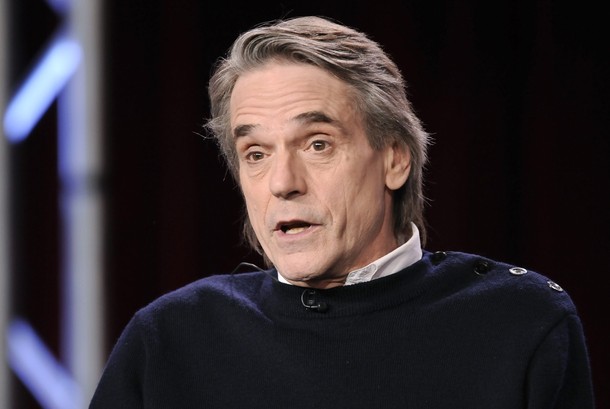
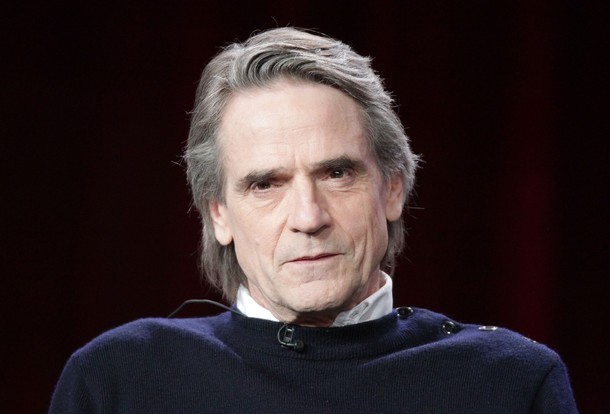
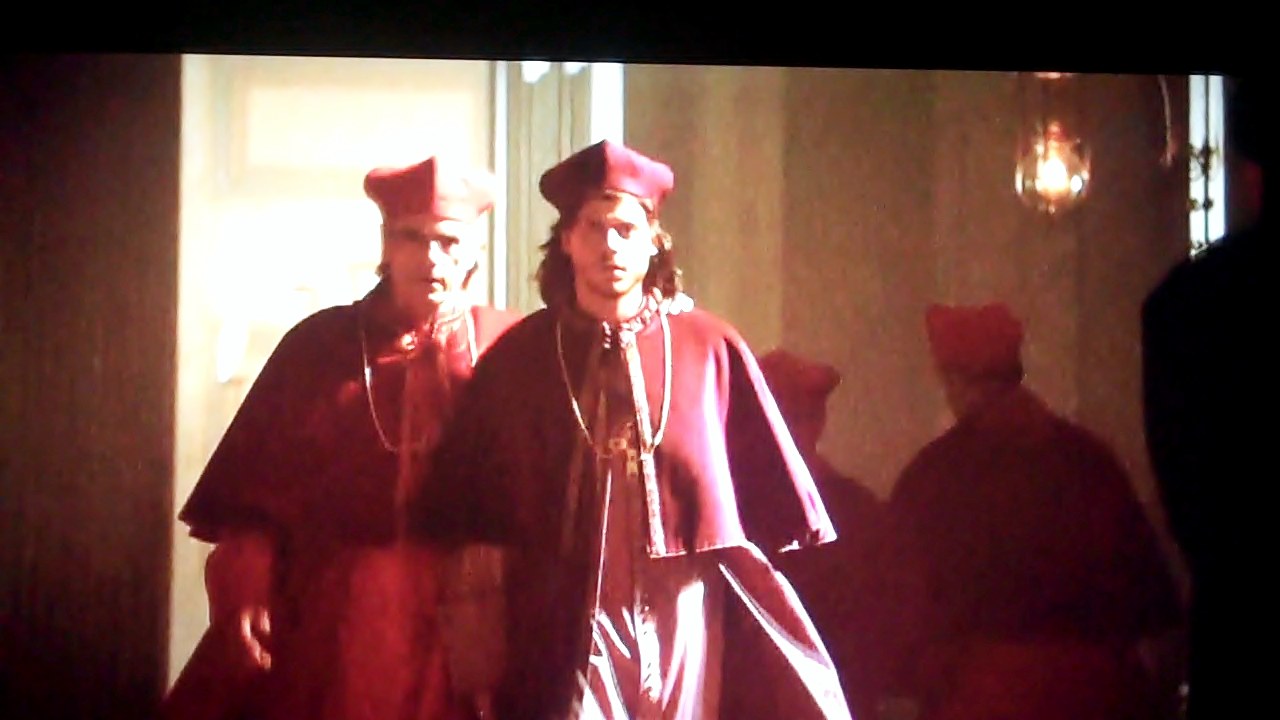
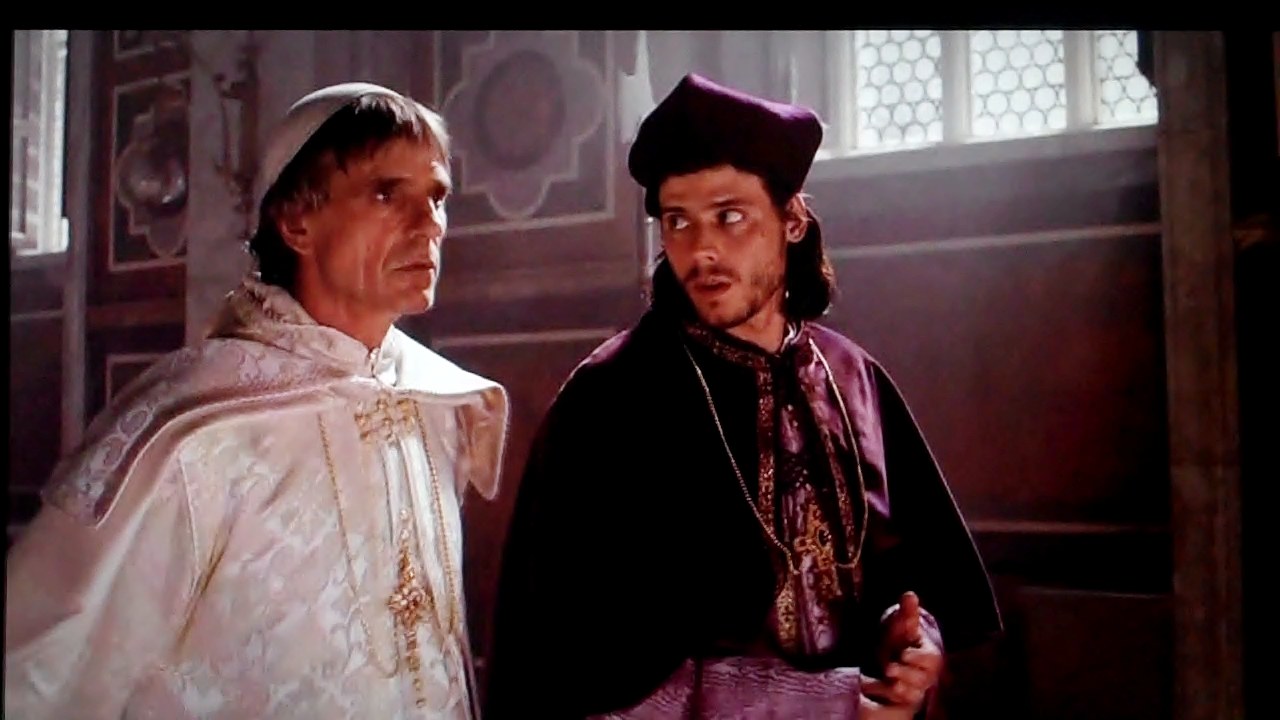
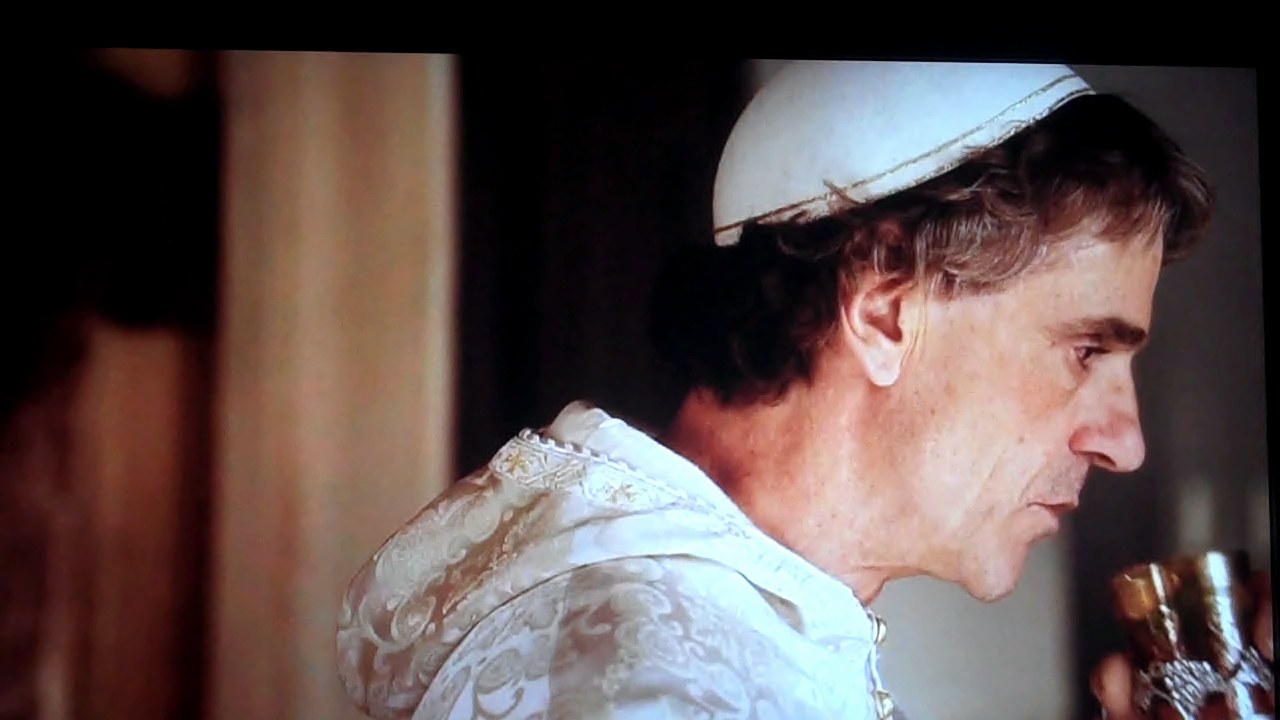
Screen caps from Jeremy Irons’s appearance on ABC’s The View from Thursday, March 3, 2011. Jeremy was interviewed for about seven and a half minutes and discussed The Borgias.


Screen caps from Jeremy Irons’s appearance on ABC’s The View from Thursday, March 3, 2011. Jeremy was interviewed for about seven and a half minutes and discussed The Borgias.


All of The Borgias trailers – all in one place – all with perfect audio and picture quality!
Vodpod videos no longer available. Vodpod videos no longer available. Vodpod videos no longer available. Vodpod videos no longer available.
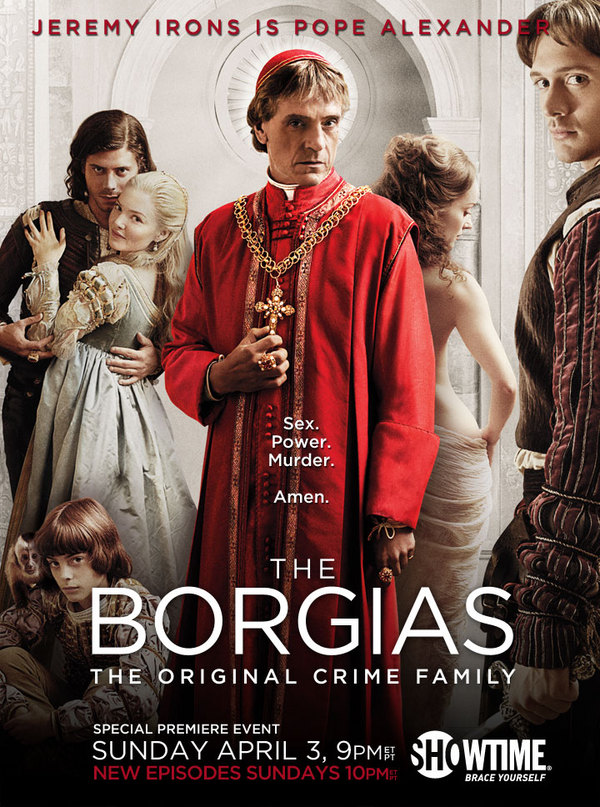
The Borgias will premiere on Showtime on Sunday, April 3, 2011, from 9:00 to 11:00 pm EST. It will move to its regular time slot of 10:00 pm, the following week.

From Elise Crane Derby via Twitter
Click on any of the thumbnails for a larger image:


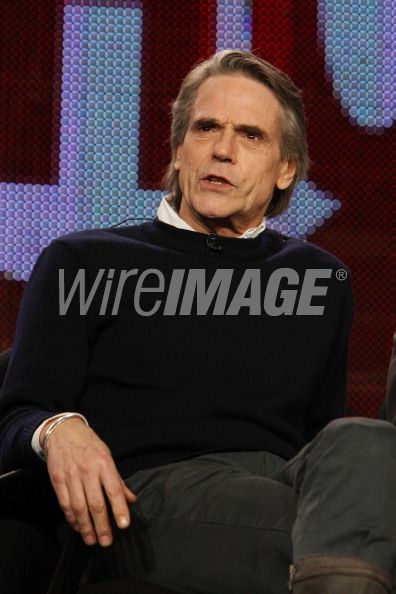


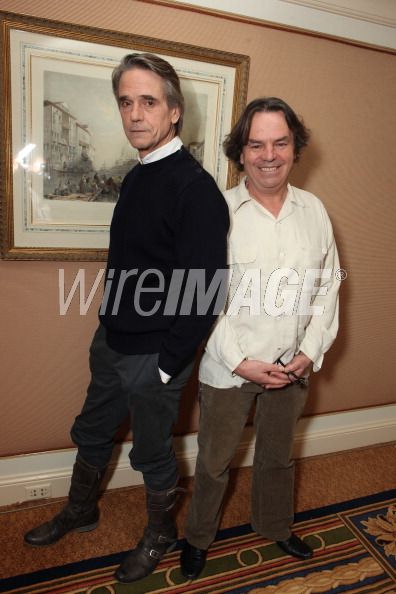


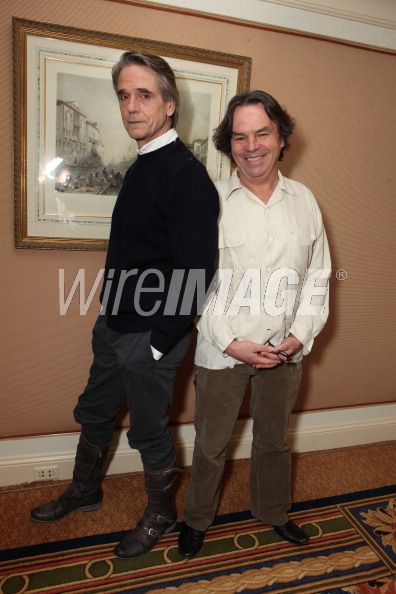
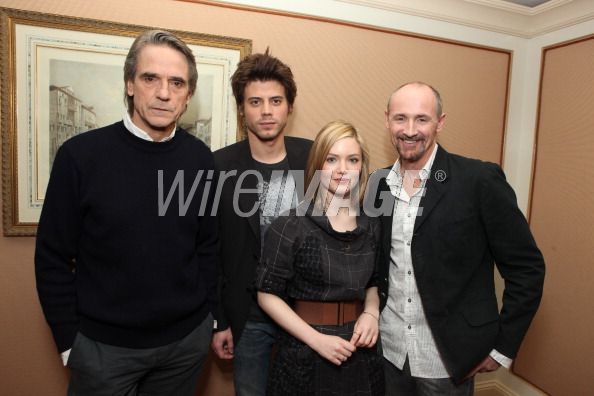

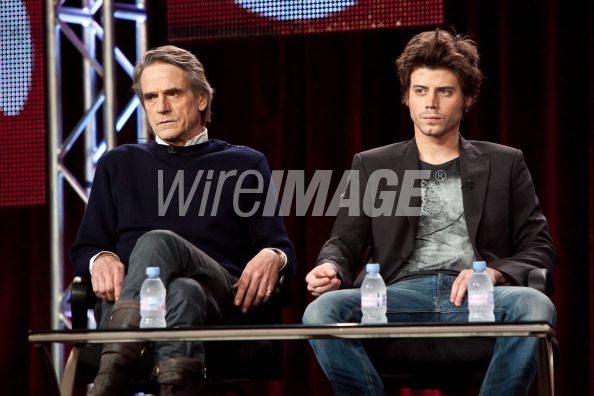
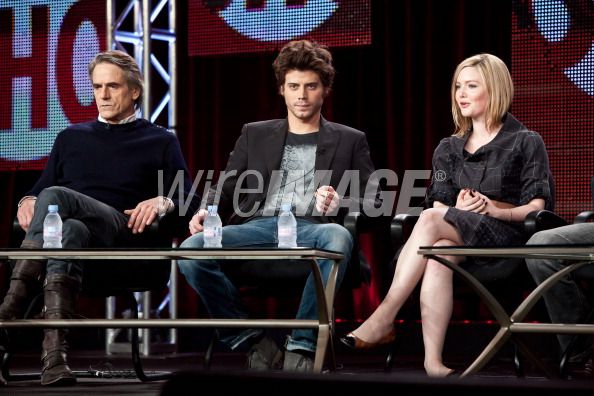


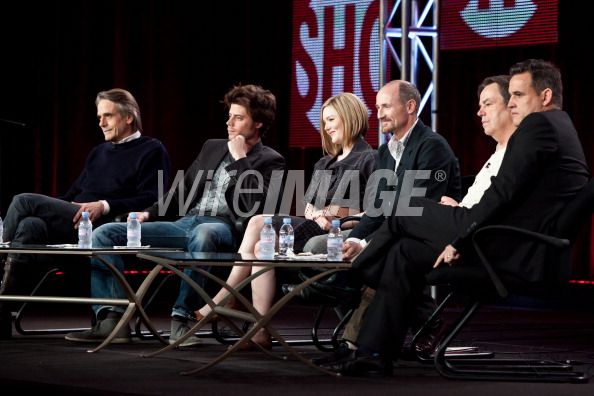

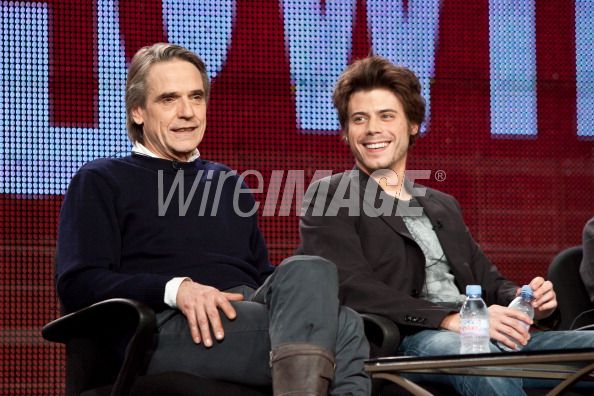






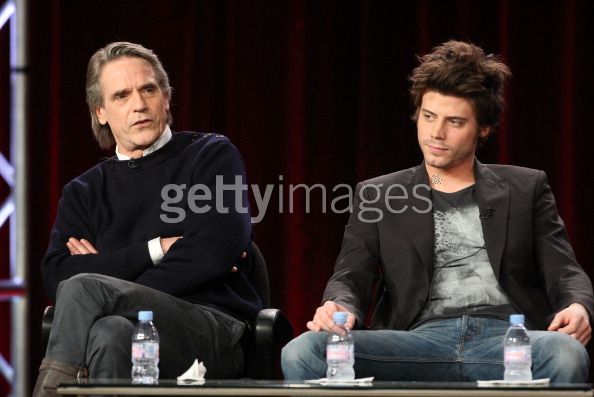

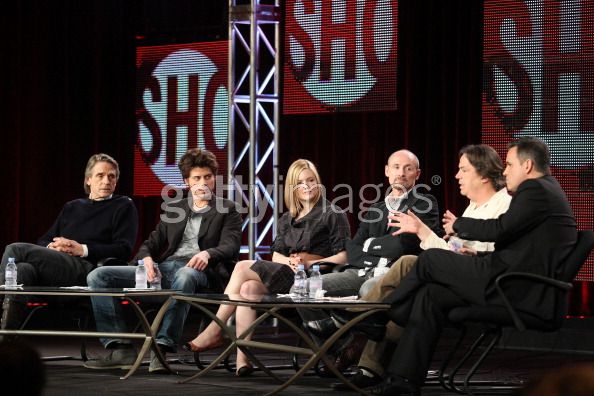

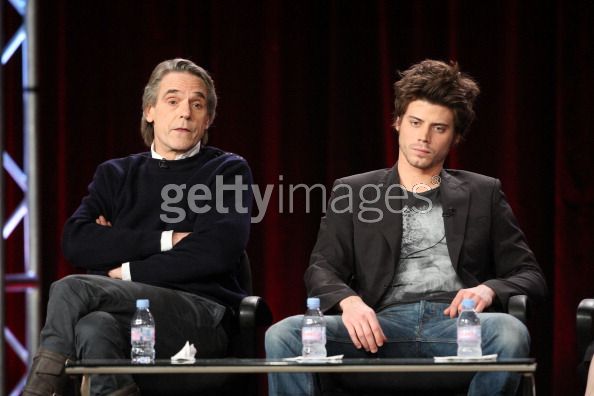


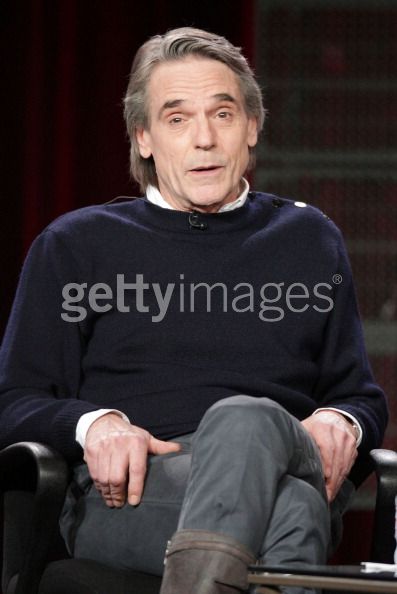





Jeremy is not in this video, but Colm Feore, who plays Cardinal Della Rovere in “The Borgias”, speaks about working with Jeremy and he gives a lot of interesting details about the filming of the series.
__________________________________________________________________________________________
From Brittany’s TCA 2011 Blog:
The Borgias
Please stop calling Showtime’s The Borgias a sequel to its wildly successful The Tudors. According to Borgias star Jeremy Irons, the shows are alike “as much as Hamlet is the same as MacBeth.”

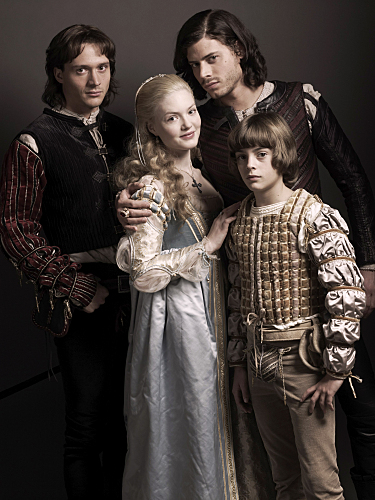
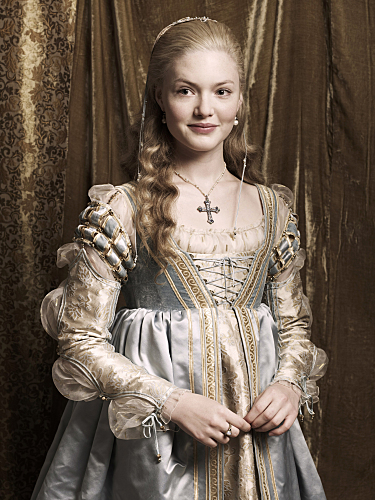
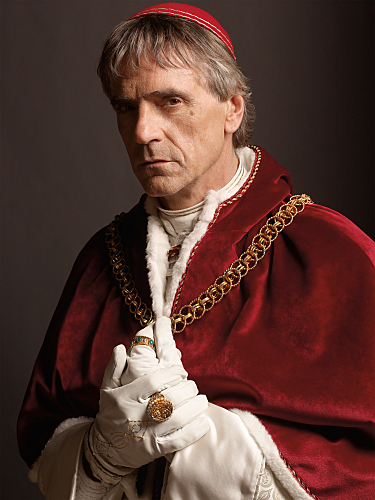
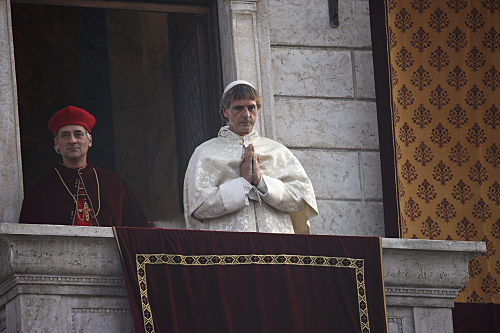
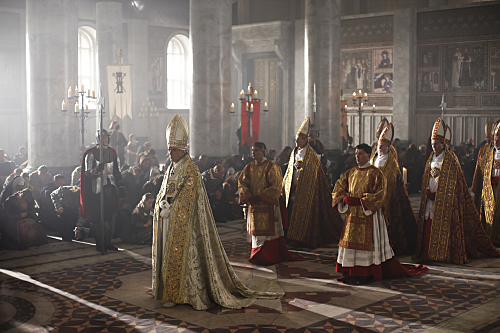
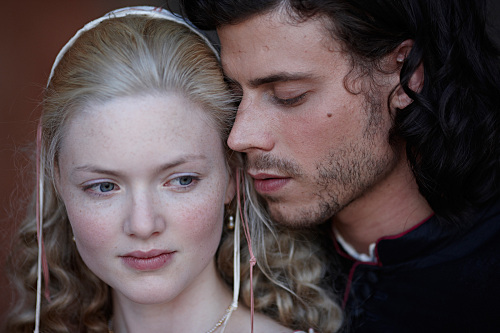
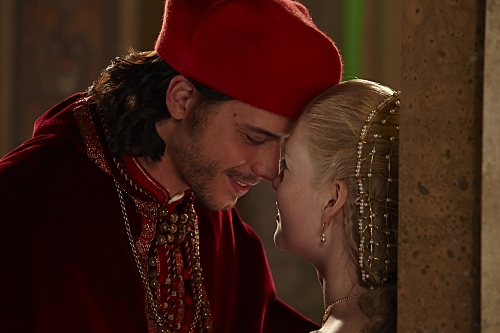
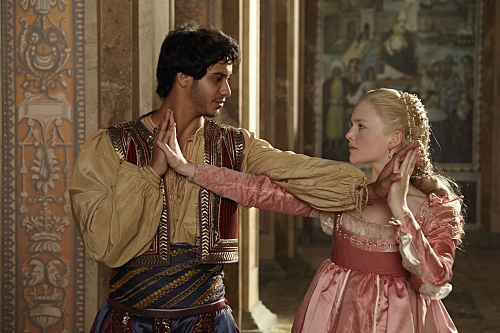
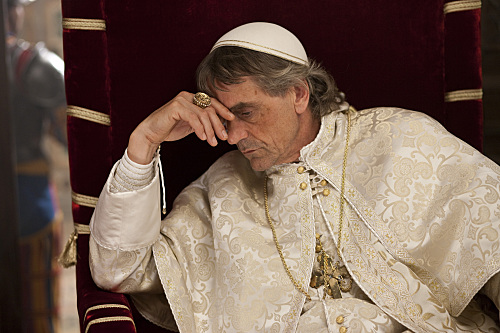
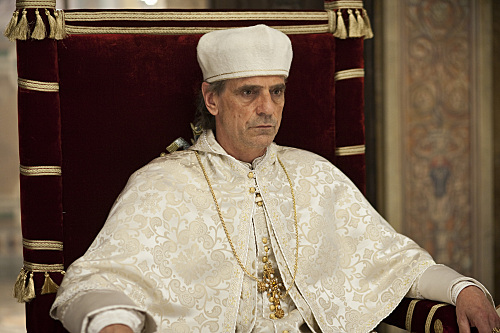
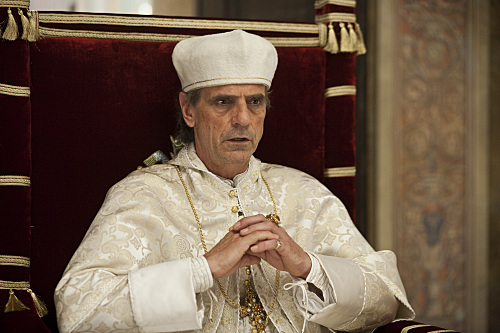
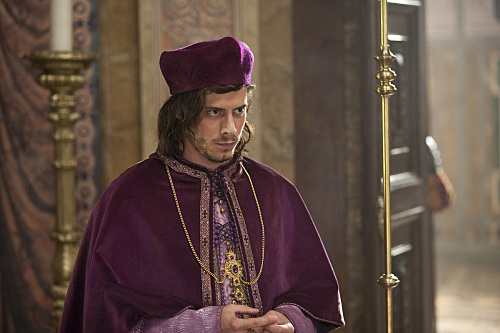
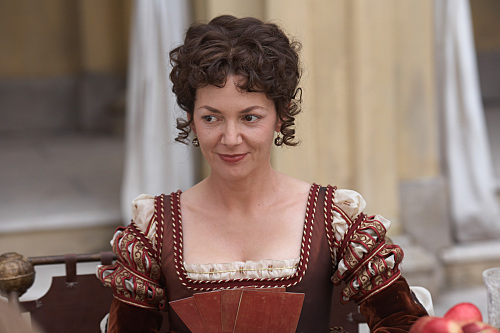
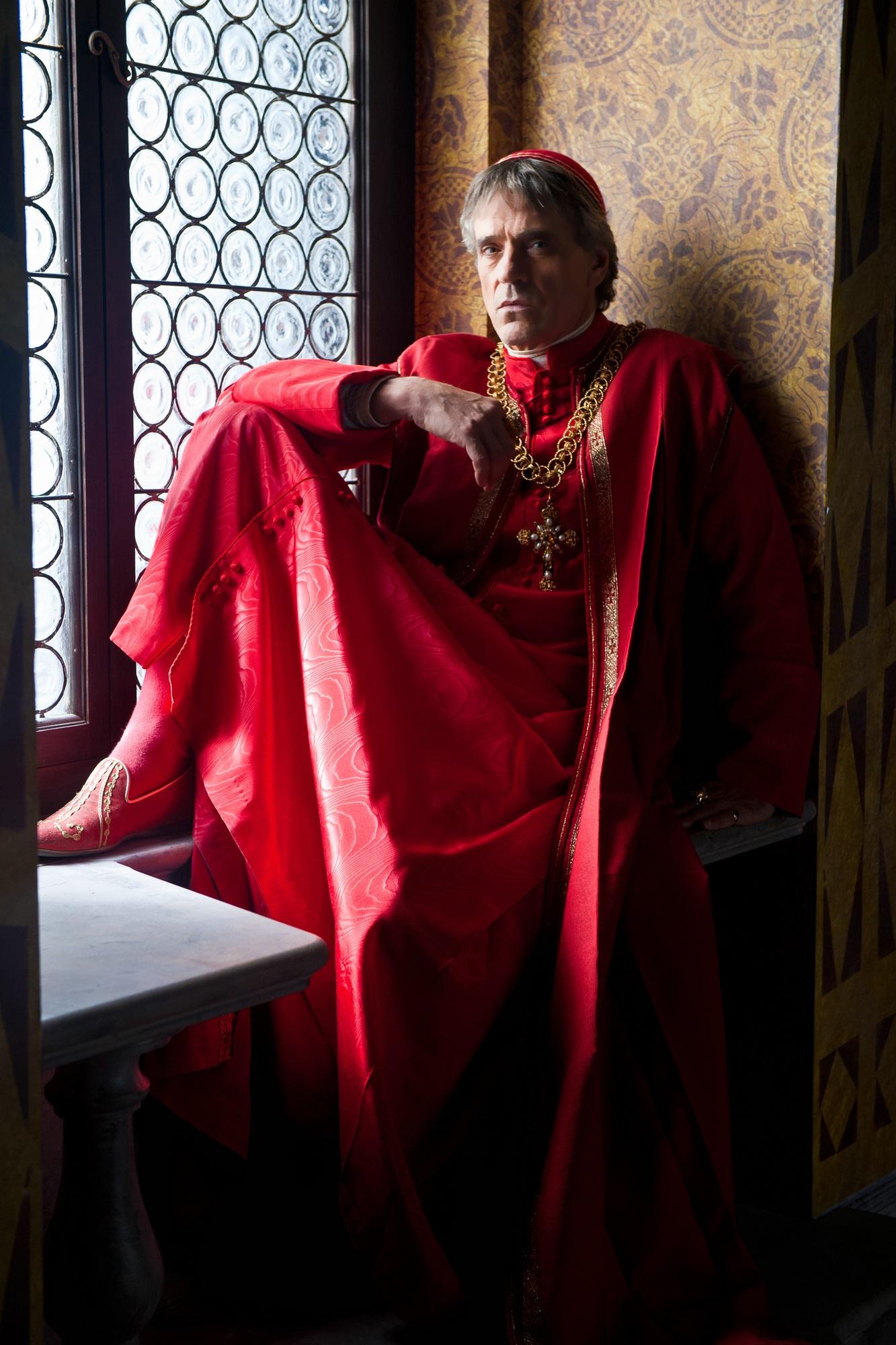
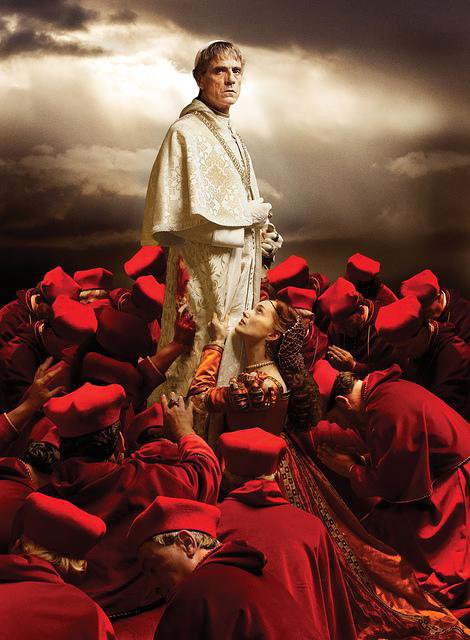
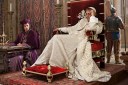
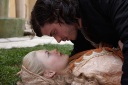
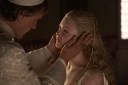
Billed by Showtime as “the original crime family,” the series depicts the titular family as Rodrigo Borgia (Irons) “builds an empire through the corruption of the Catholic Church and orchestrates a relentless reign of power and flamboyant cruelty” once he begins Pope Alexander the Sixth. The same qualities are seen in his children as Juan (David Oakes) becomes head of the papal armies and Cesare (Francois Arnaud) is made a Cardinal, while Rodrigo plots to marry off daughter Lucrezia (Holliday Grainger) as a means of further improving the family’s political position. Sex, violence, and chaos abounds.
“The series is about power and God and how they interact,” creator, writer, director (of the first two episodes) and executive producer Neil Jordan said. Co-star Colm Feore added that it’s a “very difficult problem. Maybe they don’t work together.”
Yet with all the sin, debauchery and cruelty perpetuated by the Borgias, are they going to repel some viewers who find them too objectionable? It’s possible, but no one seemed particularly bothered. Asked that question, Irons replied, “It’s for us to judge them, and wonder how much has changed [since then].” He added that the fact that people are afraid of skeletons in closets may have something to do with ‘why we have such boring people as leaders” – because they don’t want their misdeeds inevitably exposed by their candidacy.
On top of that, The Borgias faces another hurdle. With religion involved, controversy sometimes follows. Jordan doesn’t expect a backlash, however, saying that “these events are so well-documented and [Rodrigo] did try and protect the institution [of the Catholic Church]. I don’t think the Church will be unhappy.” Yet there’s only so far history can take the fictional Borgias. Asked how much research the actors did, Fiore said that it doesn’t matter as much as we might think, since “you’re only going to be doing the bit selected for the story.” Arnaud concurred: “It’s not about history so much anymore as it is about what we’re telling you.” In other words (mine, not theirs), die-hard history buffs should expect some dramatic license.
If there’s one thing in common between The Borgias and The Tudors, it’s that once again there’s no shortage of salacious content, with plenty of nudity and implied sex acts in the clip reel alone. However, unlike how it became a marketing point for The Tudors, it “just happened to be part of the story” of The Borgias, Jordan said. Yet that’s where the similarities end.
__________________________________________________________________________________________
Memorable quotes from The Borgias TCA panel discussion:
1. I read something about Pope John the Pope John Paul, is it, the Polish Pope. And it was from a Catholic theologian who said he wrote, actually, ‘Habet duos testiculos et bene pendentes.’ He said, ‘This man is well hung. That’s why he deserved to be Pope.’ Now, certain things the Vatican will not reveal to all of us, but there is a chair, apparently, a Porphyry Chair, with a large circular hole in it to so these examinations can be made. Now, many people will deny that, but I’ve read I read reputable historians who says it happens, okay? Perhaps no longer, but then it did.” – Neil Jordan, “The Borgias” (Showtime)
2. “I think (Rodrigo Borgia) is a pretty good guy just doing the best he can. I mean, power corrupts, you know. It was a time quite unlike the time we live in today. There were murders in Rome every night, poisonings most weekends. There was incest here and sodomy there. You know, it was a good old rolling, rollicking society. And if you’ve got to try and run that, which the Pope attempts to do, then, of course, you’ve got to play by some of the games, by some of the rules that society follows. I didn’t judge him at all. I just tried to hang on by the…hang onto the position and do what he wanted too. I think it’s up to the audience to say what is good, what is wrong, what is right, and then think how much… wonder how much has changed as you look at present day Italy or present day almost anywhere of power. I think there are huge parallels about what people get up to in order to hang on to power and in order to get their way. I don’t think anything has changed, and perhaps those thoughts will go through our minds when we judge these people. I played him. I thought I was quite a good guy. But George W. Bush probably thought he was quite a good guy, too. Stalin probably liked himself.” – Jeremy Irons, “The Borgias” (Showtime)
3. “As a director, (’The Borgias’) is a nightmare because (the actors) all come with the books about their character. ‘Hang on, I didn’t do that. Look, it says here he did this. It says here he did that.’ Stop, please.” – Neil Jordan, “The Borgias” (Showtime)
__________________________________________________________________________________________
From Ray Richmond, who is contributing to Deadline Hollywood’s TCA coverage:
There’s no mystery where Showtime is taking its marketing orders from in promoting its forthcoming historical costume drama series The Borgias that premieres April 3. The tagline hypes it as “the original crime family,” documenting life in the Italian Renaissance of the late 1400s and the corrupt rule of Rodrigo Borgia, who would become Pope in 1492. As he described during a TCA session this afternoon, the man playing the Borgia patriarch, Jeremy Irons, saw the notorious Rodrigo as “a pretty good guy doing the best he can.”
Irons continued, “It was an interesting time. There were murders every night. Poisonings most weekends. Incest here, sodomy there. It was a good old rolling, rollicking society. If you’re going to run that as a Pope tends to do, you’re going to have to play by some set of rules. I don’t judge him at all. I think it’s up to the audience to say what is good, what is wrong, what’s right. There are huge parallels today to how things were back then as far as what people get up to and what they do to get their way. I don’t think anything has changed really. I played him as someone who thought he was a pretty good guy. I’m sure George W. Bush thought he was a good guy, too. Stalin probably liked himself.”
The Showtime website has added two new videos which feature previously unreleased clips from “The Borgias”.
Vodpod videos no longer available.
Vodpod videos no longer available.
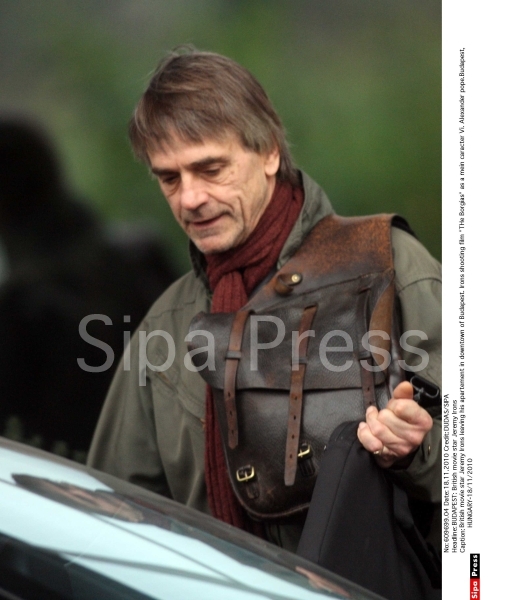
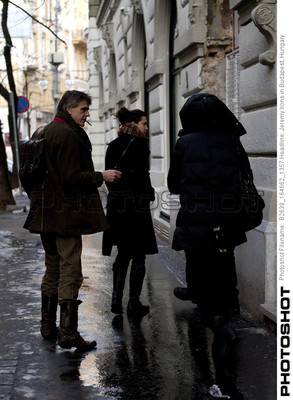
British movie star Jeremy Irons leaving his hotel in downtown Budapest.
Budapest, HUNGARY-18/11/2010
Credit:DUDAS/SIPA


From the Toronto Globe and Mail
(Photos follow the article)
The Borgias: 15th-century Sopranos for a 21st-century audience
ELIZABETH RENZETTI
BUDAPEST— From Saturday’s Globe and Mail
‘Put down your hot dogs and put on your helmets!” the first assistant director barks, an order relayed in Hungarian to two hundred lunching extras who have grabbed a very quick break on the set of the upcoming miniseries The Borgias. Dutifully, the Hungarians – who are dressed as 15th-century French soldiers – put away their cellphones, cigarettes and frankfurters, take up their helmets and pikes, and march haphazardly toward one of history’s wickedest women.
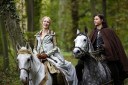
Except that Lucrezia Borgia, as played by British actress Holliday Grainger, looks less like an (allegedly) murderous, incestuous schemer than a 20th-century pop princess, all pink cheeks and lush blonde hair. Lucrezia sits on her black horse, looking across a Hungarian field which, thanks to the miracles of CGI, will be filled on television screens with thousands of soldiers of the Papal army, led by Lucrezia’s brother Juan (whose minor crimes, including military incompetence and seducing his brother’s wife, make him the good Borgia.)
The Borgias were the Sopranos of the 15th century, and the producers of the nine-part miniseries are clearly hoping, come next spring, to fill the gaping hole in torture, sex, historical semi-accuracy and codpieces left when The Tudors finished its hugely successful run. But mention the T-word on the set of the Canadian co-production and you run the risk of being run through.
“I’m not allowed to say it’s more tasteful than the Tudors,” says David Oakes, the British actor who plays Juan Borgia, with an impish smile. “It’s very different. If The Tudors started to make period drama accessible to Americans on television, then this is a step up again. This is film quality.”
Of course, that includes the odd hot poker and heaving bosom. Producer James Flynn worked on both shows and while he acknowledges The Borgias is trying to replicate The Tudors’ appeal to a young, male audience, he insists the new show is painted on a wider canvas: “There’s intrigue and sex and violence, it’s a heady cocktail that should attract a large audience. But it’s really about the journey of a ruthless man with huge ambition … It’s about family, it’s about loyalty.”
At the head of the family is Rodrigo Borgia, later Pope Alexander VI, the first pope to openly acknowledge his illegitimate children. (He especially favoured the useless Juan: You could say he put all his ego in one bastard.) As wily as he is licentious, Borgia was once described by Alexandre Dumas as “the most perfect incarnation of the devil that perhaps ever existed.”
“Well, yes,” says Jeremy Irons, who plays Rodrigo, with a not entirely pious smile. “But history belongs to the winners, doesn’t it? And the Borgias had many enemies, because they were Spanish interlopers.”
The Borgias is the baby of Irish director Neil Jordan, who has dreamed for 20 years of making a movie about the Spanish upstarts who arrived like a hurricane in Rome, and came to rule the Catholic church through a recipe of murder, intimidation, bribery and the occasional orgy. It is said that Mario Puzo based The Godfather on the family of Rodrigo Borgia and his bloodthirsty children.
Jordan wrote all nine episodes and directed the first four. The quality of the series extends to the high Canadian content in cast and crew, including director Jeremy Podeswa, Montreal actor François Arnaud as the diabolical Cesare, and, as the Borgia nemesis Cardinal Giuliano della Rovere, Stratford’s Colm Feore.
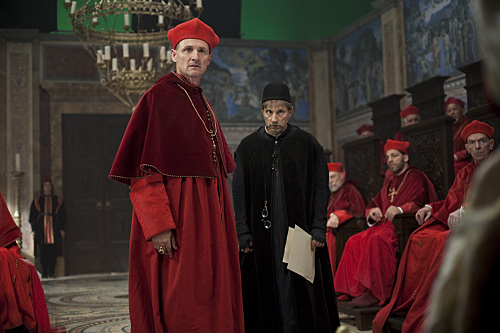
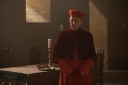
Della Rovere, who went on to become Pope Julius II, is only moderately corrupt and ambitious, which makes him the good guy of the piece. “The Borgias are heinous, no question, but so was everybody at this period,” says Feore, dressed in severe black vestments, an anachronistic plastic cup of apple cider in hand. “There was a lot of truly corrupt, horrible stuff going on. My guy wasn’t a whole lot better but he did have perhaps a stronger moral centre.”
Feore and the other actors have been shooting near Budapest since July. The $45-million production, which will debut on Showtime in the United States in early April and then Bravo and CTV shortly after, is an American-Irish-Hungarian-Canadian co-production, cobbled together with talent and financing from those countries. Hungary has become a magnet for large-scale miniseries like The Borgias and The Pillars of the Earth because it offers tax breaks, medieval landscapes largely free from cell-phone towers, and crews that are technically knowledgeable while not requiring the same concessions as their North American counterparts.
On this cool October day, for example, the crew don’t actually stop for a lunch break but grab hot dogs or buns that are, quite literally, tossed their way. As with any ambitious television production, they’re racing the clock and hoping to wrap the outdoor scenes while the weather is good. On a nearby soundstage, two hundred carpenters have built a miniature Rome, not in a day, but in a few months.
At that time, everybody who could hold a paintbrush or write a treatise passed through Rome, which allows The Borgias to indulge in a type of storytelling you might call Hits of the Renaissance. The script contains roles for Whore Number One and Arrogant Young Nephew, but also for Savonarola and Leonardo da Vinci and Machiavelli, who based his political treatise The Prince on Cesare Borgia. “I had dinner with Machiavelli and Medici the other day,” Feore says. “Fabulous guys, really fun.”
While not attempting to bury nor praise the Borgias, Feore points out that in the late 15th century, Rome was in tatters, ruined and crime-ridden, and perhaps needed a strong arm like Rodrigo’s to make things run smoothly. And, of course, to bring God’s word to the infidels, by force if necessary.
The strong man always makes enemies, and sometimes war: This entire morning Feore’s been on his horse shooting a scene where della Rovere, the French King Charles VIII and their hostage Lucrezia prepare to battle Juan and the papal army. Two weeks before he left to join the production, Feore got a call: “Um … can you ride?” He took a few lessons in Stratford and discovered a professional affinity with horses: “They’re like actors,” he says. “They’re sort of pretty, most of them, but they’re stupid.”
On cue, Holliday Grainger gallops from the French King’s side and crosses the battlefield to convince her brother to surrender before he gets a holy drubbing. This is not actually how it happened in history; Rodrigo Borgia’s mistress and her companion were taken captive, not his daughter. But then, loins are already being girded against challenges of historical inaccuracy.
“There is poetic licence,” allows producer Flynn. “If they filmed what actually happened,” says Feore, “it would be condemned as an improbable fiction.” Oakes, the young actor playing Juan, offers just one example: The Chestnut Ball, a party organized by Pope Alexander VI, who hired all the courtesans in Rome to surround a field of chestnuts and pick them up … without using their hands. “If we showed that,” says Oakes, “people wouldn’t believe it.”


Thank you to Aliz Meszaros for submitting these photos!
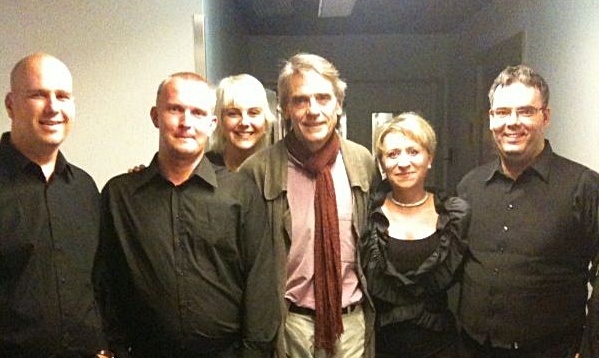
Jeremy with members of the Gyor Philharmonic 20 September 2010

Jeremy in Etyek


Jeremy Irons and Sinead Cusack at a Jon Lord concert

Jeremy's reaction after seeing "Three Sisters" at the National Theatre Budapest









 jeremyirons.net








































 jeremyirons.net
You must be logged in to post a comment.