The Borgias – Press Articles

Irons dissects complex character – Toronto Sun

Jeremy Irons on playing Pope Alexander VI as a regular dude – Montreal Gazette

Playing Jeremy Irons’ son was intriguing for actor – Sioux City Journal

Liz Smith: The Borgias Will Slay You

‘Borgias’: Showtime couldn’t make this stuff up – USA Today

The Borgias Premiere: Praying Cesare has more time for sex (and not with his sister) – Entertainment Weekly

Oh God, you Devil! – New York Post

Jeremy Irons on finding the good side of bad guys – Toronto Globe and Mail

Showtime takes on a scandalous Pope Alexander VI with The Borgias – L.A. Times

Review: Jeremy Irons Brings Charisma to ‘The Borgias’ – Maureen Ryan, TV Squad

Family values – ‘Borgias’: historical, incestuous, murderous fun – New York Post

The Borgias follows Showtime hit The Tudors to highlight Vatican church, family drama – from the New York Post

The Borgias: We are family – from TV Soundoff

The Borgias: The Original Crime Family – from Pop Culture Passionistas

The Family That Sins Together – Toronto Star

Showtime’s sinister ‘Borgias’: Vile, corrupt, addictive – The Washington Post

The Borgias preview: Power comes with a price, meet the Pope’s children – From Inside the Box – Zap2It

Jeremy Irons stars in Showtime’s The Borgias – ABC News and Associated Press

Jeremy Irons has admitted acting doesn’t get any easier with age – from Yahoo News

“Borgias” doesn’t let facts get in way of sexy story – Los Angeles Times

Just Like You Imagined – NY Magazine

Just Like You Imagined

Jeremy Irons plays himself very well.

Photo by Matt Carr/Getty Images

By Jada Yuan
Published Mar 27, 2011

Read the original article HERE

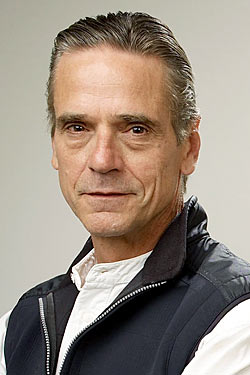
Jeremy Irons is laughing heartily outside Le Bilboquet on East 63rd Street, surrounded by attentive females. It’s a cold day, but he seems oblivious to the chill as he sips an afternoon Kir Royale and languidly smokes a hand-rolled cigarette. You approach and introduce yourself. He springs up, grabbing both your arms, and stands back to appraise you. At 62, he still possesses a liquid-eyed hotness. He cheek-kisses good-bye his coterie of women (publicists, managers, friends—it’s unclear), lays his hand on your shoulder, and gently guides you through the bistro door, all the while staring deeply into your eyes, so absorbed that he is halfway through the room before he realizes he forgot to put out his cigarette. With apologies, he takes his leave amid a chorus of dismay. “Are you kidding? He can smoke wherever he wants! He’s so cool!” says one entranced male diner, upon whom Irons bestows a two-palmed handshake before stepping outside to carefully deposit his cigarette butt in a trash bin.

Jeremy Irons is just so Jeremy Irons—that is to say, the man of flesh is very much the man of your fantasies. He doesn’t so much occupy space as consume it. Eyes follow him, then stare, rapt. And Irons, something of an attention hog, plays to his audience. He chooses the corner that allows him to face out and survey the room as it surveys him right back.

Irons calls out for a round of “Château Bloomberg” (a.k.a. tap water), “straight from the East River!” He has, he declares, “turned vigorously against the mayor because of the new law [banning] smoking in parks or on the beach, which I think is ludicrous and a terrible bullying of a minority that cannot speak back.” Irons, his teeth a testament to a life of indulgences, believes smokers ought to be protected like “handicapped people and children.” Though he clearly relishes declamation, he is getting notably heated over a law that is very briefly touching his life. The actor spends most of his time in an Oxfordshire village or at Kilcoe, an actual ­fifteenth-century castle (“You’d call it a keep,” he clarifies) on a bay in Ireland. Kilcoe’s ­hundred-foot, lovingly restored towers help to explain a spate of early-aughts parts in “sub–Lord of the Rings stuff” like Dungeons & Dragons. “It’s the shit you do,” he says, to “pay for another six months.”

Irons is in New York to reprise a guest role as a sex addict turned sex therapist on Law & Order: SVU (airing March 30) and to publicize his new Showtime show The Borgias (debuting April 3), a part he took at the behest of his friend Neil Jordan (The Crying Game), who wrote the series and directed the first two episodes. Irons plays Pope Alexander VI, despite having zero resemblance to the real man—an enormous, hook-nosed Spaniard with an insatiable appetite for corruption, food, women, and murdering his enemies. “I Googled Rodrigo Borgia, and he’s a voluptuary,” says the actor. “And I said, ‘I think I’m a bit of an ascetic, really, for that.’ And Neil said, ‘No, no, no. Because it’s all about power and what power does to you and how you deal with it. And you can play all that.’ ”

Yes, powerful and dark, Irons can do. He broke out as a heartthrob in the BBC series Brideshead Revisited, then romanced Meryl Streep in The French Lieutenant’s Woman. But by his forties, he was playing against his good looks, choosing dangerous, even creepy characters—like the twin gynecologists in David Cronenberg’s Dead Ringers and Claus von Bülow in Reversal of Fortune, for which he won his Oscar.

In his Borgias role, an outsider beset by a Roman aristocracy bent on destroying him, Irons sees parallels with Barack Obama. “Just look at the gossip about your current president being from Africa or being a Muslim,” he says. “Alexander was getting all of that.” On the other hand, Irons thinks Alexander had it easier than another of our presidents. “The medievalists would see the reaction to Clinton, for instance, and the cigars, as being deeply prohibitive. He’s a man! We ought to forgive and say, ‘Yeah, he’s got a lot of testosterone, and he’s great at what he does, and he loves a bit of lady, and there you go.’ We see all these marriages breaking because they’re under intolerable strains, because we expect to get all our happiness from our husband or our wife. Impossible! How can you get that from one other person? I don’t want a saint to be my leader. And maybe his wife after fifteen years won’t be able to provide everything he needs. That’s fine. That’s life.”

Irons’s wife of 33 years, the actress ­Sinéad Cusack, is apparently fine with this; no doubt she’s used to her husband’s decrees—including his disdain for organized religion (she is a practicing Catholic): “I don’t really approve of religion … I’m not quite sure the relevance Christianity has.” Their son Max, 25 (brother to Sam, 32), is currently starring in Red Riding Hood. Irons hasn’t seen the film, but he did catch the Jimmy Kimmel appearance in which Max talked about his eternal embarrassment over his dad’s driving around in a horse and buggy in the town where he grew up. Irons smiles indulgently. The father is resigned to letting the son find his own way. “I hope he never gets out of touch with theater, and I hope he doesn’t get too seduced by the money and all that,” says Irons. “I wish him well. But it’s always, for any parent, a slightly heart-in-the-mouth situation when you see your child climbing a rock face.”

Should The Borgias come back after the first season, the actor is committed to the series for five months out of the year, perhaps for three or four years. He is aware of and on guard against the lusty tendencies of cable TV’s costume dramas: “I know there are some series where there is a bit of history and a bit of fucking and a bit of history and a bit of fucking,” he says. “I think [Showtime] would have liked to have made it even more about that, but I wouldn’t want to be involved in something that’s just as obviously … You know, if you want fucking, there’s a lot of other channels.” (For the record, there is still quite a lot of fucking in The Borgias.)

As he’s telling me about his desire to play King Lear (“The next fifteen years, I’ll be right for it. And the next ten, I’ll be able to remember my lines”), a man approaches to ask if Irons would mind posing with his giggling female companion. The actor lets out an exasperated sigh. It is the first indication that being Jeremy Irons might be a bit of work. Then it’s gone, the Irons of your imagination returns, and it’s impossible to tell if his annoyance was real or feigned. He looks up at the woman, leaning awkwardly over him, and wraps his arm around her waist: “You’re falling over. Come and sit down. Just don’t show it to my wife. Ha. Ha. Pleasure. My ­pleasure.”

Plum Role: History’s Ultimate Godfather – NY Times

Read the full original article at: http://www.nytimes.com/2011/03/27/arts/television/the-borgias-a-showtime-mini-series-starring-jeremy-irons.html
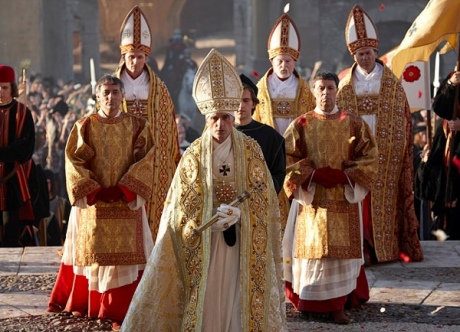
20110325-043925.jpg

March 25, 2011

Plum Role: History’s Ultimate Godfather

By CHARLES McGRATH

ALTHOUGH they lived in the 15th and 16th centuries, the Borgias, the subject of a new nine-part Showtime mini-series that begins next Sunday, were a family made for TV. The Borgias were rich, ruthless, scheming and corrupt, and so sexually voracious that, if you believe the rumors, they slept with everyone, including one another. Mario Puzo, who worked on a novel about them, called the Borgias the Corleones of the Renaissance. They also resemble “The Sopranos” a little. Imagine if Tony, instead of running a garbage hauling business, had bought himself the papacy.

“The Borgias,” which cost $45 million to make, was created, written and produced by the film director Neil Jordan, who also directed several episodes. It is Showtime’s latest entry in what is becoming a high-stakes game on cable TV now that it’s no longer enough merely to show Hollywood movies or the odd sporting event. If you want to sell cable subscriptions these days, you need not just original programming but a long-running, franchise-defining series like “The Tudors,” Showtime’s recent hit.

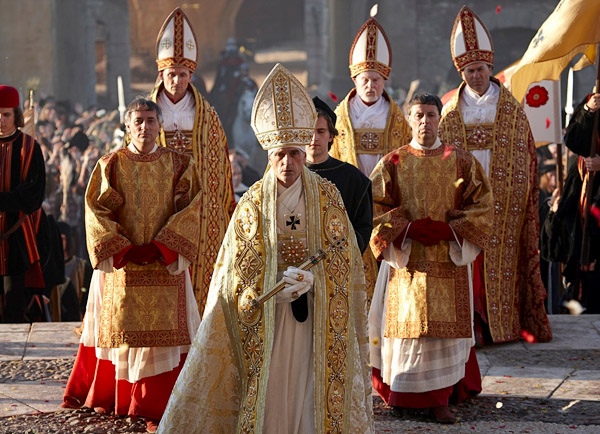
A bankable star doesn’t hurt either, and in the new series the Borgia paterfamilias, Rodrigo, who became Pope Alexander VI, is played by Jeremy Irons, not exactly typecast. To judge from his famous portrait by Cristofano dell’Altissimo, the historical Rodrigo, corpulent and hatchet nosed, looked as if he had been inflated with a tire pump. At the time of his death, or so the legend goes, he was so bloated and debauched that when his body was inserted into the coffin, someone had to jump on the lid to get it shut.

“When we first talked about the part, Jeremy was worried that he didn’t have that bulbous weight,” Mr. Jordan said recently, speaking by phone from his house in Ireland. “I told him that if we can get this guy properly situated, torn between God and politics, the weight wouldn’t matter.” He added: “I wanted someone who would understand the kind of history here. ‘The Borgias’ isn’t just a saga of poisoning and nubile women, like a Ken Russell movie. Well, we do have all that, but we also put this figure in historical context.”

Mr. Irons, still elegantly handsome at 62, doesn’t look much like Pope Alexander. He nevertheless has, both on screen and in person, a slightly detached, regal quality, a darting, glinting intelligence, and occasionally an air of weary melancholy, all very useful papal attributes. He also has a long history of playing characters who are morally ambiguous if not outright villainous: Humbert Humbert in “Lolita”; the deranged twin gynecologists in David Cronenberg’s “Dead Ringers”; the accused wife poisoner Claus von Bülow in “Reversal of Fortune” (for which he won an Academy Award); even Scar in “The Lion King.” And with that deep, rumbling voice, like an organ echoing in a cathedral, he sounds the way a Renaissance pope should sound: the sibilant S’s, the luxurious drawn-out vowels suggesting knowledge acquired outside the seminary.

Mr. Irons speaks this way in real life too, and in New York recently, draped over a chair in his suite at the Lowell hotel, he employed that same voice to say, “We don’t talk about my voice.” He doesn’t like to be made conscious of it, he explained, recalling a conversation he had years ago with the actor John Hurt. “You know all these young actors coming up, 18, 19, 20 — rather good, aren’t they?” Mr. Hurt said. “You know what I do? I go up and say, ‘You’re a great actor, with such a fantastic voice. Have you ever listened to it?’ ”

And then they’re finished, Mr. Hurt said gleefully.

Mr. Irons was a late bloomer. He grew up well to do, on the Isle of Wight in England and went to Sherborne, a midlevel boys’ boarding school, where he was a good athlete but such an indifferent student that the headmaster predicted he would wind up as a paratrooper. He tried being a social worker before becoming an actor and then had such trouble finding parts that for a while he supported himself as a home remodeler. His breakthrough didn’t come along until 1981, when he was cast as the earnest, proper Charles Ryder in the 11-part television adaptation of Evelyn Waugh’s “Brideshead Revisited.”

“We had just come through the ‘Look Back in Anger’ phase, and actors like Tom Courtenay and Albert Finney were sort of fashionable — what I call the kitchen-sink actors, actors with local accents,” he said. “It was ‘Brideshead’ that made it acceptable to have someone who was tall and English and spoke properly as a hero.”

Nevertheless he mostly sees his archetypal Englishness as a liability rather than a strength. “The American version of the Englishman is rather like the English version of the American — sort of one-dimensional and not very attractive,” he said. “I’ve tried not to capitalize on my Englishness. If I had the charm of David Niven or Hugh Grant, then maybe I would, but I don’t. I’m dirtier and more odd.”

The roles of characters who are strange or morally enigmatic have come to him, he went on, partly by accident, or because he has a reputation for playing them, and partly because he has sought them out. “Certainly they attract me,” he said. “I’m always interested in good and evil, who’s a good person, who’s a bad person, believing, really, that we’re all rather gray.”

No one is grayer than Rodrigo Borgia, who bought the papacy in a rigged election, had numerous mistresses and fathered four children yet was also a skilled diplomat and renowned patron of the arts. Mr. Jordan said he thought the whole family has suffered from bad press: “A lot of the history was written by Rodrigo’s successors, especially by Cardinal Giuliano della Rovere, who became Pope Julius II. There was no Gibbon or Niall Ferguson to write about the Borgias, and so they become a little demonized.”

He added that what he found interesting in writing the script was that once Rodrigo was put in the context of his family, he remained attractive no matter how evil he became. Oddly, the villain of “The Borgias” is Rodrigo’s rival, della Rovere (played by Colm Feore), a model of probity and holiness.

Mr. Irons said that in researching the part he made a list of all the qualities attributed to Rodrigo Borgia. “It was like a rainbow,” he said. “The list goes all the way from ‘generous man,’ ‘wonderful company,’ ‘a great organizer’ to ‘poisoner,’ ‘cruel’ and ‘despotic,’ all the worst adjectives you can think of. I thought: ‘That’s very interesting. Maybe it’s all true. Maybe from different vantage points all those adjectives could be seen to be the truth.’ Film is always a kind of patchwork anyway, and my hope is that Rodrigo will emerge as a man of many different colors and many different behaviors. He’s completely different when he’s being persuaded by his daughter or bullied by the mother of his children or negotiating with the Spanish ambassador. I never judge. That’s not my job. I just try to link all those attributes.”

Mr. Jordan said: “Jeremy does manage to humanize the monster, doesn’t he? I loved him as Claus von Bülow. You had absolutely no idea what that character was thinking.”

About playing the pope, a character who is always being deferred to while being lugged around on a throne or gliding through his palace in robes, Mr. Irons said, “It’s daft, really, but someone’s got to do it.” Then he became serious and went on, “I hope the Vatican doesn’t go down the obvious path of creating a great controversy over this, though I’m sure Showtime would love that.”

He added: “I think the great strength of Neil’s script is that because he’s a very bright man and a historian who reads very widely, he’s found something possibly nearer the truth about the Borgias, though God knows what the truth really is. I’m hoping that the audience will be totally confused about whether to root for this man. It’s a bit like von Bülow, you know. Did he do it or not?”

Jeremy Irons Wall Street Journal Interview

The Wall Street Journal

ARTS & ENTERTAINMENT
MARCH 25, 2011

Feeling Wrong for the Role, at First
By AMY CHOZICK

Read the original article here – Wall Street Journal Online

Thirty years after he played Charles Ryder in the British miniseries “Brideshead Revisited,” actor Jeremy Irons takes on another TV role that involves Catholicism, opulence and distrust: Rodrigo Borgia, the scheming patriarch and corrupt Pope Alexander VI in Showtime’s “The Borgias,” premiering April 3.

Watch a scene from Showtime’s new drama ‘The Borgias.’ The series stars Jeremy Irons as Pope Alexander VI. Courtesy Showtime.

Mr. Irons, 62, is perhaps best known for film roles including Claus von Bülow in “Reversal of Fortune,” for which he won an Oscar, and Humbert Humbert in “Lolita.” He also starred in TV miniseries like the 2009 Lifetime biopic “Georgia O’Keeffe” with Joan Allen and “Elizabeth I,” with Helen Mirren.

His deep, languid voice is currently in theaters as the narrator of wildlife documentary “The Last Lions.” (He voiced the villain Scar in “The Lion King.”) In “Margin Call,” an upcoming film about the financial crisis, Mr. Irons plays an embattled Wall Street CEO based on Lehman Brothers’ Richard Fuld.

Mr. Irons was reluctant to commit to an ongoing TV series, but the nine-episode cable run and the fact that Irish director Neil Jordan (“The Crying Game”) would write and direct “The Borgias,” convinced him.

The Wall Street Journal: Why is “The Borgias” being touted as a kind of medieval version of “The Godfather”?

Mr. Irons: There’s an element in common in that Don Corleone was an Italian in America. Rodrigo is a Spaniard in Rome. Yes, that element of the manipulator and the immigrant trying to find power and how to hold onto it and influence people as the head of the family. But those parallels don’t run very deep. I think it’s sort of a marketing idea Showtime had. [Mario] Puzo wrote a novel [“The Family”] about the Borgias, of course.

You’ve said you don’t think you’re right for the role of Rodrigo. Why not?

Neil [Jordan] said “Do you want to play Rodrigo Borgia?” I got home and Googled him and I told him “Christ, you don’t want me. You need James Gandolfini.” I could think of four or five actors who would physically be right for the role. I said “I can’t play that guy.” I have an aesthetic quality that is expected from a pope, whereas this guy was a big, sweaty Spaniard with a big appetite—a lot of food, a lot of women.

So why did you change your mind?

Neil said “No, it’s all about power and how power corrupts you and how you manipulate it. No one knows what he really looked like.” So he convinced me.

Even though Rodrigo is an evil megalomaniac, there’s some humor in him. Did you bring that to it?

I think it’s all in Neil’s writing. There’s sort of a natural amusingness about the situation which one doesn’t have to play. You just do what you do and it brushes off on somebody and there’s a smile there.

Speaking of humor, why wasn’t the 1997 film version of “Lolita” you starred in funnier? The book is very funny.

That book is full of irony. I think we were so nervous about the subject when we were making it that we were walking on egg shells. We could have used a lot more irony. The Kubrick version had more irony but it missed a lot of other things.

In addition to “The Borgias,” you’ve recently done a couple of episodes of “Law & Order: Special Victims Unit.” How did that come about?

Well, “SVU” is a different kettle of fish. I was in Budapest finishing “The Borgias” and they asked and I said I don’t know the show. They sent me an episode with Robin Williams and one with Isabelle Huppert. I said “This is good, it’s fine. It is what it is.” For an actor it feels a little like you’ve just finished reading Proust and you think “I’m going to read a Dick Francis novel and it will take me a day and be great.”

“The Tudors” did very well for Showtime but it got criticism for being soft porn in costumes. Will “The Borgias” have as much sex and nudity?

No. There are a lot of channels doing that. I think we can do better than that. This adaptation, for example, and there have been loads, doesn’t fall into the trap of writing all these stories about incest. In those days whole families used to sleep in the same bed. It’s better to get inside characters, who they are and why they do what they do than to make it sensationalist.

You seem to regularly go from film to TV to theater. Which do you prefer?

It’s just the material. They all have good things about them and they all have bad things about them. Theater is great because you can really stay in one place and work on the character in depth over a long period. It doesn’t pay as much as movies, but is often better written. The problem with TV is people are watching soccer at the same time. I’m really lucky to hop around. I’m a jobbing actor.

How is developing a character for TV different from one for film?

The huge luxury is time. A two-hour movie—and, if you’re lucky, it’s two hours—you can tell a story but it’s hard to develop the inconsistencies of a character and have time to bring all those inconsistencies together.

Are you Catholic?

My wife is. My children are. I don’t belong to clubs.

It may shock a lot of Catholics to see a Pope who behaves like Rodrigo Borgia.

Well, the medieval mind would’ve had no problem with a pope who has a mistress. Why do you expect him to be a God? He’s not a God. He’s a man, with all the weaknesses and failures. [Today] we expect our leaders to be squeaky clean and when they turn out to be normal people with normal desires, we say this person shouldn’t be our leader. Man is just doing his best.

Have you discussed a second season with Showtime?

We have a little. Neil has talked to me about some ideas. It’s hard to get the Pope out of the Vatican. I’m very grateful Showtime was hands-off when we were shooting. They left us alone. I hope that will continue because I don’t think you can make movies or TV series by committee.

Printed in The Wall Street Journal, page D5

Copyright 2011 Dow Jones & Company, Inc. All Rights Reserved

The enduring charm of the Borgias

The enduring charm of the Borgias

http://www.independent.co.uk/arts-entertainment/tv/reviews/the-enduring-charm-of-the-borgias-2247598.html

One of history’s most notorious families is returning to TV – this time with a class cast. Sarah Hughes has a preview…

Monday 21, March 2011

When in Rome: Jeremy Irons stars in the costume drama 'The Borgias' When in Rome: Jeremy Irons stars in the costume drama ‘The Borgias’.

As The Tudors rollicks towards its final episodes, complete with extra wheezing from Jonathan Rhys Myers as the declining Henry VIII, fans of ludicrous yet oddly addictive historical dramas are feeling a slow-burning sense of loss. How will we spend our Saturday nights now that Rhys Meyers, his incredible cheekbones and his distinctly odd way of Declaiming. Each. Sentence. As. Though. He. Was. Learning. To. Read. For. The. First. Time. are no longer with us?

Luckily there is hope on the horizon, for Showtime, the channel that originally commissioned The Tudors, is clearly aware that some of us can never have too much frippery, flouncing and fornication on our television shows, provided that is that they come accompanied with suitably ripe dialogue and the weight of history on their side.

So it is that the US cable channel has headed to 15th-century Rome for its latest drama, a new take on one of history’s most notorious families, the ambitious, murderous Borgias. On paper this is a brilliant idea with the potential for much mayhem, blood, guts, poisoning and heaving of breasts – and Showtime’s extended trailer for the new show, which begins in the US on 3 April before coming to Sky Atlantic in July, certainly plays up to the family’s reputation with rousing music, close-ups of a sorrowful yet sinister Jeremy Irons, the suggestion of dark deeds afoot, and the snappy tagline: “The Original Crime Family”.

So far, so satisfying. However, any new version of the Borgias raises an old spectre: will it be as bad as the infamous 1981 BBC adaptation, which was reckoned to have killed costume drama at the BBC for the best part of a decade?

That 10-part series was infamous for the graphic (for its time) nudity and violence and for a particularly memorable scene where half-naked actors crawled across the floor picking up chestnuts with their mouths. By the time the Vatican issued an edict condemning the BBC’s The Borgias the only question asked by anyone with any taste was what on earth took them so long?

Thankfully, the new Borgias looks like it will actually be rather good. Jeremy Irons, who plays the power-crazed Cardinal Rodrigo Borgia later to become one of history’s most infamous Popes, has a whale of time. His Rodrigo, all hissing sibilants and subtle suggestions, wields his power quietly yet absolutely, more Godfather Part II-era Michael Corleone than Tony Soprano.

While Irons dominates, the rest of the cast, which includes Derek Jacobi and Colm Feore as Rodrigo’s rivals, Joanne Whalley as his principal mistress, Vanozza dei Cattanei, and a couple of brooding bruisers (François Arnaud and David Oakes) as his murderous sons Cesare and Juan Borgia, are no slouches and manage to sell some fairly baroque moments involving the campaign for the new Pope, which could easily teeter into Monty Python-esque parody.

That they don’t is also thanks to the involvement of the idiosyncratic Irish director Neil Jordan, who is the series’ co-creator and will direct the first two episodes. The Borgias is something of a pet project for Jordan who has been trying to make a film about the family, described as “The Godfather set in the Vatican” since 2000.

That said The Borgias is also the work of Michael Hirst, the man behind The Tudors and the scriptwriter for Elizabeth and Elizabeth: the Golden Age. Hirst, a man who never met a period of history he couldn’t joyfully sex up, is the sort of wilfully over-the-top writer whom you either love or despise.

Should historical drama be accurate? The only sane answer is yes but Hirst has so much fun proving the opposite that it’s hard not to get swept along. His involvement suggests that this Borgias might be more Rome than I, Claudius, more Tudors than Elizabeth R but it’s also the case that even if the series does turn out to be tosh, it will be lavishly shot, lovely to look at and completely addictive tosh.

Jeremy Irons on The View 3 March 2011

Screen caps from Jeremy Irons’s appearance on ABC’s The View from Thursday, March 3, 2011.  Jeremy was interviewed for about seven and a half minutes and discussed The Borgias.

This slideshow requires JavaScript.

Share

All of The Borgias Trailers

All of The Borgias trailers – all in one place – all with perfect audio and picture quality!

Vodpod videos no longer available. Vodpod videos no longer available. Vodpod videos no longer available. Vodpod videos no longer available.


Share

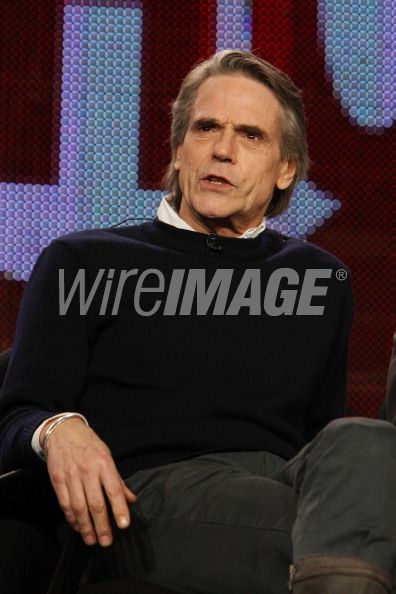
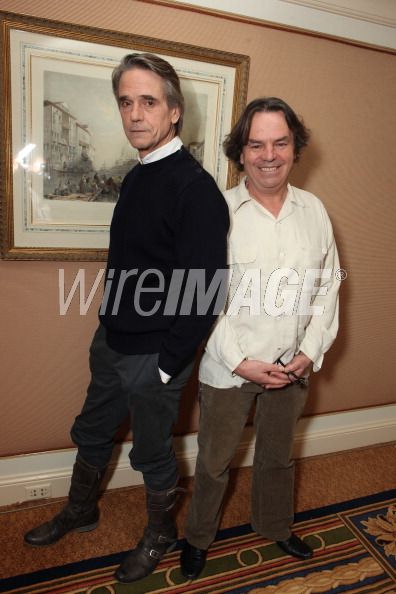
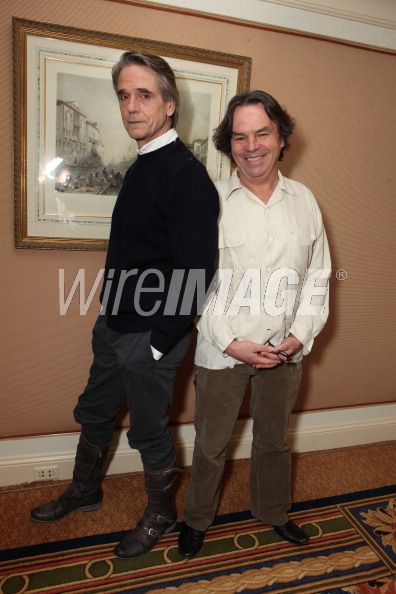
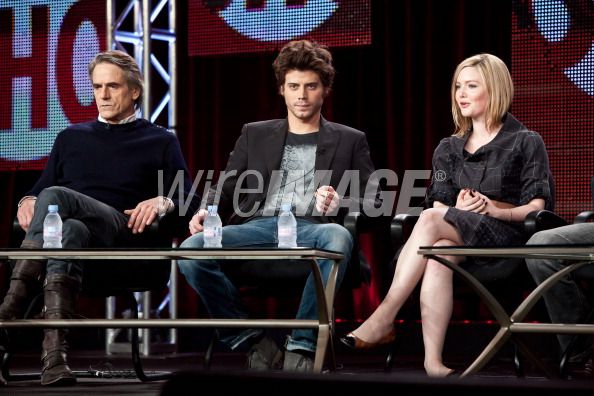
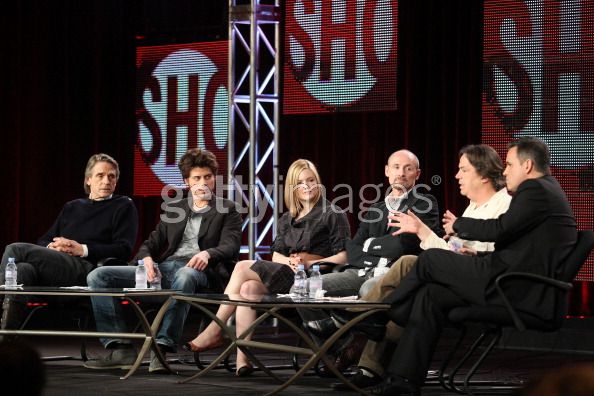
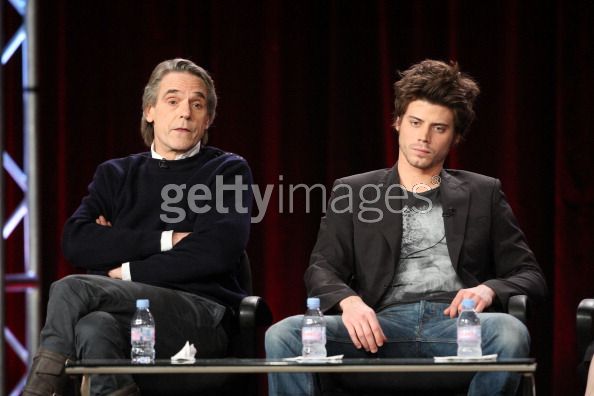
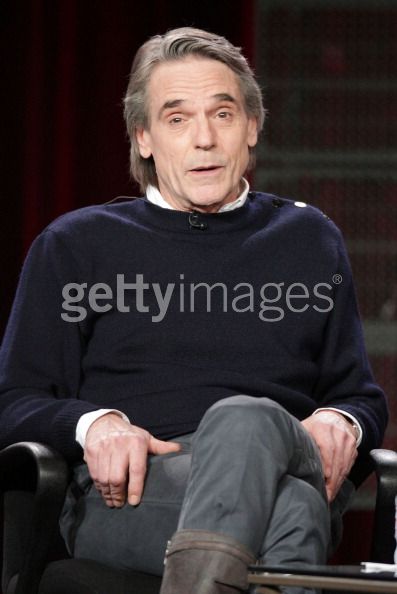
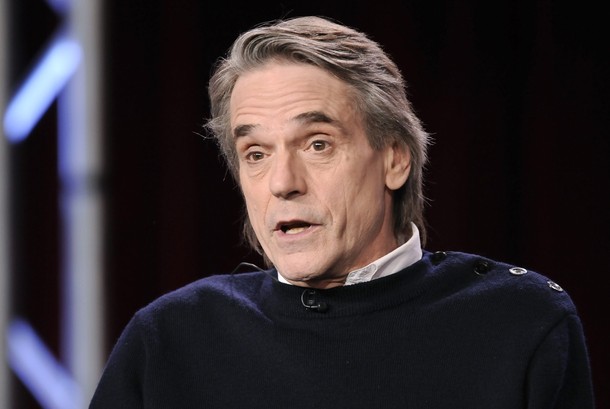
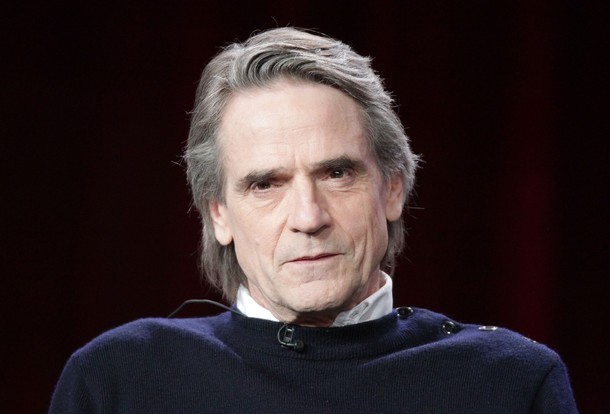
TCA Press Event Photos and News

The Borgias will premiere on Showtime on Sunday, April 3, 2011, from 9:00 to 11:00 pm EST.  It will move to its regular time slot of 10:00 pm, the following week.
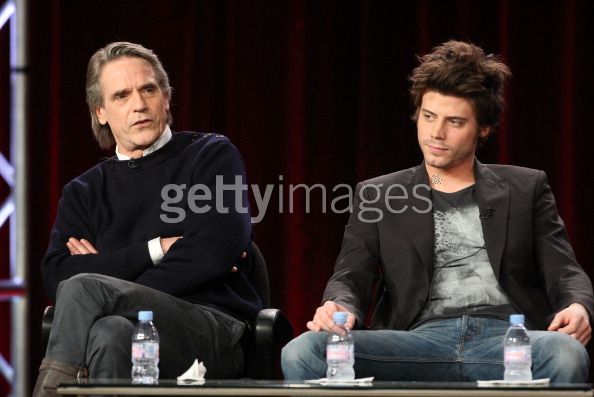
This slideshow requires JavaScript.

From Elise Crane Derby via Twitter

Click on any of the thumbnails for a larger image:

Jeremy is not in this video, but Colm Feore, who plays Cardinal Della Rovere in “The Borgias”, speaks about working with Jeremy and he gives a lot of interesting details about the filming of the series.

__________________________________________________________________________________________

From Brittany’s TCA 2011 Blog:

The Borgias

Please stop calling Showtime’s The Borgias a sequel to its wildly successful The Tudors. According to Borgias star Jeremy Irons, the shows are alike “as much as Hamlet is the same as MacBeth.”

Borgias-010511-0001.jpg

Billed by Showtime as “the original crime family,” the series depicts the titular family as Rodrigo Borgia (Irons) “builds an empire through the corruption of the Catholic Church and orchestrates a relentless reign of power and flamboyant cruelty” once he begins Pope Alexander the Sixth. The same qualities are seen in his children as Juan (David Oakes) becomes head of the papal armies and Cesare (Francois Arnaud) is made a Cardinal, while Rodrigo plots to marry off daughter Lucrezia (Holliday Grainger) as a means of further improving the family’s political position. Sex, violence, and chaos abounds.

“The series is about power and God and how they interact,” creator, writer, director (of the first two episodes) and executive producer Neil Jordan said. Co-star Colm Feore added that it’s a “very difficult problem. Maybe they don’t work together.”

Yet with all the sin, debauchery and cruelty perpetuated by the Borgias, are they going to repel some viewers who find them too objectionable? It’s possible, but no one seemed particularly bothered. Asked that question, Irons replied, “It’s for us to judge them, and wonder how much has changed [since then].” He added that the fact that people are afraid of skeletons in closets may have something to do with ‘why we have such boring people as leaders” – because they don’t want their misdeeds inevitably exposed by their candidacy.

On top of that, The Borgias faces another hurdle. With religion involved, controversy sometimes follows. Jordan doesn’t expect a backlash, however, saying that “these events are so well-documented and [Rodrigo] did try and protect the institution [of the Catholic Church]. I don’t think the Church will be unhappy.” Yet there’s only so far history can take the fictional Borgias. Asked how much research the actors did, Fiore said that it doesn’t matter as much as we might think, since “you’re only going to be doing the bit selected for the story.” Arnaud concurred: “It’s not about history so much anymore as it is about what we’re telling you.” In other words (mine, not theirs), die-hard history buffs should expect some dramatic license.

If there’s one thing in common between The Borgias and The Tudors, it’s that once again there’s no shortage of salacious content, with plenty of nudity and implied sex acts in the clip reel alone. However, unlike how it became a marketing point for The Tudors, it “just happened to be part of the story” of The Borgias, Jordan said. Yet that’s where the similarities end.

__________________________________________________________________________________________

Memorable quotes from The Borgias TCA panel discussion:

1. I read something about Pope John the Pope John Paul, is it, the Polish Pope. And it was from a Catholic theologian who said he wrote, actually, ‘Habet duos testiculos et bene pendentes.’ He said, ‘This man is well hung. That’s why he deserved to be Pope.’ Now, certain things the Vatican will not reveal to all of us, but there is a chair, apparently, a Porphyry Chair, with a large circular hole in it to so these examinations can be made. Now, many people will deny that, but I’ve read I read reputable historians who says it happens, okay? Perhaps no longer, but then it did.” – Neil Jordan, “The Borgias” (Showtime)

2. “I think (Rodrigo Borgia) is a pretty good guy just doing the best he can. I mean, power corrupts, you know. It was a time quite unlike the time we live in today. There were murders in Rome every night, poisonings most weekends. There was incest here and sodomy there. You know, it was a good old rolling, rollicking society. And if you’ve got to try and run that, which the Pope attempts to do, then, of course, you’ve got to play by some of the games, by some of the rules that society follows. I didn’t judge him at all. I just tried to hang on by the…hang onto the position and do what he wanted too. I think it’s up to the audience to say what is good, what is wrong, what is right, and then think how much… wonder how much has changed as you look at present day Italy or present day almost anywhere of power. I think there are huge parallels about what people get up to in order to hang on to power and in order to get their way. I don’t think anything has changed, and perhaps those thoughts will go through our minds when we judge these people. I played him. I thought I was quite a good guy. But George W. Bush probably thought he was quite a good guy, too. Stalin probably liked himself.” – Jeremy Irons, “The Borgias” (Showtime)

3. “As a director, (’The Borgias’) is a nightmare because (the actors) all come with the books about their character. ‘Hang on, I didn’t do that. Look, it says here he did this. It says here he did that.’ Stop, please.” – Neil Jordan, “The Borgias” (Showtime)
__________________________________________________________________________________________

From Ray Richmond, who is contributing to Deadline Hollywood’s TCA coverage:

There’s no mystery where Showtime is taking its marketing orders from in promoting its forthcoming historical costume drama series The Borgias that premieres April 3. The tagline hypes it as “the original crime family,” documenting life in the Italian Renaissance of the late 1400s and the corrupt rule of Rodrigo Borgia, who would become Pope in 1492. As he described during a TCA session this afternoon, the man playing the Borgia patriarch, Jeremy Irons, saw the notorious Rodrigo as “a pretty good guy doing the best he can.”

Irons continued, “It was an interesting time. There were murders every night. Poisonings most weekends. Incest here, sodomy there. It was a good old rolling, rollicking society. If you’re going to run that as a Pope tends to do, you’re going to have to play by some set of rules. I don’t judge him at all. I think it’s up to the audience to say what is good, what is wrong, what’s right. There are huge parallels today to how things were back then as far as what people get up to and what they do to get their way. I don’t think anything has changed really. I played him as someone who thought he was a pretty good guy. I’m sure George W. Bush thought he was a good guy, too. Stalin probably liked himself.”

Share

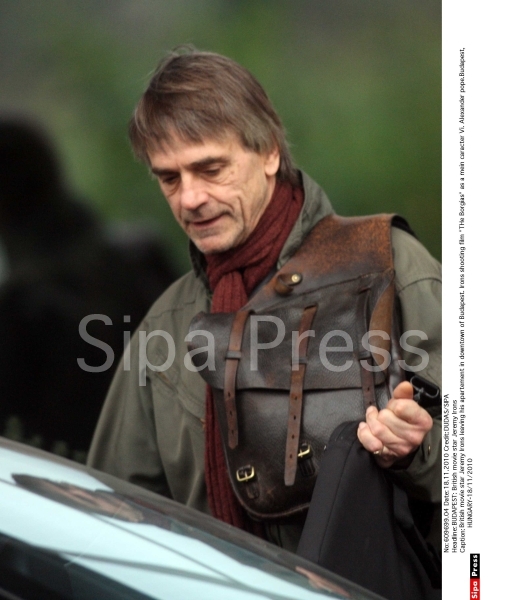
New Photos of Jeremy in Budapest

British movie star Jeremy Irons leaving his hotel in downtown  Budapest.
Budapest, HUNGARY-18/11/2010
Credit:DUDAS/SIPA

This slideshow requires JavaScript.

Share

Screencaps from The Borgias Preview!

This slideshow requires JavaScript.


Share