Jeremy Irons was a guest on Late Night with Seth Meyers, on Tuesday 18 January 2022.
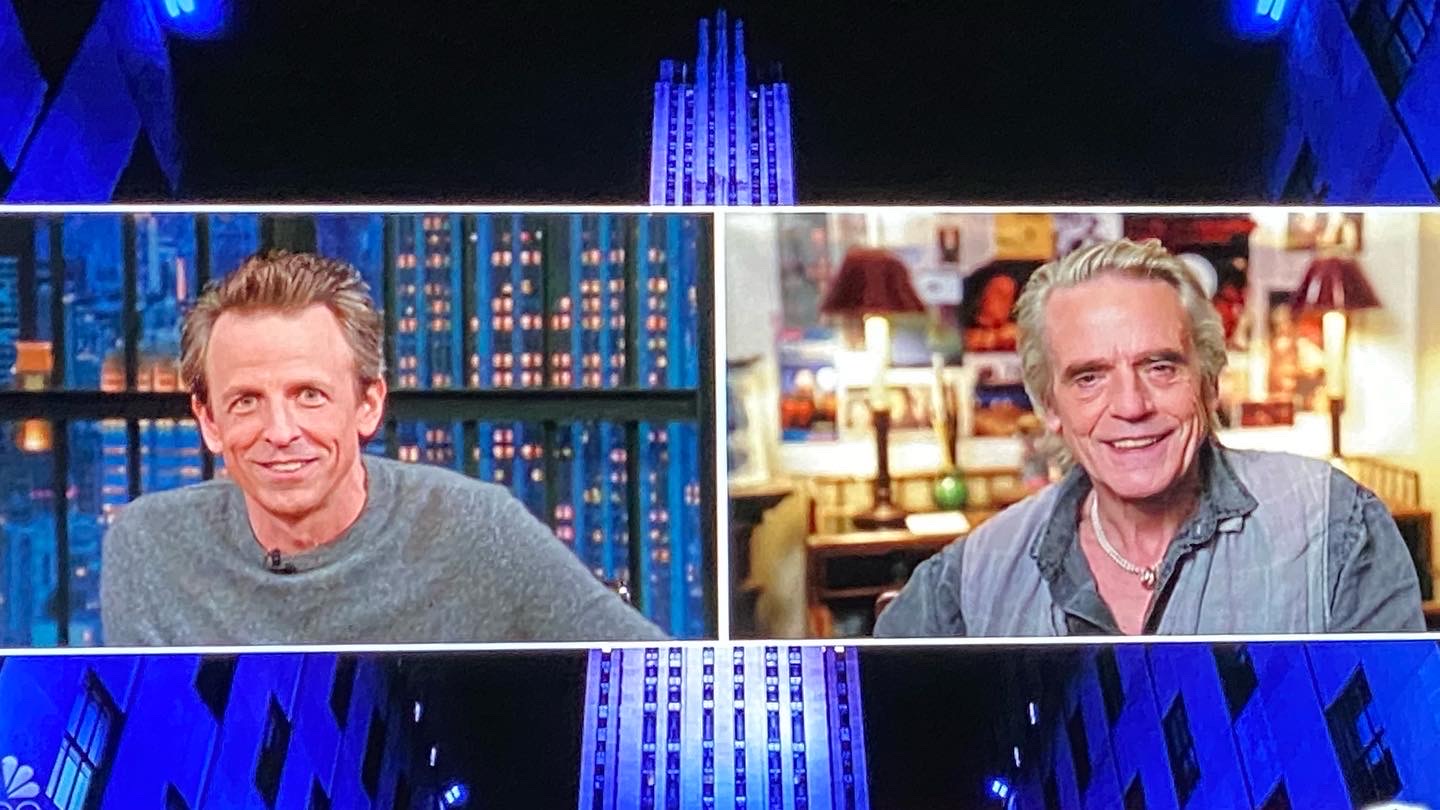




Jeremy Irons was a guest on Late Night with Seth Meyers, on Tuesday 18 January 2022.
by Kathryn Shattuck
My Ten
The star of the new Netflix movie ‘Munich — The Edge of War’ discusses his first Broadway gig and the connection between Irish fiddling and jazz.

Jan. 19, 2022
“Am I talking too much?” Jeremy Irons asked. “I tend to get a bit loquacious.”
With that voice — you know the one — he can talk as long as he wants.
Irons was calling from his home in Oxfordshire, England, to discuss “Munich — The Edge of War” and his portrayal of the British prime minister Neville Chamberlain.
Based on Robert Harris’s historical thriller, the Netflix movie follows four frantic days leading up to the 1938 Munich conference, where world leaders tried to avert war by allowing Hitler to annex the Sudetenland region of Czechoslovakia, which had a large German population. In Munich, Chamberlain also signed an agreement between Britain and Nazi Germany that he said would ensure “peace for our time.”
“I love reappraisals of history, and Robert was very keen to try to clear the name, to a certain extent, of Chamberlain,” Irons said. “I think we do understand that Chamberlain was a man between a rock and hard place at that time.”
After reflecting on his own history and the sources of his contentment, Irons has, in recent years, chosen to work less and revel more in immediate pleasures.
“I act to live, I don’t live to act,” he said.
In his 50s, as leading-man roles waned, he found himself “behaving not terribly well because I was bored,” Irons, now 73, said. So he channeled his creative energy into the restoration of his 15th-century Kilcoe Castle in West Cork, Ireland. Now he is rebuilding a cottage on an island about 100 yards offshore that he occasionally swims to.
“I used to think, when I was a young man, that the epitome of wisdom and what I should aim for in my life is to be able to sit beneath a tree and be entirely happy,” Irons said. “And I found the tree — it’s next to this cottage. And I sit under it, and I look at the view and look at the land around me, and I’m entirely happy.”
Here are edited excerpts from the conversation.
1. “Noah’s Flood” by Benjamin Britten I used to play the violin in the school orchestra. We got together with all the other school orchestras around, and we went into the amazing Gothic abbey in the middle of the town, and some professional singers came down to play the leads. And we rehearsed for three days “Noah’s Flood,” with the kids playing the little animals getting onto Noah’s ark. One morning I walked out of the abbey, and it hit me like a thunderbolt: “Where am I? Where have I been? I’ve been somewhere that I want to get back to.” It was the first time I had that thought, and it’s stayed with me. And that, I suppose, is why I shall never stop working. I’ll always keep looking for the opportunity to go into the foreign land.
2. David Lean’s “Lawrence of Arabia” I remember seeing “Lawrence” when I was about 12. I think I was mesmerized by Peter O’Toole and by his blue eyes. But I was also mesmerized by the scale of the picture and the great emotion within the picture, and I thought, “I’d love to tell stories that way.”
3. “Brideshead Revisited”“Brideshead” was a sort of turning point. Then, of course, it was a great success and helped me get out of what I call the gravitational field of English actors. I was doing plays in the West End with my name above the title, but the way you got your name known at that time in England was really on the television. They said, “We’d love you to play Sebastian.” And I said, “No, I want to play Charles.” I’d actually just played a rather similar character to Sebastian in “Love for Lydia,” in that he loved his mother too much, he drank too much and he fell off a bridge in Episode 8. I looked at Charles, and I thought, “Now, he’s a really interesting guy, because he’s so typically English. I know all about that. I’ve been educated to be that man.”
4. The Cusack family I’m an Anglo-Saxon, middle-class boy. I come from good, boring English stock. And it makes my wife [the actress Sinead Cusack] terribly cross when I say this, but I love breeding dogs, and I know that crossbreeds are so much more interesting. And I felt I needed a bit of crossbreeding. I needed a bit of Celt.
And so when I had the opportunity to make the acquaintance of Miss Cusack, with all her color and history, I was joining in this artistic dynasty. I began to enter that Celtic twilight, that way of life, which I have wallowed in since.
5. Tom Stoppard’s “The Real Thing”I got a request to start rehearsal of this play in London called “The Real Thing” by Tom Stoppard, whom I’d never met. And I read the play and thought, “Good God, he knows me. This is me on the page.” But I couldn’t do it because I was doing this film “Betrayal.” Then I heard news through the grapevine that Meryl Streep and Kevin Kline had come to London and had gone to look at “The Real Thing.” And I thought, “Bugger that for an idea.” So I called my American agent, Robbie Lantz, and I said, “Robbie, you’ve never done anything for me so far. Now, if you don’t get me ‘The Real Thing,’ I’m leaving you.”
After a month or two, I was asked to play it opposite Meryl. But then Meryl, like she always does, she decided not to do it. And Glenn Close did it. So that was my introduction to New York and to Broadway, playing a part which I was made to play.
6. West Cork, Ireland David Puttnam, the film producer, had moved to just outside Skibbereen, and as I sat in his dining room, I thought, “I’m home.” I travel so much, and I’d never had that feeling before. Why did I feel I was home? Because I suppose I was brought up on the Isle of Wight, where the sea is very much part of the land. West Cork, even more so. There’s always a boat in the farmyard. It has, historically, a slightly anarchic element. It’s a place of hunting, a place of music and of conversation. And I found myself settling into West Cork with an absolute, delightful happiness.
7. T.S. Eliot’s “Four Quartets”The “Four Quartets” is his greatest work. I fell in love with its complexity and its simpleness. It made me realize that the way to hear poetry is to hear it aloud. Josephine Hart, who wrote “Damage,” started a series of poetry readings at the British Library, and she would ask actors to read. She had started giving me Eliot. Eliot is a very complicated poet, and I read it without a lot of preparation, on a bit of a wing and prayer. Valerie Eliot, who was his widow, came up to me and said, “I think you’re today’s voice of Eliot. I think you should record his work.” So now I have recorded all his work with the BBC.
8. Martin Hayes and the GloamingThey made a television series in Ireland and asked six middle-aged personalities if they would learn something new. And they asked me, Would I learn Irish fiddle? Martin gave me these lessons, and this man is an absolute magician. The first time we met, I started playing the “Arrival of the Queen of Sheba” by Handel. He stopped me after about 15 seconds. “Wait, wait, wait. Is that the note you wanted?” I said, “Well, that’s how it’s written.” He said, “No, no, no, no. The music’s yours. It comes out of you.” And I realized at that moment that Irish music is jazz.
9. Jean-Marie Tjibaou Cultural Center in New CaledoniaI had a period when I thought I was going to have to stop being an actor. One of the things I thought I might do instead was to be an architect. And I got to know Renzo Piano, who has become a great friend. He allows his imagination to travel without embarrassment. This particular building, which he built for the New Caledonians as an arts center, is just stunning because not only is it dazzling, but it comes out of the place.
10. His dog SmudgeSmudge, I just need. I got her from the Battersea Dogs Home when she was eight weeks old. She is now 7, lying at my feet with great patience. And she’s a very important part of my work and my life because she gives me respite. She reminds me it’s only a [expletive] film and that actually a walk or dinner is much more important. She’s extremely tactile, which is lovely because I’m quite tactile. And now, when you aren’t allowed to be tactile with other people, it’s wonderful. You’re still allowed to be tactile with your dog. So I’m able to cuddle her without getting into any trouble.
Reel Pieces with Annette Insdorf: Jeremy Irons on Munich: The Edge of War
Moderator Annette Insdorf interviewed Jeremy Irons about the new Netflix film, Munich: The Edge of War. Based on the international bestseller by Robert Harris, the film is an engrossing drama set during the Munich Agreement of 1938, with Europe on the brink of World War II.
Munich: The Edge of War is directed by German filmmaker Christian Schwochow. The screenplay — based on Robert Harris’ book — is by Ben Power (whose adaptations include The Hollow Crown and The Lehman Trilogy). As Adolf Hitler prepares to invade Czechoslovakia, Neville Chamberlain’s government desperately seeks a peaceful solution. Amid mounting pressure, British civil servant Hugh Legat (George McKay, from 1917) accompanies Chamberlain to Munich. There, he encounters a buddy from Oxford, German diplomat Paul von Hartmann (Jannis Niewöhner), who has a stolen document signaling Hitler’s true intent — a war of conquest across Europe. Amid frantic negotiations at the Munich Conference, Hugh and Paul conspire to prevent a terrifying conflict.


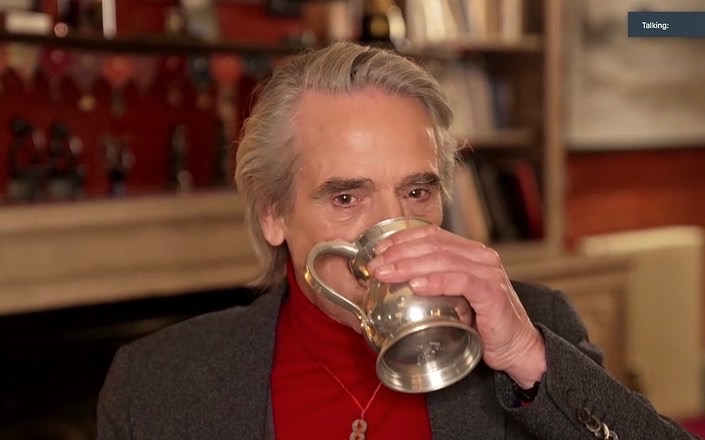
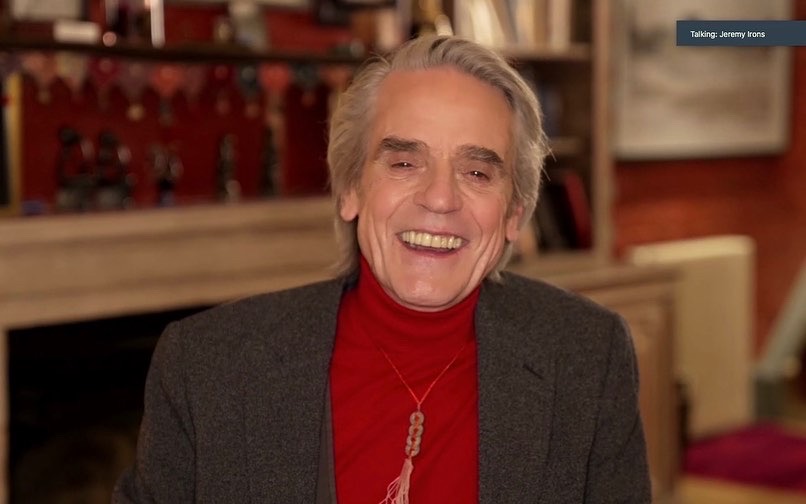

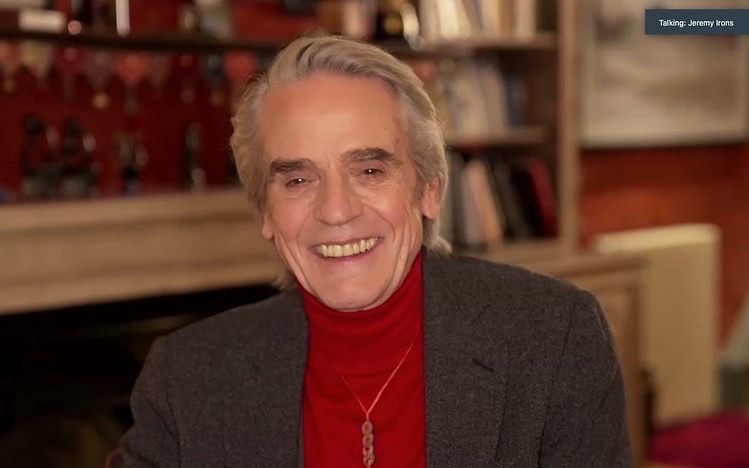

Jeremy Irons and George MacKay were guests on The One Show, on Thursday 13 January 2022, to discuss their film Munich: The Edge of War.
Munich: The Edge of War is in select cinemas now and will be on Netflix on 21 January 2022.
Watch the segments of their interview below.

Moderator Annette Insdorf will interview Jeremy Irons about the new Netflix film, Munich: The Edge of War. Based on the international bestseller by Robert Harris, the film is an engrossing drama set during the Munich Agreement of 1938, with Europe on the brink of World War II.
Jeremy Irons, who plays Prime Minister Neville Chamberlain, is the recipient of the Academy Award for Best Actor (Claus von Bulow in Reversal of Fortune), as well as Golden Globe, Emmy, Tony, and SAG awards. While he is perhaps best known for his recent work in House of Gucci, HBO’s Watchmen, and Justice League, he has starred in such films as The French Lieutenant’s Woman, Moonlighting, The Mission, Dead Ringers, M.Butterfly, Die Hard with a Vengeance, Lolita, The Man in the Iron Mask, and The Man Who Knew Infinity. On television, his credits include Brideshead Revisited, Elizabeth I with Helen Mirren, and The Borgias.
Munich: The Edge of War is directed by German filmmaker Christian Schwochow. The screenplay — based on Robert Harris’ book — is by Ben Power (whose adaptations include The Hollow Crown and The Lehman Trilogy). As Adolf Hitler prepares to invade Czechoslovakia, Neville Chamberlain’s government desperately seeks a peaceful solution. Amid mounting pressure, British civil servant Hugh Legat (George McKay, from 1917) accompanies Chamberlain to Munich. There, he encounters a buddy from Oxford, German diplomat Paul von Hartmann (Jannis Niewöhner), who has a stolen document signaling Hitler’s true intent — a war of conquest across Europe. Amid frantic negotiations at the Munich Conference, Hugh and Paul conspire to prevent a terrifying conflict.
The first 250 people who register will receive a private link to watch the film during a 48-hour window prior to the conversation. Please register before 10 am ET on Thursday, January 13 to be eligible for this link.
Munich: The Edge of War will premiere on Netflix January 21.
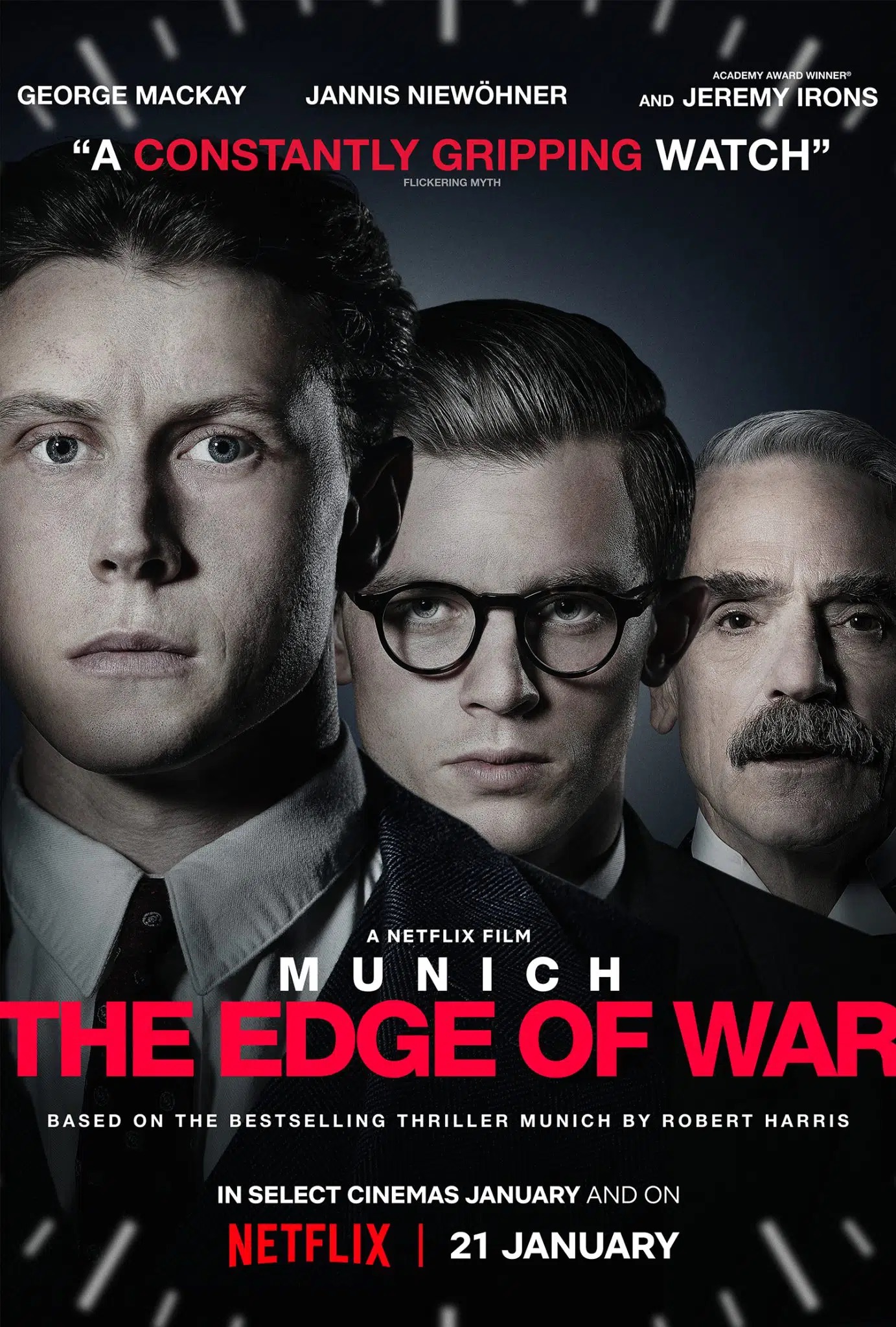
An official trailer and poster for the upcoming Netflix film Munich: The Edge of War, starring Jeremy Irons as British Prime Minister Neville Chamberlain, has been released.
Munich: The Edge of War also stars George MacKay and Jannis Niewohner. The film was directed by Christian Schwochow, based on the novel by Robert Harris.
The film is in select cinemas in January 2022 and on Netflix on January 21, 2022.

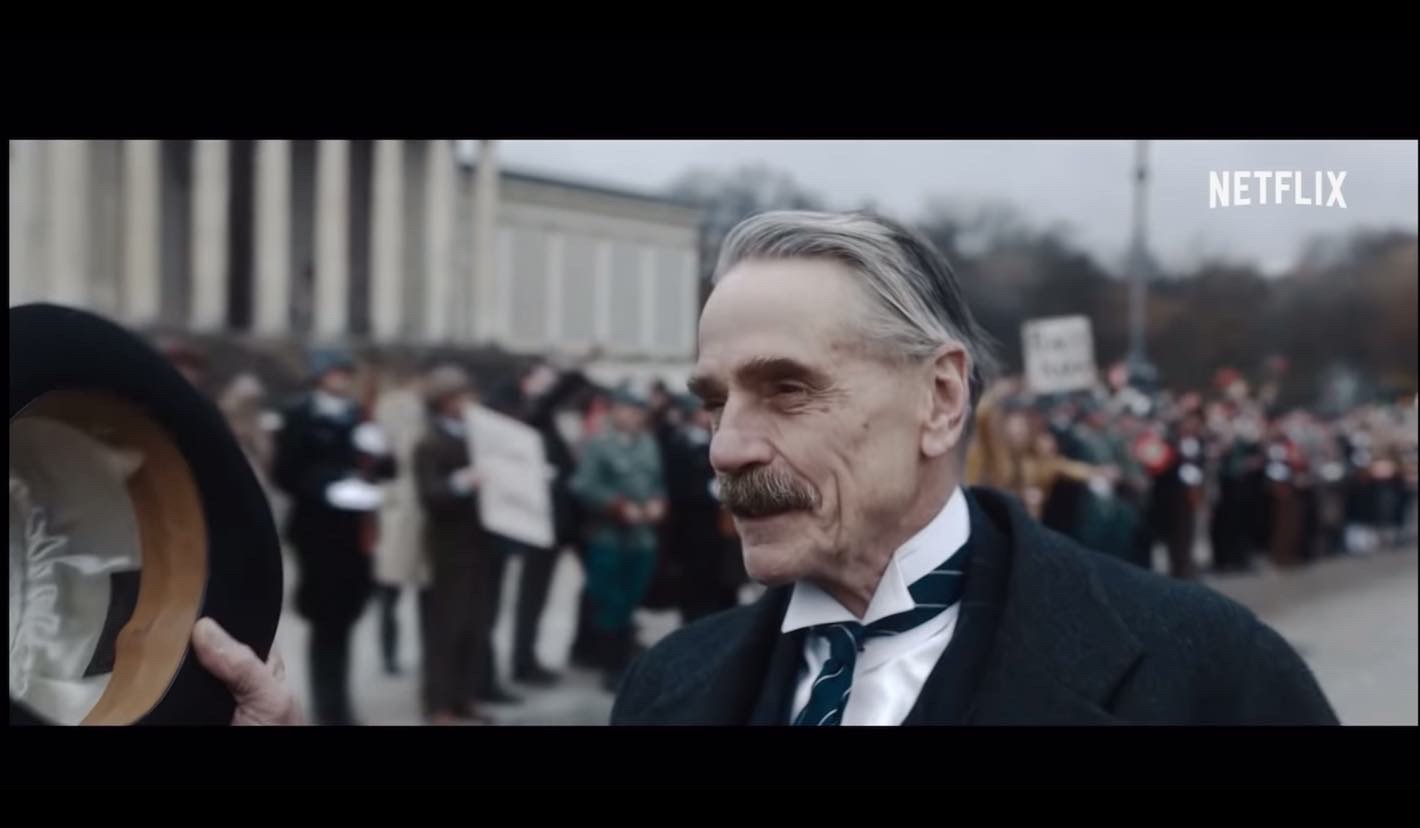


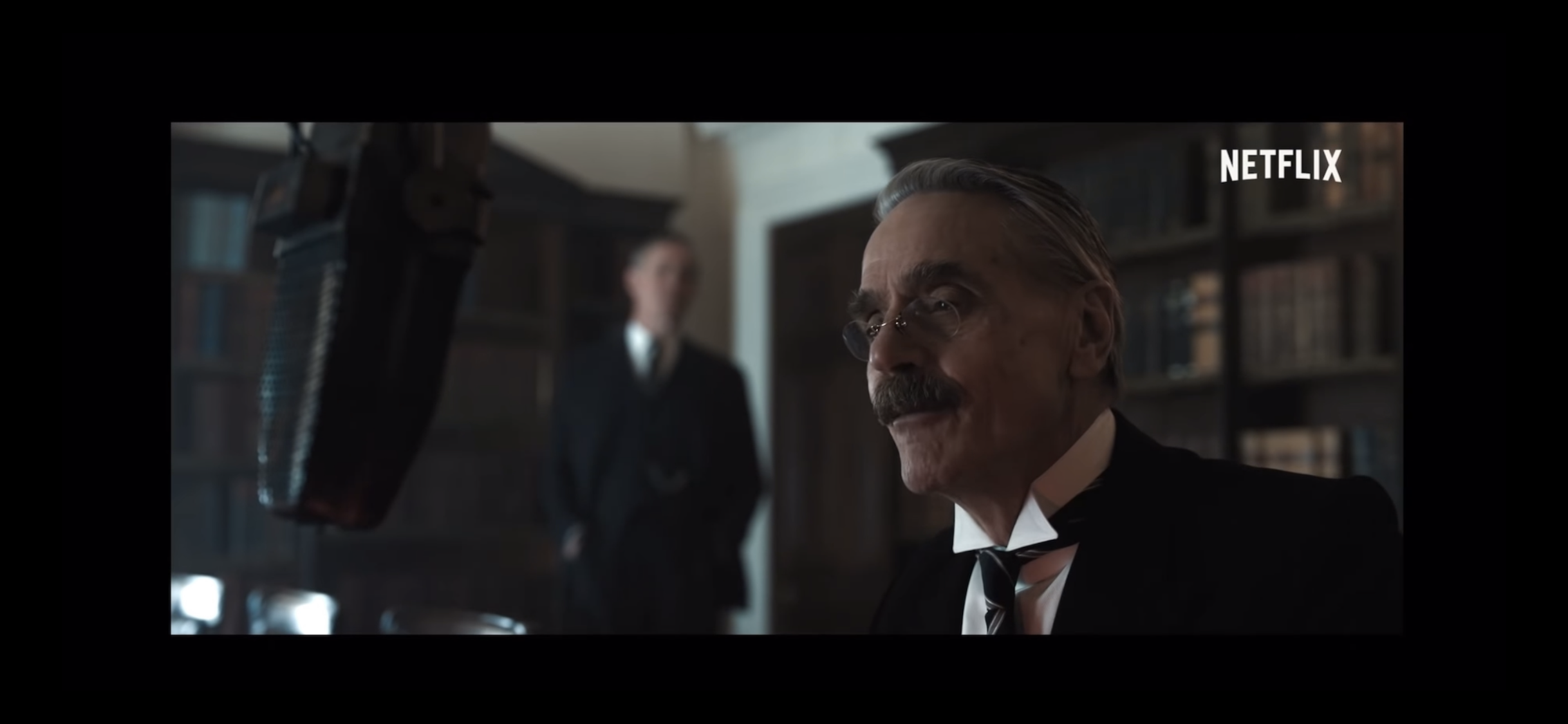


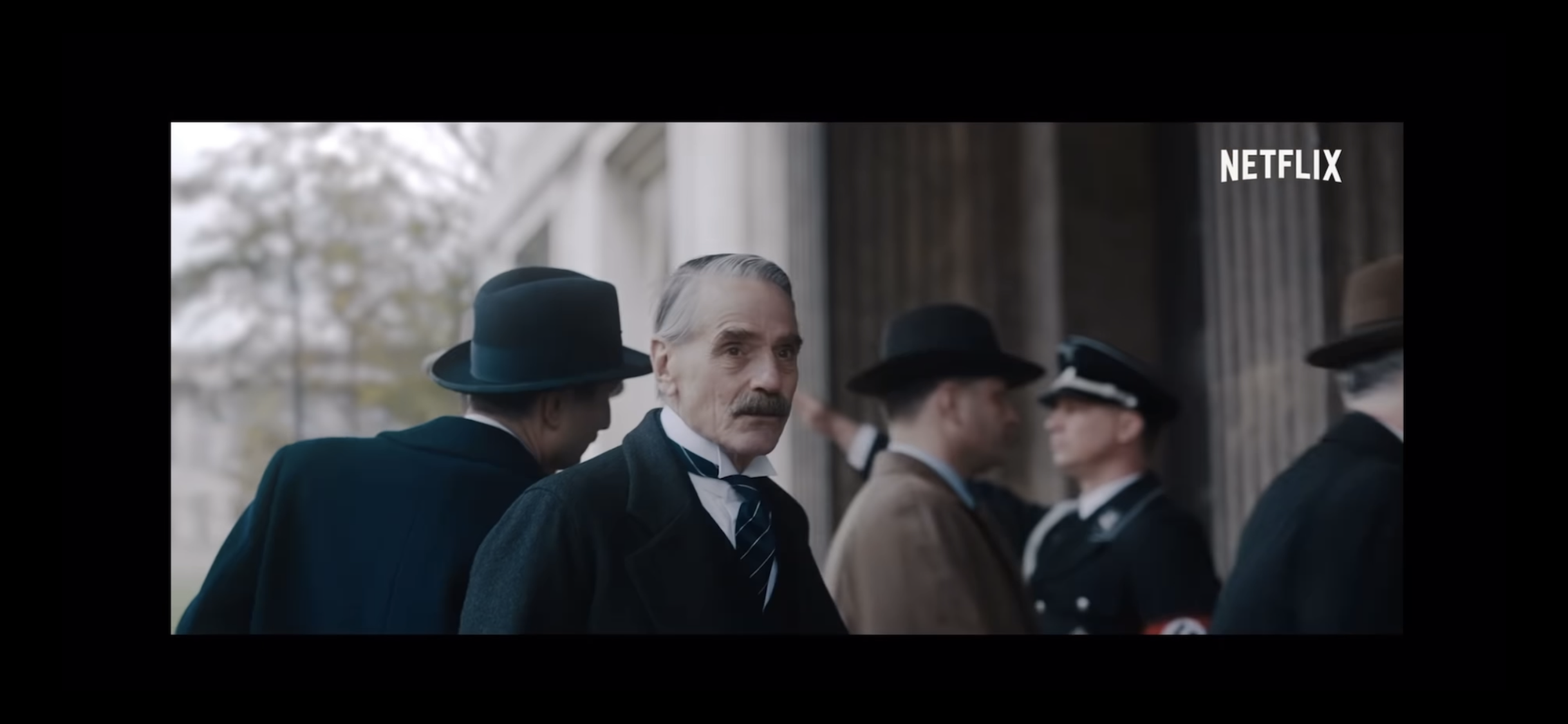
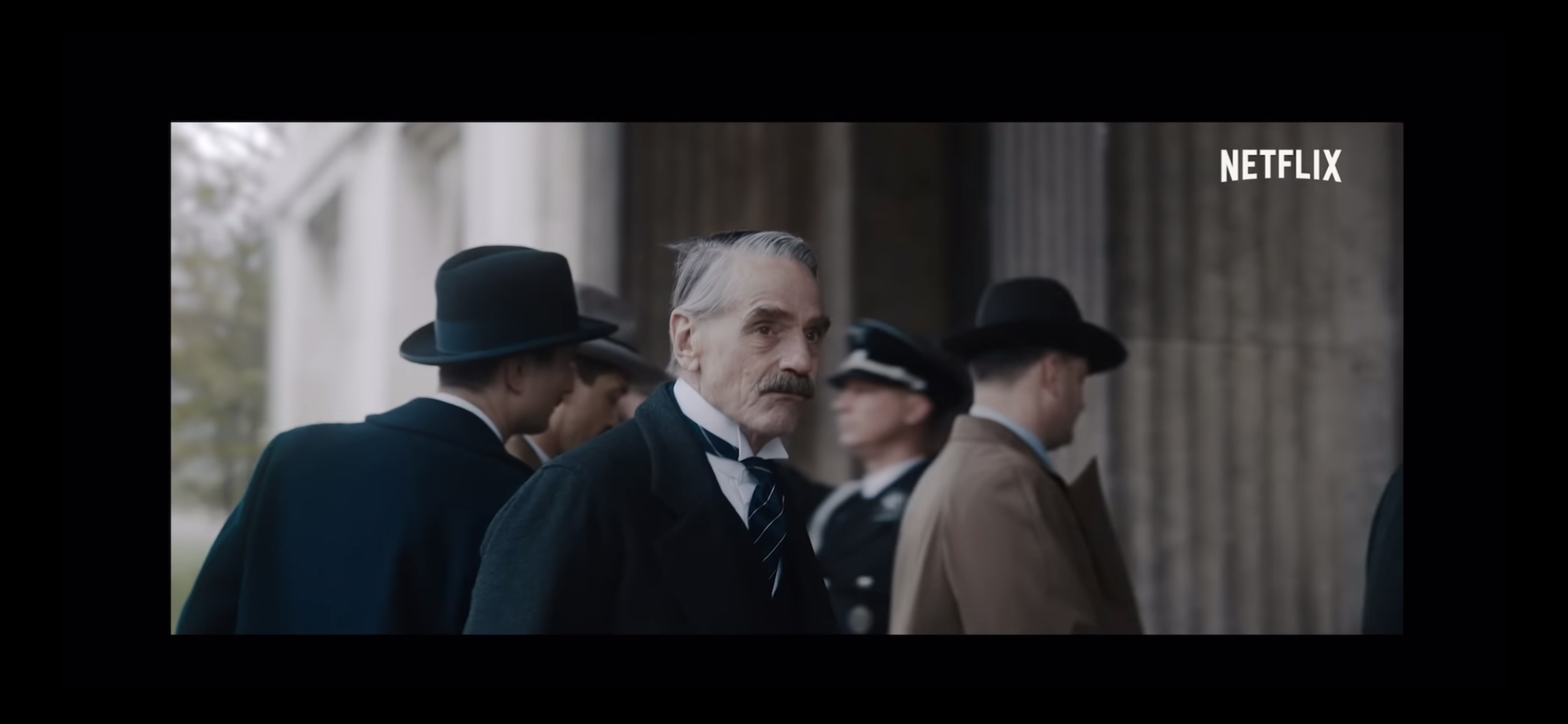
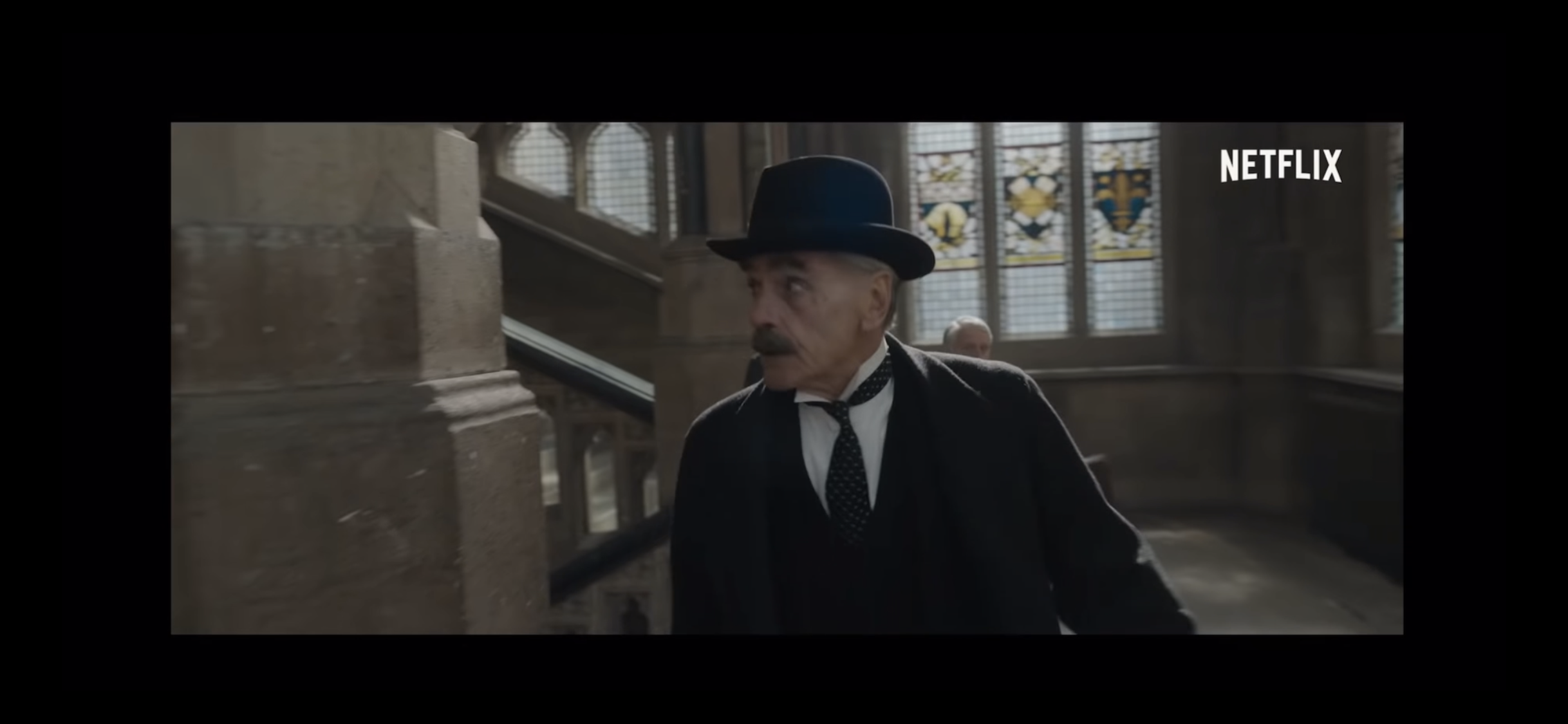




Jeremy Irons was interviewed on The Chris Evans Breakfast Show on Tuesday 30 November 2021.
Click on the media player below to listen to the complete interview:
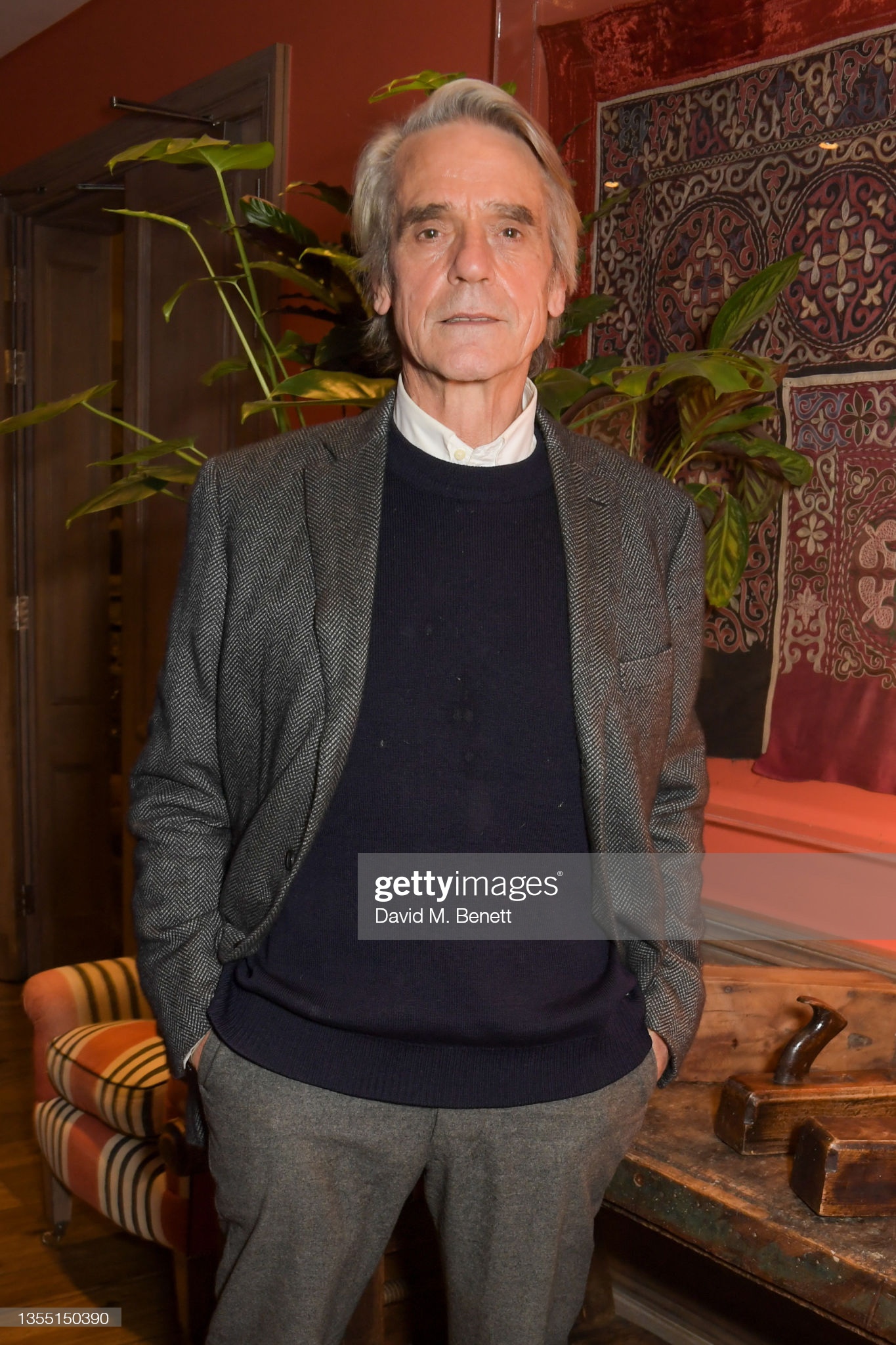
Jeremy Irons attended the Munich: The Edge of War special screening at The Soho Hotel on November 23, 2021 in London, England.




New article/interview with Jeremy, from the Irish Independent:
Jeremy Irons: ‘I think Cyril [Cusack] was very pleased that his daughter was marrying a British man’
November 21 2021
By Donal Lynch
The celebrated actor talks about his ‘Irishness’, out-dressing ‘Lady G’ during publicity for House of Gucci, and what drew him to his role in Ridley Scott’s blockbuster
It’s the night of the House of Gucci premiere in London and Jeremy Irons has done the seemingly impossible. He has out-dressed Lady Gaga, by doing the unexpected.
While everyone else (including her) was clad head-to-toe in the titular label, Irons looked a picture of what the Italians call sprezzatura – a studied insouciance – in a pea coat with waistcoat and trousers tucked into his combat boots. It’s the look of someone who is too cool to try to impress.
“I just go to the wardrobe and pick out something which I think would be the least embarrassing,” he says airily. Anyway, he never cared much for Gucci, he adds – it was “too blingy” before Tom Ford took over, which comes pretty much at the end of the period covered in the film.
“I don’t think they even did men before then,” he says with a wry smile. “Apart from jockstraps.”
Spanning three decades, the film, which is directed by Ridley Scott, is a festival of backstabbing, high fashion and almost operatic tragedy. It tells the story of Patrizia Reggiani (Gaga), the wife of Maurizio Gucci (Adam Driver) who was tried and convicted of orchestrating her ex-husband’s murder in 1995.
Irons plays the Gucci patriarch, Rodolfo, who is appalled when Maurizio announces he wants to marry Patrizia and disinherits him when the young man refuses to ditch her.
It’s bound to be one of the film releases of the year, made all the more impressive because it was filmed during the pandemic, which Irons admits was a challenge.
“Milan, which was where it was shot, was in lockdown. So we were getting tested all the time and we weren’t able to wander the streets and enjoy great Italian restaurants. But on the set, apart from the fact everyone was wearing masks until the cameras turned on, it was OK.”
The film inevitably conjures comparisons with Reversal of Fortune and Irons’ Oscar winning performance as Claus von Bulow, a British socialite who was found guilty of the attempted murder of his wife before being cleared after a second trial.
However, while Irons acknowledges that all of his performances come through “the same brain and the same gut”, he says there were other reasons why the role intrigued him.
Rodolfo himself had made a career as an actor in the 1920s and 1930s, before returning to the family fashion business after his father died in the 1930s. In 1967 he created the Gucci Flora scarf for Grace Kelly.
“He wasn’t a terribly good actor,” Irons explains. “I watched excerpts of his films and they made me realise that he was probably more of an artist than a businessman, although not much of an artist.“
“He was desperately in love, I think, with his German wife, who was a much better actor than he was and who was dead by the time the film starts. Rodolfo was sort of living in the past. He worked on a documentary of [his wife’s] work so he can watch her on screen at night while he listens for the door to unlock with his son coming home.
“He was a very controlling father, because I think his son is one connection to that glamorous past that he had lived.”
Growing up on the Isle of Wight, Irons had a very different dynamic with his own father, an accountant.
“I was very lucky, he always encouraged me to follow my dreams,” he says.And follow them Irons did. It was while he was at school that he first became involved in drama and when he left, he realised he didn’t want to go to university.
He once said that, during a period of hitch-hiking and busking, he toyed with the idea of leading a life as a gypsy, but in fact it was the bohemian life of an actor that beckoned.
He trained at the Old Vic and got his break in the musical Godspell (opposite David Essex), which went on a huge West End run in the early 1970s.
He was originally offered the role of Sebastian Flyte, the ill-fated aristocrat, in Brideshead Revisited , but instead took the part of the more middle-class and circumspect Charles Ryder, a decision which proved to be career changing.
The series was, the New York Times observed, the “biggest British invasion since the Beatles”. It popularised the Oxford argot – with words like “spiffing” – and became a cultural moment. And it made a huge star of Irons.
By then he had already met our own Sinéad Cusack, who is part of a famous Irish acting dynasty. She, he tells me, thought “well he [Irons] is a very proper gentleman”, but I wonder was there any tension between Irons’ very intrinsic Britishness and the Irish family he would marry into?
“Yeah, there was indeed. But of course the Irish being as they are – not valuing themselves and feeling inferior because of the bloody British, I think Cyril (Cusack, Sinéad’s father) was very pleased that his daughter was marrying a British man.”
The Cusacks gave him a “huge [artistic] inheritance” he adds. “I was immensely proud to join the Cusack dynasty, because I never felt like an artist. And so to join a family of third generation artists was an enormous pleasure. And the people I met through them were very different from the people I’d been brought up with.
“I was already acting and playing music, but somehow I felt I was coming to rest in the right nest.”
He feels that “more British people should try to marry a Celt”. Right, and not just for the passport. “Not just for the passport, although the passport would be nice.”
Can’t someone like him get one with the snap of their fingers? “Oh, I wish they would, but they won’t.”
Still, his Irishness is a big part of his identity. He still owns homes in Cork and the Liberties in Dublin, which, he’s pleased to note, have become “wonderfully fashionable”. In lockdown, however, he traded the fiddle, which he once played on TG4, for a viola.
“I’ve always loved the viola and I now play that more than the fiddle. I just love the vibrations of its slightly lower strings.”
We’re supposed to only talk about the movie, but there’s a sense that this may be due to nervousness about Irons himself, as much as any journalistic overreach. To say he’s liable to say anything contentious might be putting it mildly.
In a 2011 interview with the Radio Times he said political correctness had “gone too far” and that some women can handle unwanted touches from men. “Most people are robust. If a man puts his hand on a woman’s bottom, any woman worth her salt can deal with it,” he said then. “It’s communication. Can’t we be friendly?”
In another interview, in 2013, he said that gay marriage could “debase what marriage is” but later recanted, saying: “Gay marriage is wonderful” and that he applauds “the legislation of same-sex marriage, wherever it has been attained.”
In 2016, discussing abortion, he told the Guardian : “Women should be allowed to make the decision, but I also think the church is right to say it’s a sin. Because sin is actions that harm us. Lying harms us. Abortion harms a woman.”
He has since said that he supports “wholeheartedly the right of women to have an abortion should they so decide”.
Looking back at Irons’ opinion swerves makes me think of Edward de Bono’s line: “If you never change your mind, why have one?”
There’s a sense that he doesn’t really care what people think – he once said he has the “tendencies of a benign dictator” – and in the confines of a film junket there’s little chance of him saying anything controversial. But a jessed eagle is still an eagle.
He tells me he called Lady Gaga “Lady G” on set, and adds: “It’s very odd having someone called Lady Gaga. And you know what it means, right? It means…” and he twirls his finger at his temple in the universal miming of ‘bonkers’.
Nothing bonkers about a pop star starring in such a major film however, he insists, pointing out that Jared Leto, who plays Paulo Gucci, is also a musician “most of the time”.
“There are crossovers between musicians and actors. It’s the same ballpark. As a musician, you have to be able to listen for the other [performers], you have to be able to fit around them, you have to be able to carry emotion to your music, you have to have a relatively good technique. I mean, there are great similarities.”
And, anyway, everyone’s got to make a living. When I wonder why such a icon of acting is still working at the age of 73, he fixes me with one of those knowing half-smiles and says it’s quite simple: “The money.”
House of Gucci is in cinemas from Friday
Jeremy Irons lends his support to new campaign to build National Child Development Centre

How good would it feel to know you’ve made a difference to the life of a child? You Can Help Change 30,000 Children’s Lives Over the Next 10 Years By Helping Us Build Our Amazing New National Child Development Centre. Visit www.sensationalkids.ie/besensational
Watch A Story About You now. Narrated by award-winning actor Jeremy Irons and featuring the voices of Lucy Kennedy and Baz Ashmawy, A Story About You, tells the true story of Sensational Kids, and our plans to build a new National Child Development Centre to provide essential therapies for children in Ireland.









 jeremyirons.net
 jeremyirons.net
You must be logged in to post a comment.